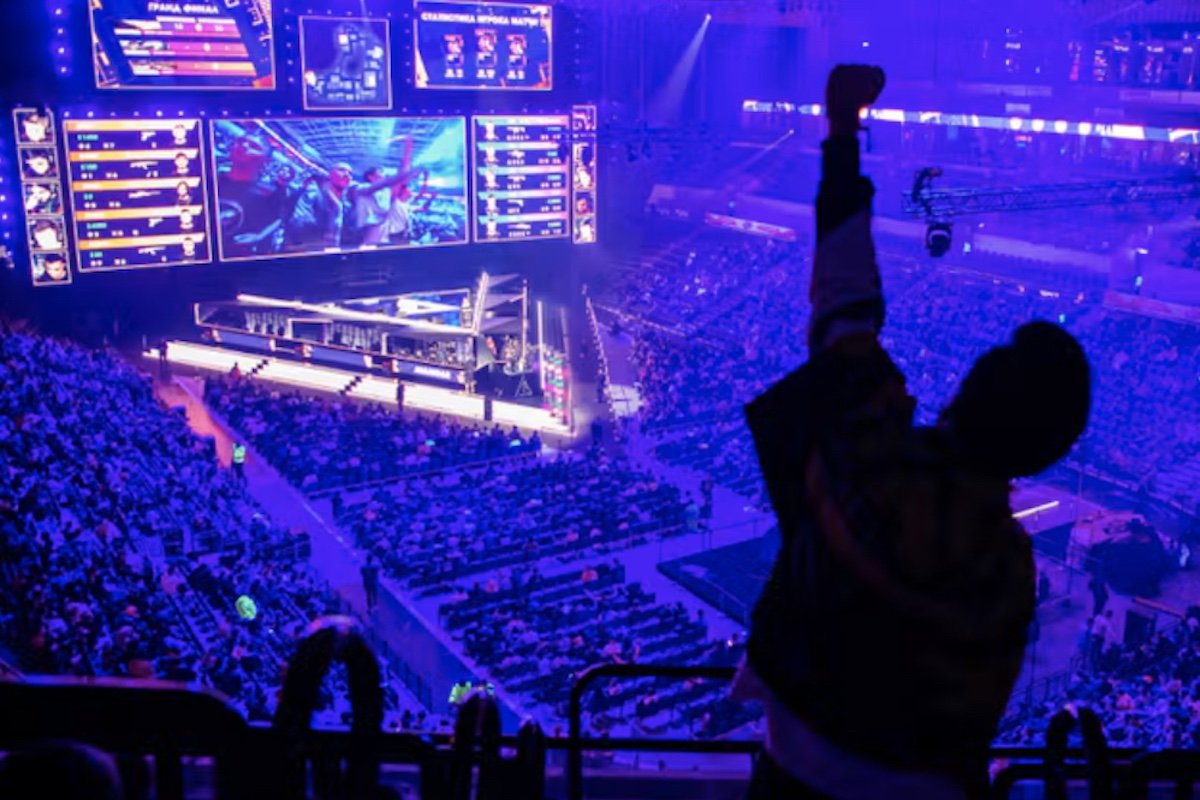
Over the past two decades, competitive gaming has grown from a niche subculture into a global industry watched by hundreds of millions. The 2025 Esports World Cup in Saudi Arabia drew over three million attendees and offered more than US$70 million in prize money. But beyond the spectacle, esports has become a strategic tool for states across the Indo-Pacific and beyond.
As my research shows, esports now functions as geopolitics by other means. Governments are leveraging gaming for economic diversification, soft power projection, and even as a lever in diplomatic disputes. The virtual arenas are increasingly shaped by real-world power dynamics.
Economic diversification and state investment
Saudi Arabia has made esports a pillar of its Vision 2030 plan to reduce dependence on oil. The National Gaming and Esports Strategy, announced in 2022, aims to support 250 gaming companies and create 39,000 domestic jobs. The Esports World Cup, launched in 2023, and the planned 500,000-square-meter gaming hub in Qiddiya City are central to this push. The kingdom's sovereign wealth fund is backing a target of 50 billion Saudi riyals (US$13.4 billion) in GDP contribution by 2030.
Riyadh has also acquired direct stakes in the industry. The state-owned Savvy Games Group bought ESL Gaming and FACEIT, two major tournament organizers, for US$1.5 billion in 2022, and later completed a US$4.9 billion acquisition of Scopely, a leading game developer. These moves position Saudi Arabia as a global hub for competitive gaming, attracting studios, events, and tourism.
Soft power through digital culture
China is using esports to export its culture and build goodwill. Honor of Kings, a Tencent-produced mobile game with over 100 million daily players, draws heavily on Chinese history and heritage. In 2025, the game collaborated with Suzhou embroidery artist Fu Xianghong to create a character costume, blending traditional craft with digital entertainment. Tencent's commercial drive to expand abroad aligns with Beijing's cultural influence, though the government's content approval process gives the state significant leverage over the industry.
Chinese companies also adapt to local cultures to win regional audiences. Mobile Legends: Bang Bang, by Shanghai-based Moonton, features characters like Lapu-Lapu, a Filipino hero, and Gatotkaca from Indonesian mythology. At the 2026 World Championship in Jakarta, actors portraying Gatotkaca performed at the opening ceremony and in city-wide promotions. This strategy of localizing content helps Chinese firms build trust and loyalty across Southeast Asia.
Sanctions and disputes reshape the competitive landscape
Esports may appear borderless, but its infrastructure is rooted in the physical world. After Russia's invasion of Ukraine in 2022, ESL Gaming restricted participation by organizations linked to the Russian government, allowing players to compete under neutral names. Similarly, the 2026 Esports World Cup was moved from Riyadh to Paris following the outbreak of war in Iran, and the inaugural Esports Nations Cup in Saudi Arabia was postponed to 2027, with potential further delays if Houthi attacks continue.
India's ban on 118 China-linked apps in September 2020, including PUBG Mobile, disrupted a thriving esports ecosystem. The game had roughly 30 million daily active users in India; the ban halted tournaments and displaced professional players. Such actions show how geopolitical tensions can directly affect the competitive gaming industry, influencing which platforms are accessible and which players can compete.
These developments underscore that esports is no longer just about entertainment. It is a strategic domain where states invest, project influence, and enforce their interests. As the industry grows, its role in regional and global politics will likely expand, making it a key arena to watch.
For more on how technology and statecraft intersect in the region, see our analysis of China's new drone mothership and the SoftBank AI bets that are shaping the future.