The outcome of modern warfare in the Middle East is increasingly measured not by battlefield destruction but by the resilience of economic systems that remain functional afterward. Recent US-Israeli strikes on Iran, which Washington portrays as a demonstration of restored military dominance, have instead highlighted a structural mismatch between the speed of military operations and the region's capacity to absorb their economic consequences.
This tension became evident in early 2026, when the United States and Israel launched direct military action against Tehran despite reported warnings from Riyadh and Doha urging restraint. The incident marked a sharp reversal from May 2025, when President Donald Trump visited Saudi Arabia, Qatar, and the United Arab Emirates on the inaugural international tour of his second term, securing large investment pledges for the US economy. That political momentum proved fleeting, as Gulf capitals now find themselves more focused on managing the domestic costs of regional escalation than on exporting stability.
Infrastructure Under Pressure
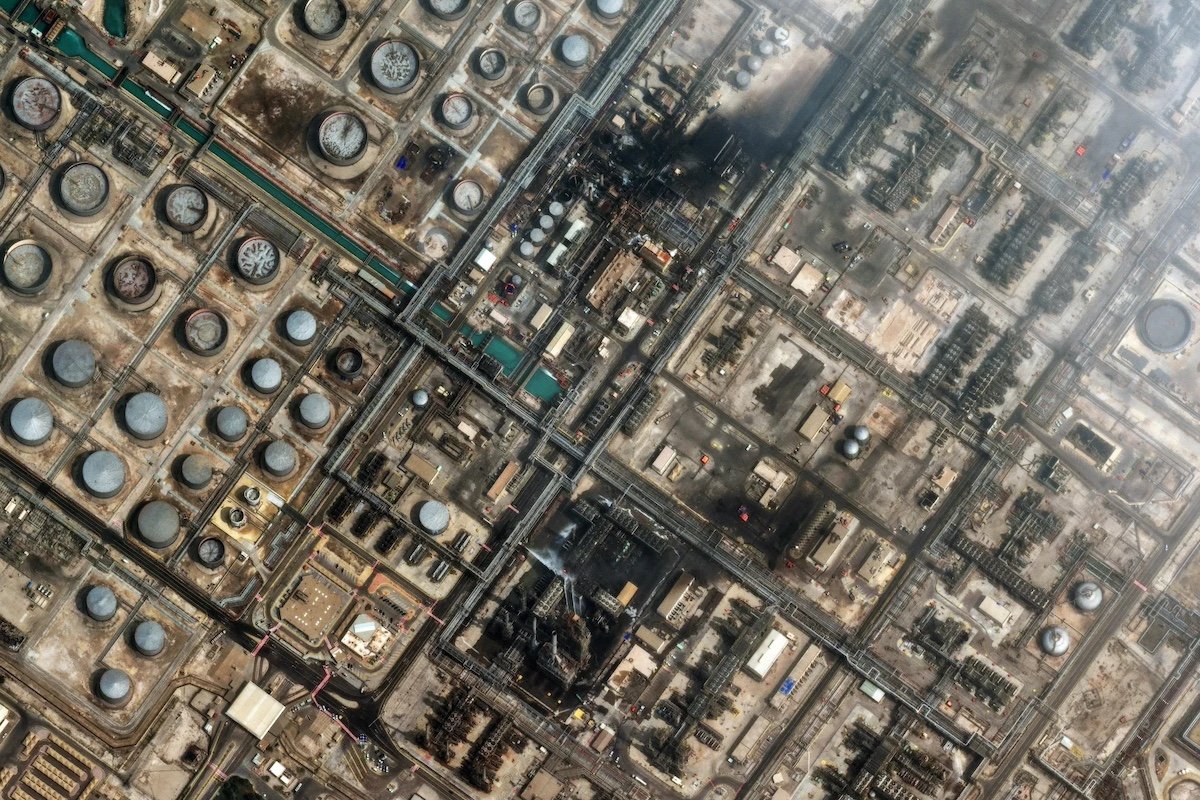
In March, an Iranian missile strike on Ras Laffan Industrial City disrupted Qatar's key liquefied natural gas hub. Reuters reported that QatarEnergy confirmed operational disruptions and a roughly 17% reduction in export capacity following damage to critical facilities. The financial repricing that followed was swift: insurance premiums rose, shipping costs adjusted, and long-term contracts were reassessed based on risk rather than volume.
Aviation has faced similar pressures. Disruptions across Gulf air corridors and major hubs such as Dubai International Airport illustrate how quickly conflict affects global connectivity. Airspace closures, rerouted traffic, and rising war-risk insurance premiums are increasing operational costs for carriers across the region. These vulnerabilities extend into the Gulf's post-oil transition strategies, which rely heavily on globally integrated infrastructure for artificial intelligence, cloud computing, and data-center capacity. As compute infrastructure becomes a geopolitical asset, the line between civilian economic systems and national security infrastructure blurs.
The erosion of these assumptions is already visible in sovereign spreads, delayed investment timelines, and downgraded growth forecasts across the Gulf Cooperation Council. The central question is no longer whether the region can absorb isolated shocks, but whether sustained instability is altering the assumptions underpinning long-term diversification strategies such as Saudi Vision 2030.
Diplomatic Recalibration
This growing pressure has driven a broader diplomatic recalibration. The assumption that American military power functions as a stabilizing shield is giving way to a more complex reality: US military action may impose significant economic costs on Gulf states themselves. That unease culminated in an unusually visible divergence in early May, when Trump's "Project Freedom" — a plan to reopen the Strait of Hormuz through military enforcement — encountered resistance from Saudi Arabia after Riyadh reportedly restricted US access to key airbases and airspace corridors, including Prince Sultan Air Base. The Wall Street Journal reported that Gulf states, including Saudi Arabia, the UAE, and Qatar, pressed Washington to pause further escalation amid fears of broader economic and infrastructural fallout.
Recognizing that temporary restraint may not constitute a durable security framework, Saudi Arabia has moved toward direct diplomatic stabilization with Tehran. A proposed non-aggression architecture, sometimes compared to the logic of the 1975 Helsinki Accords, signals an emerging shift toward regionalized security management outside traditional US-led frameworks. This trend echoes broader shifts in the region, as explored in our analysis of West Asia's old security order collapsing under the weight of war and mistrust.
None of this implies imminent economic collapse. Gulf states retain substantial fiscal buffers and sovereign investment capacity. But adaptation becomes costlier as instability shifts from episodic disruption to a structural condition. It also exposes a widening fault line within the Gulf itself: while Saudi Arabia leans toward regional détente to protect long-term transformation strategies, the UAE has at times adopted a more security-forward posture, reflecting divergent risk assessments.
These differences underscore a broader unresolved question in Western policy: whether Iran can be contained through pressure without producing fragmentation. Historical precedents from Iraq, Libya, and Syria suggest that fragmented states often generate prolonged instability rather than strategic clarity. For Gulf states, a weakened Iran may not be safer — it may be less predictable, less centralized, and more prone to asymmetric escalation across maritime and energy corridors. This dynamic has direct implications for Asian energy security, as highlighted in our report on Asia fracturing into energy security haves and have-nots amid the Hormuz crisis.
The central issue facing the United States is therefore not military effectiveness alone, but economic absorption. While US force projection remains unmatched, the surrounding system is increasingly sensitive to the economic consequences of that power. Military superiority may no longer be sufficient to guarantee regional order. What is changing is not America's capacity to project force, but the region's capacity to absorb it. If policymakers interpret the current pause in escalation as a return to stability, they may miss the deeper structural shift underway — one that is reshaping the Gulf's relationship with its primary security guarantor.