The Iran war has tested the resilience of global oil markets in ways few anticipated. Despite the closure of the Strait of Hormuz—the world's most critical oil transit chokepoint—prices have largely held near $100 per barrel, a level lower than many analysts had forecast. This stability stems from a dramatic shift in production dynamics, with the Americas emerging as a pivotal force.
Before the conflict, the International Energy Agency had projected that virtually all global oil demand growth in 2026 could be met by rising supply from North and South American producers. The United States, Canada, Brazil, Guyana, and Argentina were already scaling up output. OPEC, meanwhile, was preparing to increase its own production, setting the stage for a potential oversupply. The war upended those expectations, removing up to 14 million barrels per day from the market through the Hormuz closure and triggering large stock draws instead of builds.
American Output Surges to Fill the Gap
High prices have proven to be the most effective cure for shortages. Producers across the Americas have responded aggressively. US crude exports hit a record 6.44 million barrels per day in April, and new export infrastructure is coming online—nearly 800,000 barrels per day of additional dock capacity is expected by 2026. The US remains the world's largest oil producer, with total liquid hydrocarbon output reaching almost 22 million barrels per day in April.
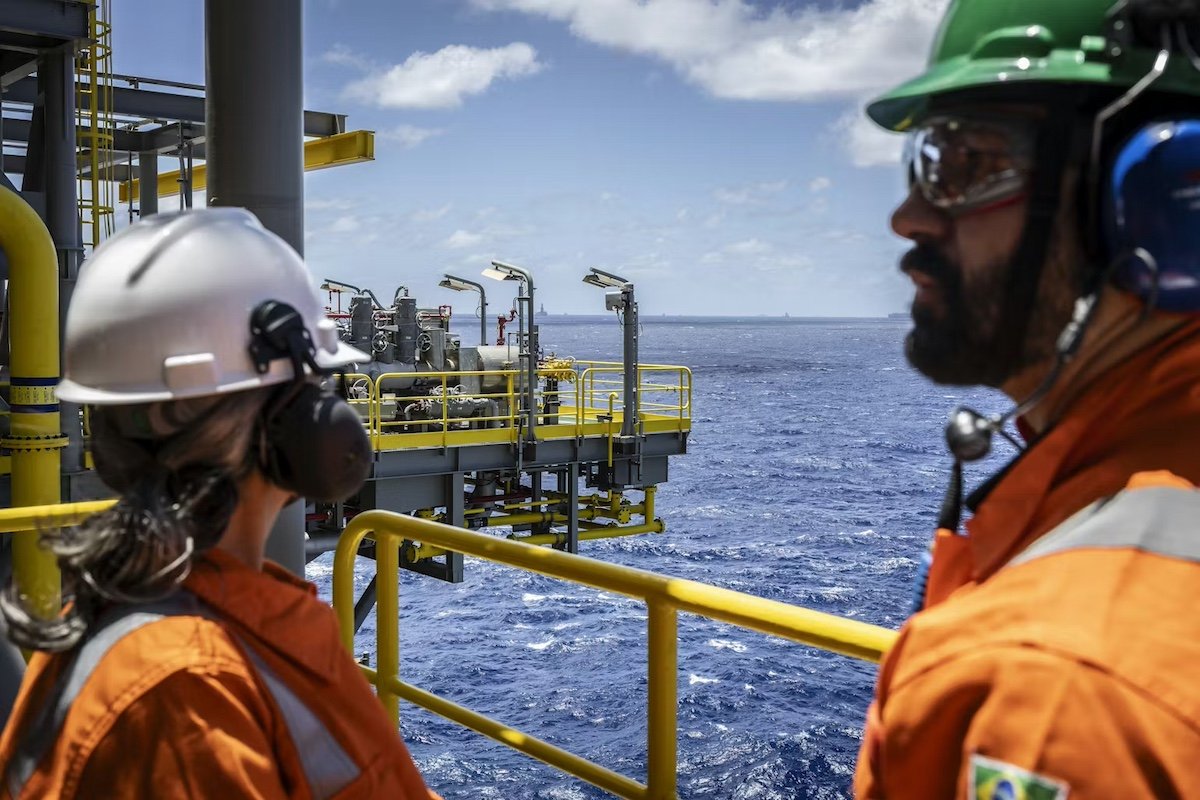
Brazil has added eight new offshore floating production vessels in recent years, with combined capacity approaching 1.5 million barrels per day. Petrobras, the state oil company, recently started production at a new project in the Búzios field off the coast of Rio de Janeiro—five months ahead of schedule, partly to capitalize on elevated global prices. Guyana has emerged as one of the fastest-growing oil producers globally, with output already around 900,000 barrels per day and potential to nearly double by the decade's end. Even Venezuela, long plagued by declining production and economic crisis, has substantially increased exports in response to higher prices.
Together, the Americas are expected to produce around 30 million barrels per day later in 2026, approaching pre-war OPEC production levels. This surge has effectively made the region a swing producer, providing flexibility during supply crises.
OPEC's Unintended Role
This Western Hemisphere boom did not happen by accident. Ironically, OPEC itself helped create it. For years, Saudi Arabia and its partners restricted output to support higher prices, making expensive projects in the Americas commercially viable—especially US shale production. Saudi Arabia's strategy of 'higher for longer' was partly driven by domestic ambitions, including financing the vast Neom city development, which requires oil prices of at least $90 per barrel. The result has been a powerful incentive for non-OPEC producers to expand.
Yet declaring a permanent shift in oil's center of gravity away from the Middle East would be premature. The economics of production still strongly favor Gulf producers, with extraction costs in the Persian Gulf among the lowest in the world. In some Saudi fields, oil can be extracted for less than $10 per barrel; across the Gulf, average production costs are roughly $27 per barrel. By contrast, much of North American shale requires prices between $50 and $65 per barrel to remain profitable. That difference matters enormously during periods of lower prices, when higher-cost producers would come under pressure first.
Geography also favors the Middle East in key markets. For growing Asian economies such as India, Pakistan, and Bangladesh, importing oil from the nearby Gulf remains the cheapest option. Many Asian refineries were designed specifically to process Middle Eastern crude grades, which are rich in middle distillates like diesel and jet fuel—the hydrocarbons that drive economic development. Much of the shale oil exported from the US is lighter and less suitable as a direct replacement. This structural dependency underscores why Gulf producers remain indispensable to Asian energy security, a dynamic that has implications for broader geopolitical strategies, as seen in Xi Jinping's patient strategy reshaping global power dynamics.
Gulf producers are also investing heavily to protect their long-term role. The United Arab Emirates is expanding pipeline infrastructure that bypasses the Strait of Hormuz, including upgrading its Habshan-Fujairah pipeline. Saudi Arabia already operates its vast East-West Pipeline, capable of transporting 7 million barrels per day to the Red Sea. These projects are designed to reduce vulnerability to regional instability and secure export routes for decades to come.
The Americas are unquestionably transforming the global oil market, providing a critical buffer during geopolitical shocks. But long-term dominance in oil markets is determined not only by production volumes. Cost, geography, infrastructure, and reserve size matter too. On those measures, the Middle East still holds a formidable advantage. For Asian importers, the calculus remains complex, as the IEA warns global oil reserves at critical low as Strait of Hormuz crisis persists, and the interplay between American output and Gulf resilience will continue to shape energy security across the Indo-Pacific.