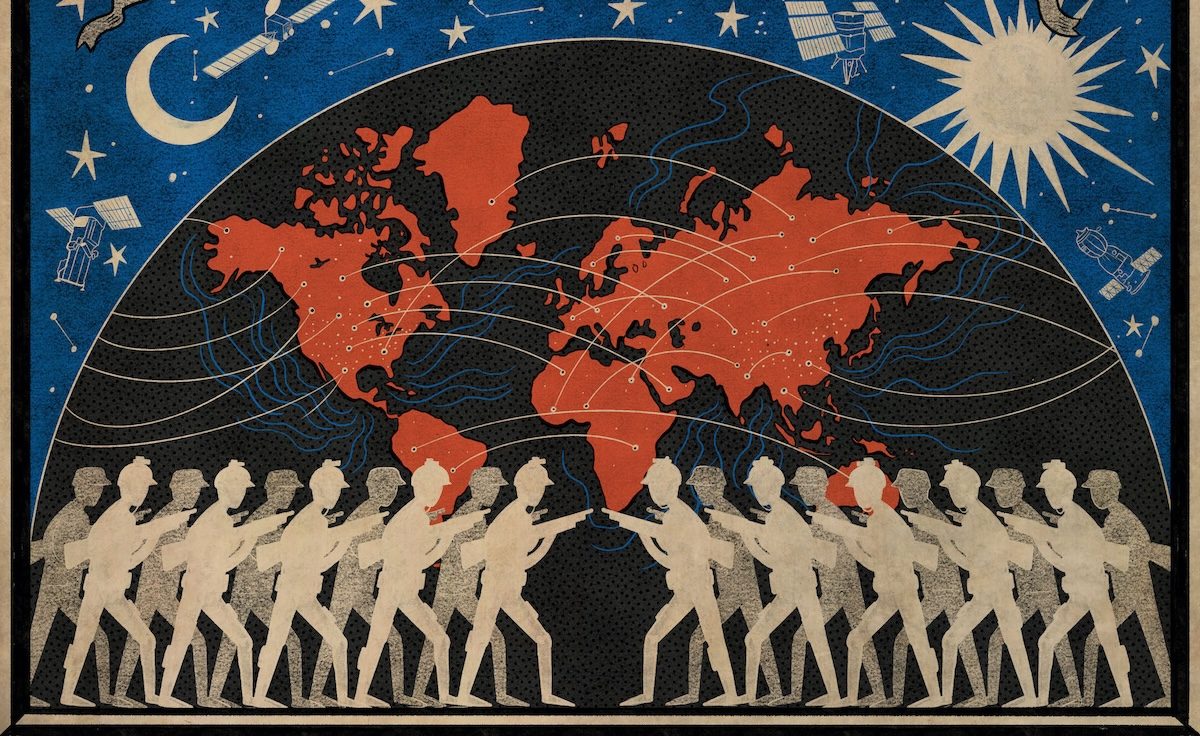
An old Chinese proverb holds that the skilled hunter does not chase the rabbit—he positions himself where the rabbit must eventually run. Chinese President Xi Jinping, often criticized for his authoritarianism, has demonstrated extraordinary patience. In recent weeks, both Russian President Vladimir Putin and former US President Donald Trump made separate visits to Beijing, confirming that the rabbit ran exactly where Xi expected. This is not coincidence; it is deliberate architecture.
The simultaneous gravitational pull China exerts on Washington and Moscow—two powers nominally defining opposing ends of the current global order—reveals where real geopolitical weight now resides. Beijing is no longer reacting to the international system; it is quietly reshaping it.
When Moscow Faces Eastward
Putin's visit to China carried the unmistakable optics of dependence dressed as partnership. Russia arrived not as an equal but as a supplicant—needing to offload energy exports, survive sanctions, and purchase diplomatic cover. The Kremlin needs China far more than Beijing needs Moscow, and both sides understand this asymmetry perfectly, even if unspoken.
Since the Ukraine war began, Russia has pivoted its entire economic architecture eastward, funneling gas, oil, and raw materials into Chinese markets at discounted rates that Beijing negotiated with the quiet confidence of a creditor who knows the borrower has nowhere else to go. The second Power of Siberia pipeline, long stalled in negotiation, reflects this dynamic: Russia wants it desperately; China is in no particular hurry.
Historically, a great power that becomes economically captive to a single partner loses strategic independence gradually, then suddenly. Think of Habsburg Spain, flush with New World silver yet structurally dependent on Genoese bankers, finding its foreign policy quietly constrained by financial obligation. Russia today retains military prestige and nuclear deterrence, but its room for independent geopolitical maneuver is steadily narrowing into a corridor that Beijing defines.
For South Asia, this consolidation carries real weight. India, which has carefully preserved its Russia relationship as a counterbalance to both China and Western pressure, now faces a Moscow increasingly filtered through a Beijing lens. Every arms deal, every energy contract, every diplomatic signal from Russia now carries a Chinese shadow. New Delhi sees this; the discomfort is visible, even when unspoken.
Trump Arrives with Flattery, Leaves with Little
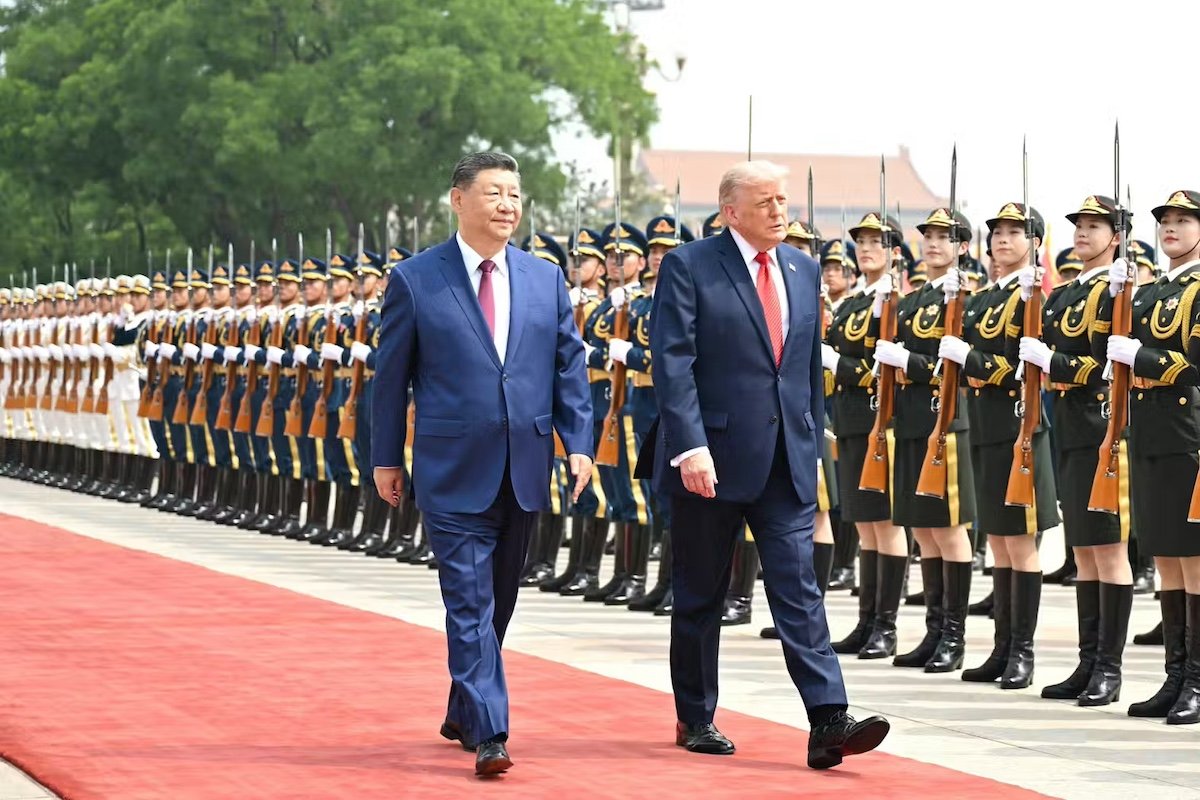
If Putin's visit revealed Russia's structural weakness, Trump's visit revealed something arguably more striking—America's diplomatic disorientation. Trump arrived in Beijing with the country's most powerful corporate executives in tow, a gesture that read internationally as a solicitation. The imagery was uncomfortable for a country that has spent decades lecturing the world about leverage and strength.
Xi received him with the composed authority of someone who had already decided the terms of engagement. He invoked the Thucydides trap—the idea that a rising power and an established one inevitably collide—not as a warning this time, but almost as a settled verdict. China, Xi's posture suggested, has already made the transition. The question now is whether America will accept the new geometry or exhaust itself resisting it.
The summit produced no joint statement. That absence speaks louder than any communiqué could. When two powers meet at the highest level and cannot agree on shared language, it means the gap between their respective worldviews is too wide for diplomatic paper to bridge. The two sides issued separate readouts—America's notably subdued, stripped of the triumphalist language Trump typically deploys. A man who once described a brief phone call with a foreign leader as “incredible and productive” called this meeting merely “good.” That is a telling retreat.
On trade, on Taiwan, on technology restrictions and rare earth controls, the tit-for-tat sanctions architecture that preceded the visit had already demonstrated something important: China is no longer absorbing American pressure quietly. It is retaliating systematically, and with growing confidence in its own capacity to impose costs. The export restrictions on critical rare earth elements, imposed in 2025 and affecting American defense supply chains directly, were not the actions of a country that fears confrontation. They were the actions of a country that has done the math and likes its position.
The G-2 Reality
Xi's most consequential gambit during the Trump summit was not a trade concession or a diplomatic formula. It was a conceptual one. By framing the bilateral relationship around the idea of a “constructive strategic stable relationship”—and by explicitly invoking the notion that China and the United States bear shared responsibility for global peace—Xi was advancing something Washington has long resisted: the formal acknowledgment of a G-2 world.
This is China's real ask, beneath all the tariff negotiations and technology disputes. Not equality on paper—Beijing has long since moved past the need for symbolic gestures—but structural recognition that the international order requires Chinese consent to function. That no crisis, whether in the Middle East, in Ukraine, or across the Taiwan Strait, can be managed without Beijing's active or passive cooperation.
The Iran dimension of Trump's visit underscores this precisely. America's failure to decisively resolve the Iranian conflict—its inability to force the Strait of Hormuz open through either military pressure or diplomatic leverage—arrived in Beijing as evidence of a superpower struggling to project influence. As the IEA warns global oil reserves at critical low, China's role as a potential mediator or spoiler becomes even more central.
For the broader Indo-Pacific, Xi's strategy has profound implications. Japan's rearming ambitions face hard limits, as detailed in our analysis, while Southeast Asian nations like Vietnam and Indonesia grapple with economic contradictions that China's leverage can exploit. The message from Beijing is clear: the rules of global power are being rewritten, and Xi Jinping is holding the pen.