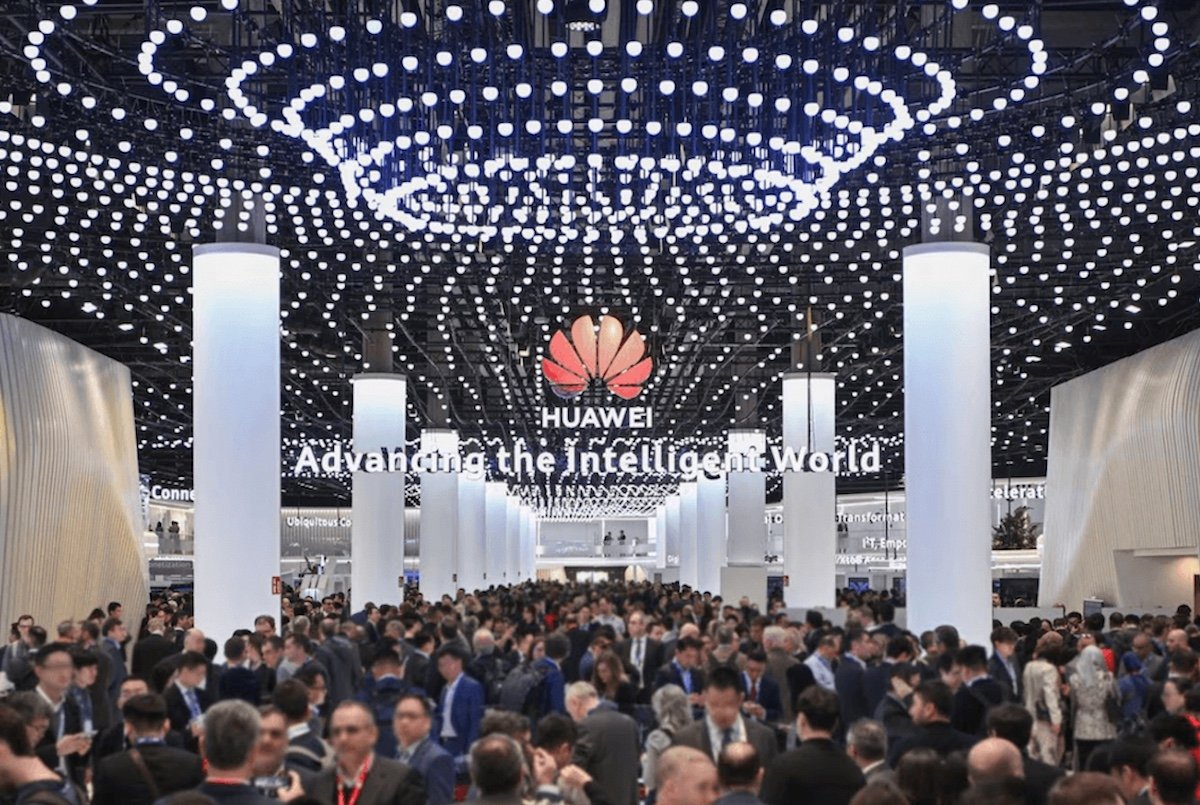
Mobile World Congress 2026 (MWC26), held March 2–5 in Barcelona, Spain, drew nearly 105,000 participants from 207 countries and territories, along with some 2,900 exhibitors and 1,700 speakers. The 20th annual gathering of the telecom industry saw over 1.3 million views of keynotes and presentations online, but what stood out was the absence of the usual anti-Huawei tirades from Washington. The US government, preoccupied with its renewed focus on the Middle East, largely stayed out of the fray, allowing the conference to center on technology rather than geopolitics.
AI Agents Take Center Stage
Huawei, the Chinese telecom giant, used MWC26 to aggressively promote its vision of integrating artificial intelligence agents into mobile networks. The company argued that AI-driven automation could optimize network traffic, reduce latency, and enable new services like real-time translation and autonomous vehicle coordination. Huawei’s booth featured demonstrations of AI agents managing spectrum allocation and predictive maintenance, positioning the firm as a leader in the next wave of telecom evolution.
Rivals Nokia and Ericsson were not far behind. Nokia showcased its “AI-native” network architecture, while Ericsson highlighted partnerships with operators in Japan and South Korea to deploy AI for energy efficiency. The competition underscored a broader industry shift: telecom operators across Asia, from Singapore’s Singtel to India’s Reliance Jio, are racing to adopt AI to cut costs and improve service quality.
Geopolitical Backdrop Shifts
The relative quiet from Washington at MWC26 marked a departure from previous years, when US officials routinely criticized Huawei over security concerns. This year, the US administration’s attention was diverted by escalating tensions in the Middle East, including potential disruptions in the Strait of Hormuz that threaten Asia’s energy and fertilizer supplies. For Huawei, the reprieve allowed it to focus on business development, though the company remains under US sanctions that limit its access to advanced chips.
Meanwhile, European telecom operators expressed cautious interest in Huawei’s AI offerings. Deutsche Telekom and Orange, both present at the conference, noted that they would evaluate the technology on technical merit, but regulatory hurdles in Europe could slow adoption. The European Union’s recent push for digital sovereignty, including its own cloud and AI standards, adds another layer of complexity.
Asia’s Telecom Landscape in Flux
Asia remains the largest market for mobile telecom, with countries like China, India, and Indonesia driving demand for 5G and beyond. At MWC26, Chinese operators China Mobile and China Telecom announced plans to deploy AI agents across their networks by 2027, aiming to handle the surge in data traffic from streaming and IoT devices. In India, Bharti Airtel and Vodafone Idea are exploring AI for rural network expansion, while Japan’s NTT Docomo is testing AI for disaster response communications.
The push for AI in telecom also raises questions about data sovereignty and security. As transnational crime networks exploit digital infrastructure, operators must ensure that AI systems do not become vectors for fraud or surveillance. Huawei has emphasized its commitment to secure AI deployment, but skepticism persists among Western governments.
Industry Outlook
MWC26 demonstrated that the telecom industry is betting heavily on AI as the next revenue driver, especially as 5G matures and 6G research accelerates. Huawei’s aggressive push into AI agents reflects its strategy to diversify beyond hardware and into software and services. For Asian telecom markets, this could mean faster innovation but also greater dependence on a single vendor. The coming years will test whether the industry can balance technological ambition with geopolitical realities.