For nearly half a century, Washington has treated the Strait of Hormuz as a defensive line essential to global commerce. But President Donald Trump has repeatedly questioned this orthodoxy, chiding European and regional allies for not doing more to secure the waterway, even as he expanded the US Navy's presence there. Tehran, too, views the strait as a cornerstone of its defense, grudgingly accepting unimpeded traffic to sustain the shadow fleet that moves its sanctioned oil to buyers across Asia.
Now, for the first time, both capitals share a plausible interest in reforming the international law governing maritime transit: the United Nations Convention on the Law of the Sea (UNCLOS). The treaty, rooted in a 17th-century legal fiction, treats the open ocean and coastal waters near global chokepoints as a natural commons open to all. But a modern post-Panamax container ship is no Dutch fluyt, and today's sea lanes are anything but natural.
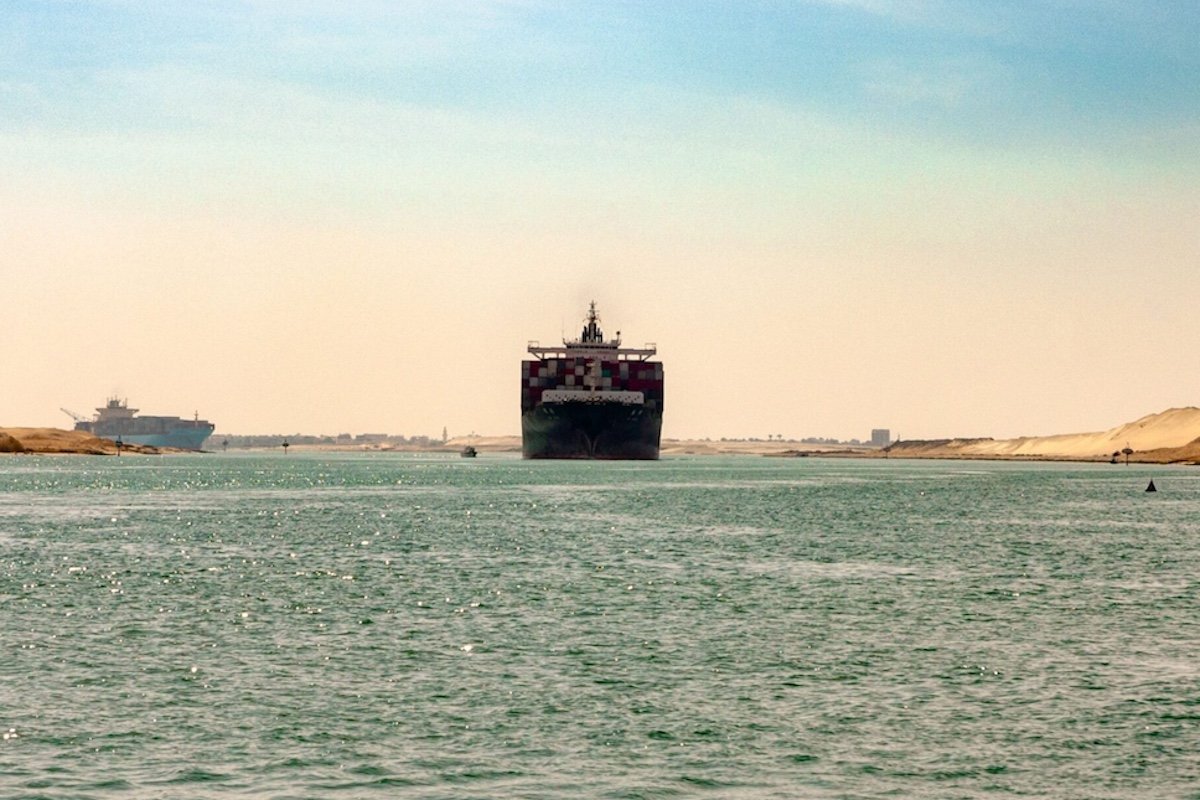
Modern straits are perpetually re-engineered through dredging, electronic signals, and wreck removal. They are policed against piracy and environmental violations, and require round-the-clock radio operators for traffic management. In short, they are infrastructure. Yet Articles 26 and 44 of UNCLOS prohibit coastal states from charging tolls for these services, forcing sovereigns to absorb the operational and environmental costs of keeping straits free and navigable.
This arrangement functions as a subsidy for logistics capital at the expense of taxpayers in countries like Singapore, Indonesia, Malaysia, Oman, and Iran. Acknowledging this injustice could offer a pragmatic opening for US-Iran negotiations to rethink who should pay for free transit. As Pathways to De-escalation: How Washington and Tehran Could Avert Conflict in the Strait of Hormuz explores, such shared grievances may provide unexpected diplomatic leverage.
The Hidden Costs of Free Passage
Classical liberal legal traditions treat the ocean as a gift of nature, an ideal anchored in the age of sail. When a 17th-century Portuguese nau sailed the Strait of Malacca, it relied on tides, wind, and local knowledge. By contrast, a modern post-Panamax container ship requires a heavily engineered environment to avoid grounding or collision. Facilitating safe passage demands capital-intensive dredging, complex traffic separation schemes, and constant policing. Even when all goes well, coastal states bear the costs of air pollution and ballast water contamination.
While UNCLOS Article 43 vaguely encourages user states to cooperate with coastal states in establishing charity funds, the broader framework prohibits transit tolls to recover investments. In the eyes of international law, passage through these natural environments must remain free of transactional fees. This rhetorical sleight of hand renders the labor of maintaining global shipping lanes invisible, declaring multi-million-dollar sovereign infrastructure projects a gift of nature.
Proponents of the current UNCLOS framework often conflate tariffs and tolls to defend the status quo, warning that allowing charges would erect artificial barriers to trade. But a tariff is an artificial barrier designed to manipulate markets; a toll is a user fee to recover capital invested in reproducing straits as infrastructure. Global capitalism requires commodities to move as quickly and cheaply as possible, an imperative that demands ever-larger ships and deeper channels. UNCLOS guarantees this by demanding toll-free passage through global chokepoints, ensuring capital faces no financial resistance from the sovereigns it relies on.
The immense benefits of free transit flow almost entirely to North American and European markets and to multinational shipping corporations. The costs are dumped on coastal states. This status quo is unjust to a wide range of nations. The US, trapped by its Carter Doctrine-era role as guarantor of freedom of navigation, bears exorbitant naval costs to secure sea lanes globally. With the petrodollar paradigm unraveling and a pivot to Latin America likely, Washington lacks the financial and political incentive to maintain this role long-term.
Iran, meanwhile, shoulders the infrastructural and environmental costs mirrored across the globe. Coastal states like Malaysia, Indonesia, Thailand, and Singapore are forced to manage the uneconomic burden of keeping their waters open. As US-Iran Stalemate in Hormuz Strains Alliances, Reshapes Asian Energy Security details, the strain on these nations is growing. A shared interest in reforming UNCLOS could provide a rare point of convergence for Washington and Tehran, potentially reshaping the legal and economic architecture of global maritime trade.