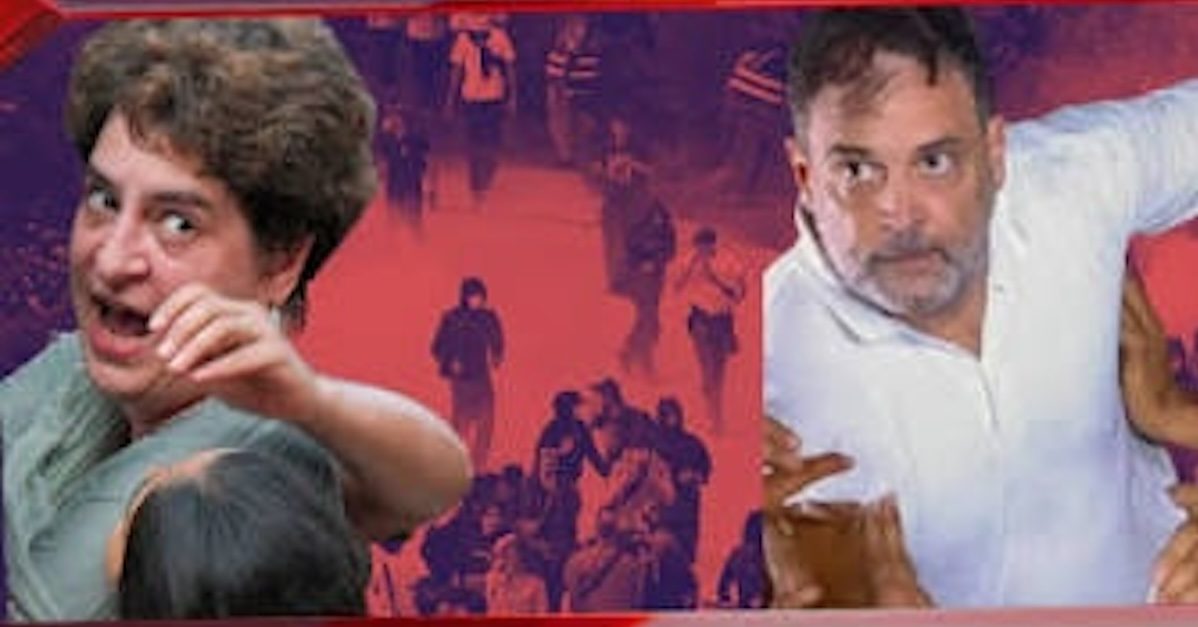
Protests rarely stay confined to the issues that first bring people out. When citizens feel their concerns are ignored, a specific grievance can quickly escalate into a broader challenge to political authority. What begins as a demand for correction becomes a question of accountability, and a local dispute can expose a deeper crisis of public trust.
The recent demonstrations in India and France illustrate this dynamic, albeit in very different contexts. In India, the focus is on the integrity of the electoral process and the right to vote. In France, dissatisfaction with education, living costs, and public services has united students, teachers, and labor unions. Both movements reveal a common tension between the authority of institutions and the confidence citizens place in them.
What these protests ultimately show is that a government's right to maintain order means little without public trust. Institutional power loses its legitimacy the moment citizens begin to question the fairness of its decisions, the quality of its services, or its willingness to listen. Stability cannot be achieved simply by policing protests; governments must address the deep-seated grievances that bring people into the streets in the first place.
India: Electoral integrity under scrutiny
In India, demonstrations over the integrity of the electoral process intensified in early October, building on a summer of widespread student protests. At the center of the dispute is the Election Commission's Special Intensive Revision (SIR) of electoral rolls. Since the exercise began in 2025, some 133.9 million electors—14.04% of the 954 million draft electors—have been removed or marked for removal.
Opposition parties, activists, and protesters fear that eligible voters, especially minorities and poorer citizens, may have been excluded. Alleging that the deletions are politically motivated and intended to benefit the ruling Bharatiya Janata Party (BJP), they are demanding independent scrutiny of the revisions and the resignation of the chief election commissioner. The Election Commission and the ruling party reject these allegations, arguing that electoral rolls require regular administrative updating, including the removal of deceased individuals and those who have relocated or cannot be traced. Authorities also defend public-order measures as necessary to prevent disruption and protect safety.
These competing positions raise a necessary question: How can the integrity of an electoral process be established when the process itself has become a source of public suspicion? Answering this requires recognizing that the demand for accountability should not be confused with a presumption of wrongdoing. Similarly, the administrative character of a revision should not shield it from scrutiny.
Electoral integrity involves more than the formal conduct of an election; it also requires that eligible citizens can exercise their voting rights. An electoral roll may be administratively updated, but if eligible voters are not given adequate opportunity to establish their inclusion or effectively challenge their exclusion, the process risks losing public confidence. The possibility of wrongful exclusion, particularly among minorities and the poor, makes transparency and accessible remedies essential. Transparent records, independent audits, and accessible appeals procedures would help establish the extent of any wrongful exclusion and provide a credible basis for resolving the issue.
The broader political risk lies in what happens when uncertainty persists. If citizens believe that their right to participate depends on a process they cannot adequately examine or challenge, confidence in the electoral system may weaken even before the underlying allegations are conclusively established. That is why institutions must not only ensure their actions are legitimate but also make that legitimacy visible to the public.
France: Public order versus public services
In France, demonstrations have been ongoing since mid-September, initially involving students protesting teacher shortages and poor school facilities. By October, the movement had broadened to include labor unions and other groups seeking higher wages, lower living costs, and the protection of public services. From the protesters' perspective, demonstrations and strikes are necessary means of making grievances heard when other avenues appear insufficient.
The government, meanwhile, emphasizes the need to maintain public order and manage spending within financial constraints. Reports of injuries among protesters and police have added fuel to the tensions. The dispute reflects a familiar dilemma: How should a government balance fiscal restraint with its responsibility to provide accessible public services?
Financial constraints are a legitimate consideration, but they cannot be used to justify ignoring the social contract. When citizens perceive that their needs are secondary to budgetary targets, trust erodes. In both India and France, the path forward requires more than restoring order; it demands restoring faith in the institutions that are meant to serve the public.
As the protests in Delhi and Paris show, the challenge is not unique to one country. It is a global test of whether governments can listen, adapt, and earn the trust that is the foundation of any stable society.