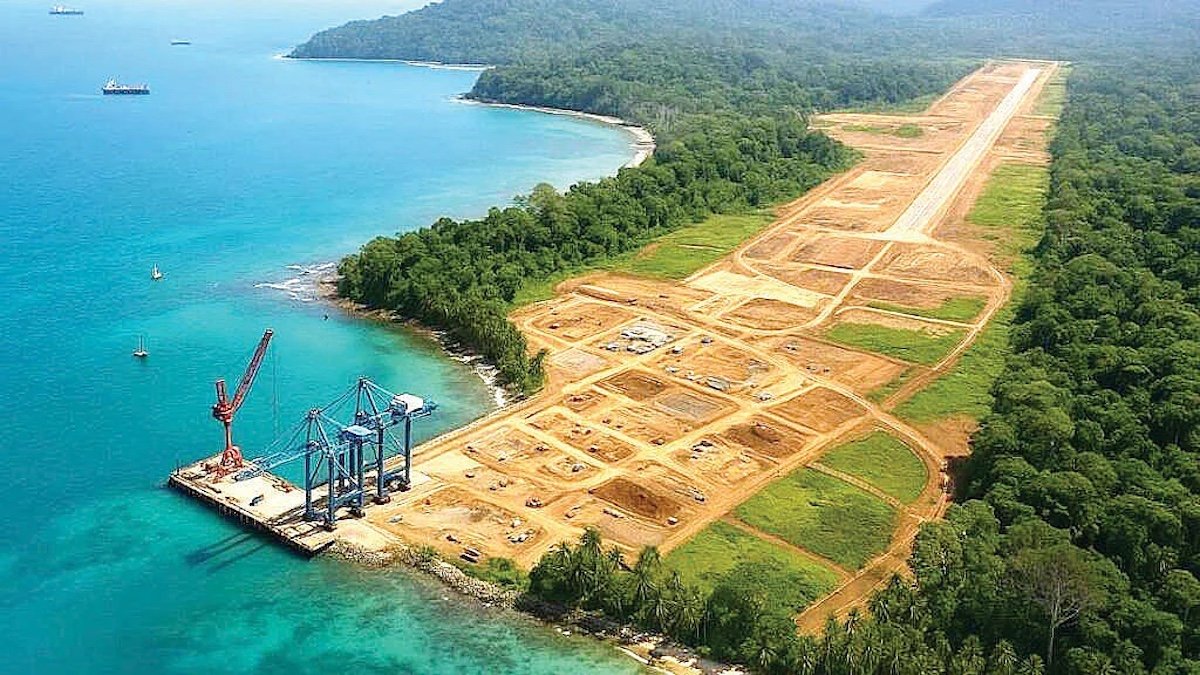
India is pushing its military footprint deep into the Andaman Sea with the construction of a major air and naval base on Great Nicobar Island, its southernmost territory. The project, located just 175 kilometers northwest of Indonesia's Sumatra Island, places New Delhi within striking distance of the Strait of Malacca—the narrow waterway through which more than 70% of China's imported oil flows.
Prime Minister Narendra Modi described the initiative in September as a project of "strategic, defense and national importance" that would transform the region into a hub of maritime and air connectivity in the Indian Ocean. Construction is already underway, with an initial phase enabling air and sea operations expected within a few years.
Strategic Implications for China's Malacca Dilemma
Chinese analysts have warned that the base threatens Beijing's "Malacca lifeline," a term used to describe China's vulnerability to any disruption of shipping through the strait. The Hong Kong-based South China Morning Post reported on May 22 that the project would allow India to monitor activities near this critical trade corridor. Some Indian military veterans argue it could enable New Delhi to "control" or disrupt Chinese supply chains, worsening Beijing's strategic dilemma.
The foreign-run analysis site China Global South Projects noted on May 21 that Chinese analysts see the base as a sign India is turning Great Nicobar into an economic and military outpost near one of China's most important maritime lifelines. This gives India greater ability to project influence across the region and potentially gain leverage over Beijing's access to the Indian Ocean and Southeast Asian sea lanes.
The base includes a Greenfield International Airport capable of handling fighter jets and commercial planes, replacing the tiny airstrip at Campbell Bay, the island's capital. Advanced radar at the existing Indian Naval Air Station Baaz will enhance surveillance over the western mouth of the Malacca Strait, a route also used by the US Seventh Fleet.
Deepwater Port and Economic Ambitions
India is also building a massive deepwater seaport at Galathea Bay on the island's southern coast, facing the Andaman Sea. The International Container Transshipment Terminal is planned to become the nation's largest port, potentially surpassing Mumbai's facilities. Lieutenant Governor Kumar Joshi said it may compete to become the container handling hub for the entire Indo-Pacific region.
Similar to ports in Singapore, Malaysia, and Sri Lanka, the terminal will allow large vessels to transship cargo to smaller ships serving Southeast Asian ports. This would reduce India's reliance on foreign ports and lower costs for its own transshipments. New Delhi also expects revenue from refueling, repair, warehousing, and other commercial services for international vessels transiting the strait.
The project is being executed in phases, with an initial opening planned for 2028 and expansion over the next 20 years. A new power plant and a town larger than the current capital are planned, with over half a million mainland Indians expected to relocate to operate the facilities. Enthusiasts predict the island could become the next Hong Kong by mid-century.
Human and Environmental Costs
The development threatens the island's approximately 1,200 residents, including about 300 Shompen tribespeople, among the most isolated and uncontacted communities on Earth. Survival International, a British campaign group, has petitioned New Delhi warning that the project could lead to genocide of the Shompen, who have lived in harmony with the island's rainforest for centuries. The petition, signed by 39 prominent scholars, expresses "utmost concern" that the plan to turn the island into the "Hong Kong of India" will destroy their way of life.
The project also raises broader questions about regional stability. As India strengthens its position near the Malacca Strait, it risks escalating tensions with China, which views the waterway as a strategic vulnerability. The base could become a flashpoint in any future conflict, especially given the broader context of Iran's Hormuz blockade and the increasing focus on narrow shipping routes as choke points in global trade.
For now, New Delhi is pressing ahead, balancing strategic ambition against the human and environmental costs of transforming one of the world's most remote islands into a linchpin of Indo-Pacific security.