Bank Indonesia's off-cycle rate hike on June 9 was a stark signal of how quickly Southeast Asia's largest economy is unraveling. The 25-basis-point increase, lifting the benchmark to 5.50%, was a direct response to the rupiah breaching 18,000 to the dollar—a record low. But the move is less a solution than a symptom of deeper, self-inflicted wounds.
The rupiah's slide is part of a regional pattern: the Indian rupee is under pressure despite heavy Reserve Bank of India intervention, the Philippine peso is weakening, the South Korean won is falling even as global funds pour into Seoul's equities, and the Malaysian ringgit continues to decline. The common driver is a runaway US dollar, but Indonesia's vulnerabilities are uniquely homegrown.
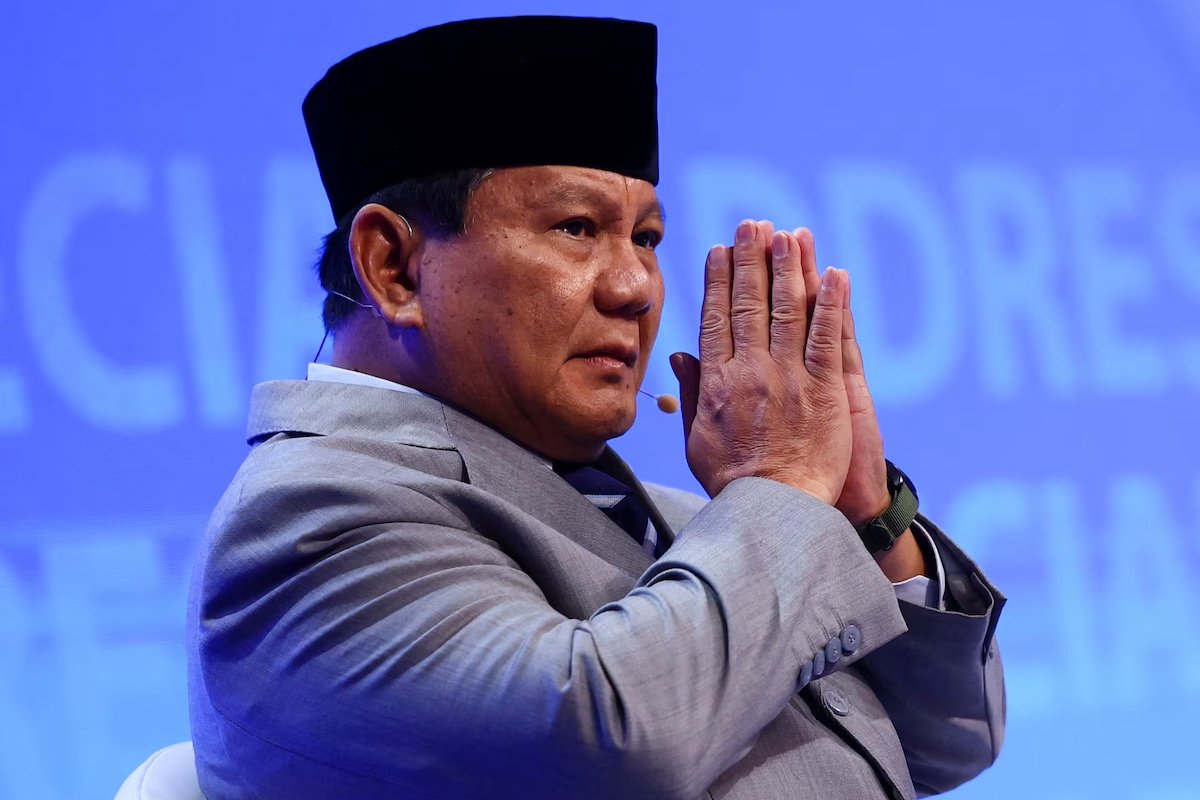
Prabowo's Policy Mix Spooks Markets
President Prabowo Subianto's administration has compounded structural weaknesses—twin fiscal and current-account deficits—with political interference in economic institutions. Investors are openly discussing a "sell Indonesia" trade, driving Jakarta equities to five-year lows. The MSCI's consideration of downgrading Indonesia to frontier-market status has cast a months-long shadow over the rupiah and asset markets.
The timing could not be worse. The Iran war keeps global energy prices elevated, and US President Donald Trump's latest tariff salvo—10% levies on at least 60 economies, including Indonesia—adds external pressure. As Suryaputra Wijaksana of UOB Kay Hian noted, the off-cycle rate hike "signals that the US-Iran war is now materially impacting Indonesia's economy and external balance."
Yet the crisis is also a story of policy missteps. In September 2025, Prabowo dismissed globally respected Finance Minister Sri Mulyani Indrawati, long seen as a check on fiscal profligacy. Her replacement, Purbaya Yudhi Sadewa, quickly oversaw a $12 billion fiscal injection to spur lending and pushed a controversial "burden-sharing" plan that pressured Bank Indonesia to loosen policy. The result: a policy mix so unpredictable that even as the central bank hikes rates, the finance ministry is stoking demand.
Last week, lawmakers approved legislation expanding Bank Indonesia's mandate to include boosting economic growth—a dual mandate that supporters compare to the US Federal Reserve. But the law also subjects BI officials to parliamentary performance evaluations, raising clear red flags about institutional independence. Concerns had already intensified after Prabowo nominated his nephew, Thomas Djiwandono, to BI's Board of Governors in January.
As Jason Tuvey of Capital Economics put it, "What investors are looking for is a shift in the policy direction of President Prabowo and his government, and so far, that doesn't seem to be in the works." Citigroup economist Helmi Arman added: "We have not seen much announced in terms of structural policies that addresses the perceived deterioration of the investment climate."
In the near term, markets brace for more rate hikes. With the May move, BI has delivered 75 basis points of tightening in just three weeks. Foreign-exchange intervention has failed to steady the rupiah: BI disclosed that FX reserves fell to $144.9 billion at the end of May, down $1.3 billion from April—a sign of how costly defending the currency has become.
BI's statement after the rate hike pledged to strengthen "fiscal-monetary coordination," but it is precisely that coordination—under political pressure—that is spooking investors. The rupiah's crisis is not just about the dollar; it is a story of policy missteps and structural strains that Jakarta seems unwilling to address.
Indonesia's return to living dangerously is a gamble it can ill afford. With global headwinds mounting and investor confidence eroding, the window for a course correction is narrowing. Whether Prabowo's team will seize it—or double down on its current path—remains the defining question for Southeast Asia's largest economy.