Two months after the United States and Israel launched military operations against Iran, the conflict shows no signs of a swift resolution. While much analysis has focused on the military and diplomatic deadlock, the war has also exposed a quieter but significant shift: the diminishing power of US economic coercion.
For decades, Washington has wielded sanctions as a primary tool of statecraft—against North Korea under Kim Jong Un, Russia after its invasion of Ukraine, and Iran since the 1979 revolution. The US, as the world’s dominant economic and military power, could effectively isolate adversaries from global finance. But the Iran conflict suggests that era may be ending.
Sanctions Lose Their Bite
Since the 1979 rupture in US-Iran relations, successive American administrations have imposed a mix of primary, secondary, and targeted financial sanctions on Tehran. The stated reasons ranged from Iran’s alleged state sponsorship of terrorism to its nuclear program. The 2015 Joint Comprehensive Plan of Action (JCPOA) offered sanctions relief in exchange for nuclear limits, but the US withdrawal in 2018 under then-President Donald Trump reimposed penalties and triggered a maximum pressure campaign.
Initially, that strategy worked: most global firms, fearing US legal repercussions, avoided business with Iran. The Iranian economy suffered crushing inflation and soaring food prices. Yet the collapse of the JCPOA—and the failure of the Biden administration to reenter it—pushed Tehran to adapt.
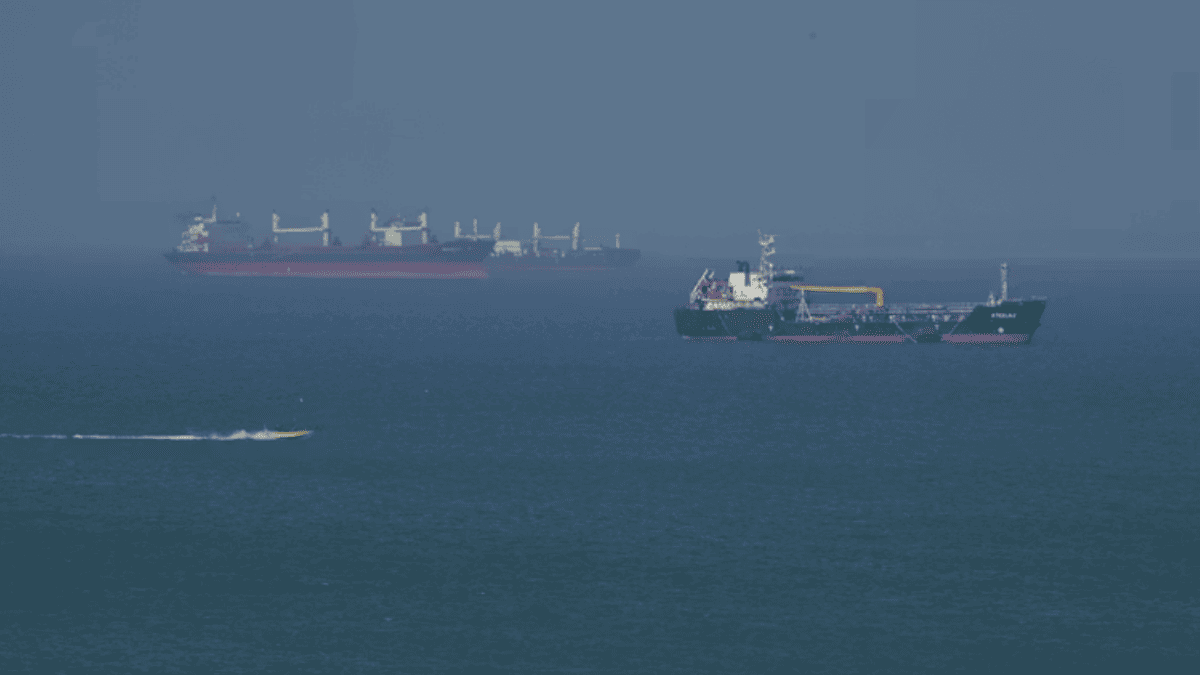
Iran has since developed increasingly creative workarounds. It operates so-called shadow fleets to ship illicit goods, produces cheap but effective homemade drones, and has reoriented its trade away from Europe toward China and Russia. As Iran deepens ties with Beijing and Moscow, the US and its allies have lost significant economic leverage. Even if a diplomatic deal were reached to reopen the Strait of Hormuz, Iran has signaled it would demand tolls from commercial ships—a condition that did not exist before the war.
The result is that US sanctions, rather than forcing Iranian capitulation, appear to be hardening Tehran’s resolve. The ongoing de facto closure of the Strait of Hormuz has redirected economic pain back at Washington.
Energy Blowback Hits American Consumers
The most immediate cost for the US has been in energy markets. America is now one of the world’s largest exporters of crude and refined petroleum, making it highly sensitive to oil price volatility. When US foreign policy disrupts oil trade, the blowback is felt at the pump.
Oil prices have climbed to their highest levels since 2022, driving up gasoline costs for American households. This creates political risks for the Trump administration, which has already taken steps to ease disruptions by relaxing sanctions on Russian and Iranian oil—a move that undermines its own policy but has done little to offset rising fuel prices.
The broader lesson is clear: in a multipolar world where China and other powers offer alternative economic partnerships, US sanctions are no longer the decisive weapon they once were. As global economic institutions reassess state-led growth models, the Iran conflict underscores that economic coercion has limits—especially when targeted states can pivot to new allies and bypass traditional financial systems.
For the Indo-Pacific, this shift carries implications. If the US cannot effectively sanction a mid-tier power like Iran, its ability to enforce economic pressure on larger adversaries—such as China or North Korea—may also be eroding. The war in Iran is not just a military stalemate; it is a signal that the architecture of US economic power is fraying.