In early 2026, back-channel negotiations between Washington and Tehran over Iran's nuclear program are unraveling, with consequences that ripple across the Indo-Pacific. The talks, which preceded US military strikes on Iran on February 28, 2026, have exposed a stark asymmetry in diplomatic expertise: Iran fields a team of seasoned nuclear negotiators, while the United States relies on political appointees with no background in arms control.
The Iranian delegation is led by Foreign Minister Abbas Araghchi, a veteran of every major nuclear negotiation since the crisis began. Araghchi, who holds a doctorate in political thought from the University of Kent, was deputy chief negotiator under Mohammad Javad Zarif during the 2015 Joint Comprehensive Plan of Action (JCPOA). Beside him sits Mohammad Bagher Ghalibaf, the parliamentary speaker, a former Islamic Revolutionary Guard Corps general and ex-mayor of Tehran, who has direct access to Supreme Leader Mojtaba Khamenei. The team also includes Esmaeil Baghaei Hamaneh, Iran's former permanent representative to the UN in Geneva, and Behzad Saberi Ansari, a doctor of international law who advised the JCPOA team. These are not political appointees; they are institutional memory incarnate, intimately familiar with every technical clause and verification mechanism.
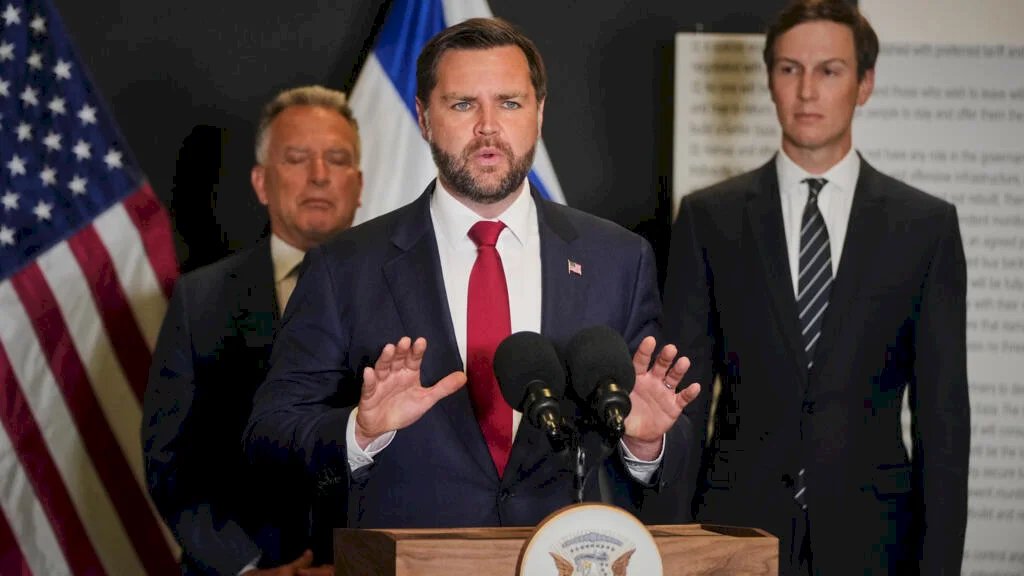
In contrast, the US delegation is led by Steve Witkoff, a New York real-estate developer, and Jared Kushner, the president's son-in-law and a real-estate heir. Vice President JD Vance, who led the first round in Islamabad, has a background in venture capital and the Marines. None have professional experience in nuclear nonproliferation or Iranian politics. According to multiple participants, during early rounds in Muscat, Oman, Araghchi had to give Witkoff basic tutorials on the stages of nuclear fuel production, including the difference between an enrichment facility and a reactor. This on-the-job education formed the foundation for discussions on enrichment levels, stockpile limits, and verification timelines.
Diplomatic Mismatch and Strategic Consequences
The American approach has been described by career diplomats as “presenting demands and waiting for surrender,” rather than the painstaking exploration of trade-offs that produced the 160-page JCPOA. Aaron David Miller, who advised six US secretaries of state on Middle East talks, noted that the advisers around the president have shown little willingness to confront him with the likely consequences of maximalist positions. The most damning evidence came in the days before the February 28 strikes, when Witkoff and Kushner briefed President Trump that the Iranians were “buying time” and that a deal was impossible, claiming Tehran had boasted of possessing enough enriched uranium for eleven nuclear bombs.
Third parties in the room, however, described the same Iranian statement very differently: the Iranians were offering to hand over their entire stockpile as part of a comprehensive deal in exchange for sanctions relief. The same words, two opposite meanings. One interpretation pointed to war; the other to a breakthrough. The man responsible for interpreting Iran's position for the US president got it wrong—or at least framed it in a way that those present called inaccurate. Oman's foreign minister, the official mediator, was reportedly so alarmed that he flew to Washington for an emergency briefing to set the record straight. By then, the decision to strike had already been made.
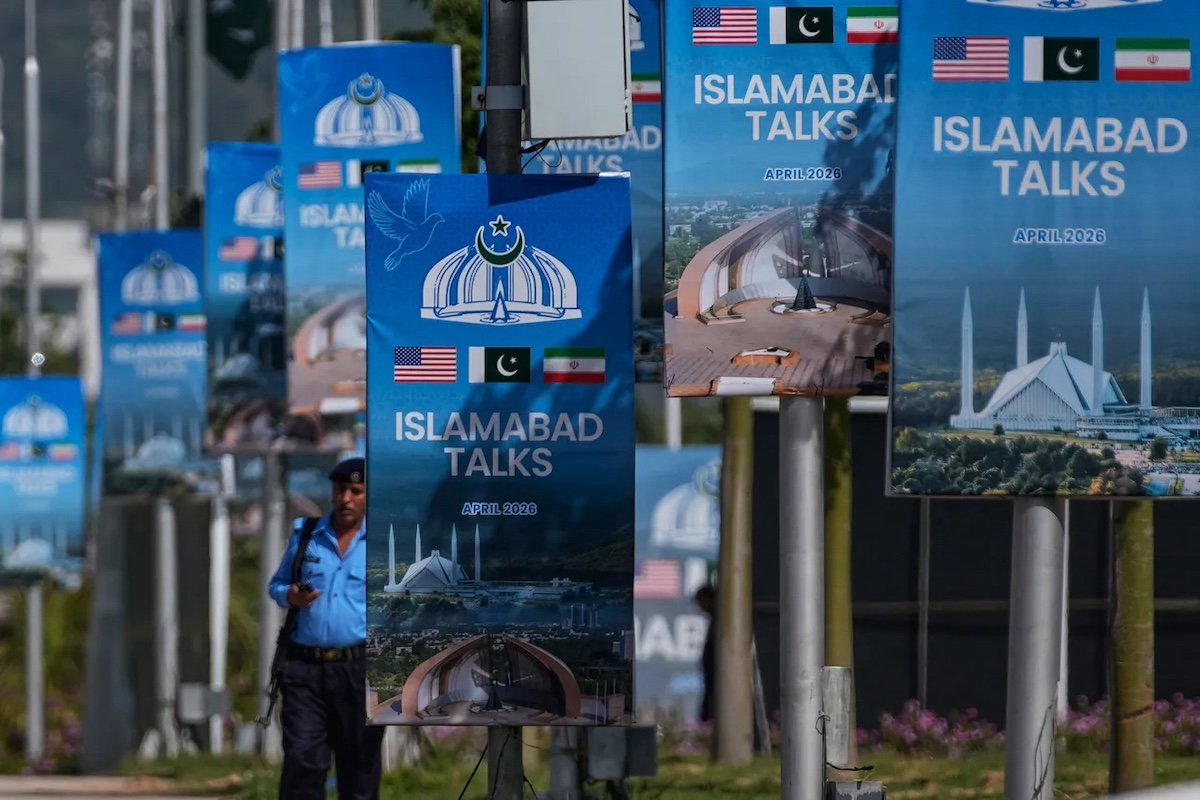
The ceasefire that followed the strikes is now teetering, and was set to expire until Trump extended it indefinitely. The same American team is expected to return to the negotiation table in Pakistan. Analysts say the outcome is a foregone conclusion unless there is a dramatic change in personnel and approach. The US is negotiating with Iran using a poker approach: a game of hidden cards, bluffs, and short-term bets. It assumes that a single winning hand—a maximalist demand, a threat of force—can substitute for the deep knowledge and skill that Iran's diplomats bring.
This asymmetry has broader implications for the Indo-Pacific. The Strait of Hormuz, through which a significant portion of global oil flows, is a chokepoint that directly affects energy markets in China, India, Japan, and South Korea. A collapse of diplomacy could lead to renewed conflict, disrupting supply chains and raising energy prices across the region. For a deeper analysis of how algorithmic prediction falls short in such high-stakes diplomacy, see Why AI Will Never Master Diplomacy: The Limits of Algorithmic Prediction. Meanwhile, the Trump administration's broader strategy has been debated; some argue that coercive diplomacy has paid off, while others point to the strategic calculus behind pulling back from war.
The contrast between the two teams is not just a matter of individual competence; it reflects a deeper structural problem. The US has systematically hollowed out its diplomatic corps, relying on political appointees who lack the technical expertise needed for complex negotiations. Iran, by contrast, has maintained a cadre of specialists who have spent decades mastering the nuclear file. As the talks resume in Islamabad, the question is whether the US can learn from its mistakes—or whether the region will pay the price for its inexperience.