Twelve weeks into the Iran conflict, the silence that follows a war's opening salvos has become deafening. The confident predictions of think tanks and cable news—that strikes would be surgical, that a weakened Iran would fold, that the Strait of Hormuz would remain open—have collided with a stubborn reality. The war's architects, it turns out, misread their adversary and the region in ways that were entirely foreseeable.
The first miscalculation concerned the nature of the Iranian regime. Supporters of the war argued that a state battered by sanctions, stripped of Hezbollah's deterrent shield, and abandoned by a collapsed Assad in Damascus would prove brittle. The assassination of Supreme Leader Ali Khamenei on February 28 was expected to trigger, if not a Persian spring, then at least a chastened autumn. Instead, the Interim Leadership Council has hardened, decentralized, and become more difficult to negotiate with. The hawks confused the absence of a single decision-maker with the absence of decision-making.
The second miscalculation was the theory of limited retaliation. Tehran, the argument ran, would calibrate its response to preserve regime survival—absorbing blows, lashing out symbolically, and returning to the table on terms favorable to Washington and Jerusalem. This was a curious belief about an adversary whose entire doctrine of strategic depth—proxies, missiles, maritime harassment—was built precisely to make limited war impossible. Iran has now struck American bases in Qatar, the UAE, Bahrain, Saudi Arabia, Kuwait, Jordan, and Iraq. The Houthis have closed the Bab el-Mandeb. The Strait of Hormuz functions intermittently, on Iranian sufferance. This was the predictable response; it was predicted.
The Regional Coalition That Never Was
The third miscalculation concerned the regional coalition. The architects of this war seem genuinely to have believed that the Abraham Accords had produced something more than a transactional arrangement—that the Gulf states' quiet animosity toward Iran would translate into active alignment with an American war. It has not. Riyadh allowed its airspace to be used and then, within forty-eight hours, was on the phone to Beijing. Pakistan, locked into its defense pact with the Saudis, has spent ten weeks mediating ceasefires it cannot enforce. Turkey is hedging. The UAE intercepted Iranian missiles and simultaneously expanded its trade corridors with Tehran's commercial partners. This is not coalition warfare; this is a region trying not to be set on fire by its security guarantor. As post-war Gulf states rethink security ties and deepen economic links with China, the limits of American-led coalitions become ever more apparent.
The fourth miscalculation is the question of what victory was supposed to look like. Read the official justifications in sequence: degrade the nuclear program, restore deterrence, induce regime change, reassert primacy. These are not the same objective; they are not even compatible objectives. A war whose purposes multiply as its costs mount is a war whose architects did not know what they wanted before they began. Clausewitz had something to say about wars conducted without a clear political object, and none of it was flattering.
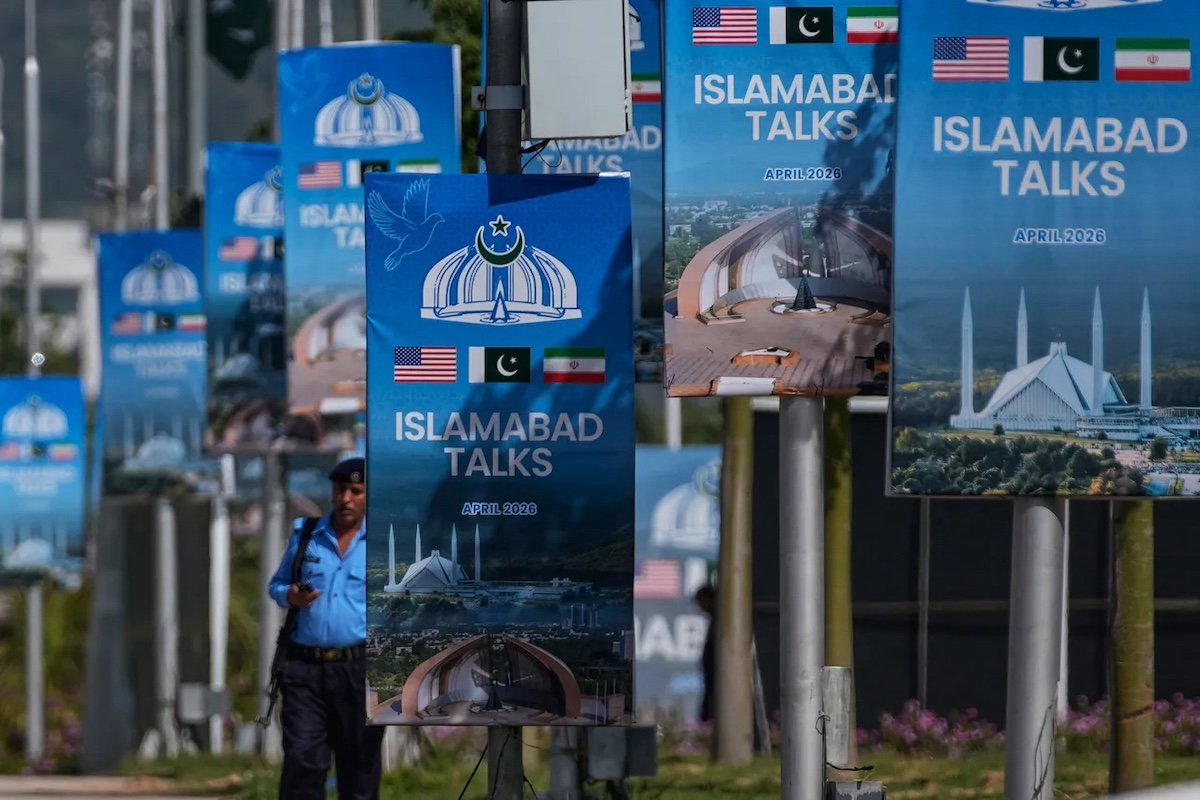
The fifth miscalculation concerned the American public. Supporters assured themselves that the absence of large-scale ground commitments would keep this conflict politically manageable at home. They are now discovering, as their predecessors discovered in 1965 and 1991 and 2003, that wars begun with airstrikes do not end with airstrikes—they end with body bags, blockades, fuel-price shocks, and a citizenry that begins to ask who exactly authorized this. The naval blockade now in place, the failed Islamabad talks, and the prospect of escalation through the Lebanese front were not on the menu the country thought it was ordering.
I take no pleasure in this. The realist tradition does not enjoy being vindicated by catastrophe. But it has been the recurring fate of Washington's foreign-policy establishment to mistake the absence of immediate cost for the absence of cost altogether—to confuse the silence that precedes consequences with the absence of consequences. Iran's restraint in 2024 and 2025 was read in Washington as weakness; it should have been read as patience. The war's defenders will, in time, produce the explanations they always produce: the plan was sound, the execution flawed, the Iranians did not behave as they were supposed to, the allies were unreliable. The lessons will be that next time we must be more committed, more unified. These are the lessons that never learn.