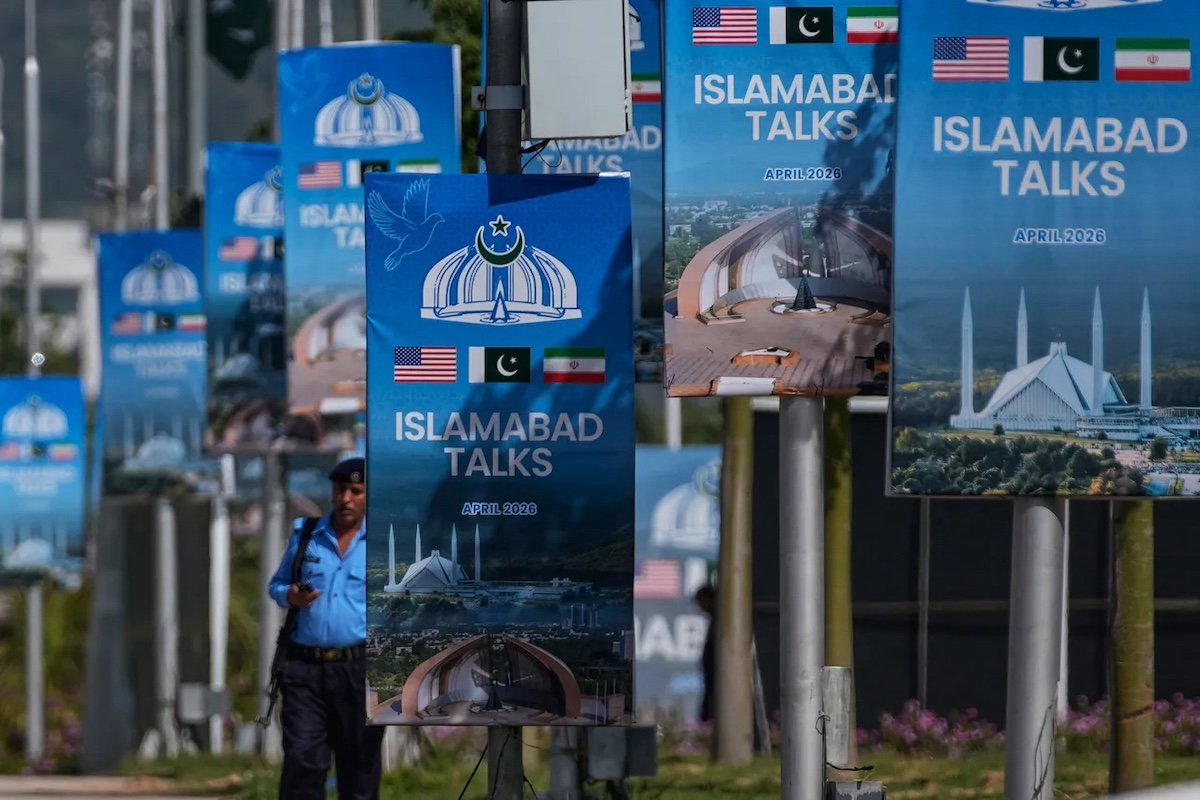
Israel carried out airstrikes on the southern suburbs of Beirut on Sunday, hours after US President Donald Trump said he expected a memorandum of understanding (MOU) with Iran to be signed as early as that day. The timing has fueled accusations that Prime Minister Benjamin Netanyahu's government is deliberately trying to derail the emerging US-Iran deal.
Lebanese authorities reported that the strikes hit a five-story apartment building, killing at least three people. Netanyahu stated the bombing was a response to Hezbollah rocket fire into northern Israel. However, the attack came just as Iranian and US officials expressed growing confidence that a diplomatic agreement was within reach.
Timing Raises Questions
The Associated Press noted that the new strikes "threatened to hamper negotiations over a deal, which in its current form is a deep disappointment to Israel's government." The last Israeli strike on the Beirut suburbs, a week earlier, had triggered the most serious escalation between Iran and Israel since a tenuous ceasefire took effect on April 7.
Kenneth Roth, former executive director of Human Rights Watch, wrote on social media that "as a US-Iranian deal seems like it might be closer, Israel predictably bombs the Beirut suburbs, evidently hoping to sabotage the deal." He questioned why Trump "puts up with this and continue[s] to arm and fund such obstructionism."
Iran's chief negotiator and speaker of parliament, Mohammad Bagher Ghalibaf, said the strikes indicate that the US "either does not have the will or the ability to fulfill its obligations." He added, "You cannot gain concessions by giving [Israel] a green light. The good cop, bad cop routine has become old."
Details of the Emerging Deal
While the full text of the MOU has not been released, Reuters reported that a final draft covers a range of issues from Tehran's nuclear work to reopening the Strait of Hormuz and US waivers on oil sanctions. A final deal would be negotiated within 60 days after both sides agree to the MOU.
Under the reported terms, Iran would immediately reopen the Strait of Hormuz, and the US would end its blockade of Iranian ports. The US would also waive oil sanctions on Iran and release $25 billion in frozen Iranian assets. In return, Iran would maintain the current status of its nuclear program, refraining from further uranium enrichment and expansion of nuclear facilities.
Iranian Foreign Minister Abbas Araghchi said in a television interview on Friday that the MOU's proposed 60-day ceasefire extension would include Lebanon.
Netanyahu's Isolation
Axios reported that Netanyahu has "found himself in the dark" as US-Iran negotiations progressed, calling allies close to the Trump administration to gather information. Following Sunday's strike, Trump told Axios's Barak Ravid that Netanyahu "has no fucking judgment." Trump added, "I passed this message on to him – that I am very unhappy with the attack in Beirut."
The Trump administration has approved billions of dollars in weapons sales to Israel, a fact that critics say undermines US leverage. Trita Parsi, executive vice president of the Quincy Institute, warned that "Israel will do more sabotage unless Trump imposes a cost on Israel." Parsi argued that "Netanyahu knows exactly what he is doing and is judging that an attack on Beirut – rather than southern Lebanon – is exactly what's needed to derail the pending US-Iran deal."
For a broader perspective on the region's dynamics, see our analysis on the limits of military force in the Middle East. The incident also echoes earlier tensions, as detailed in our report on Israel's strike on Iran after Trump urged restraint. For more on the shifting US-Israel relationship, read Trump's leaked fury at Netanyahu.