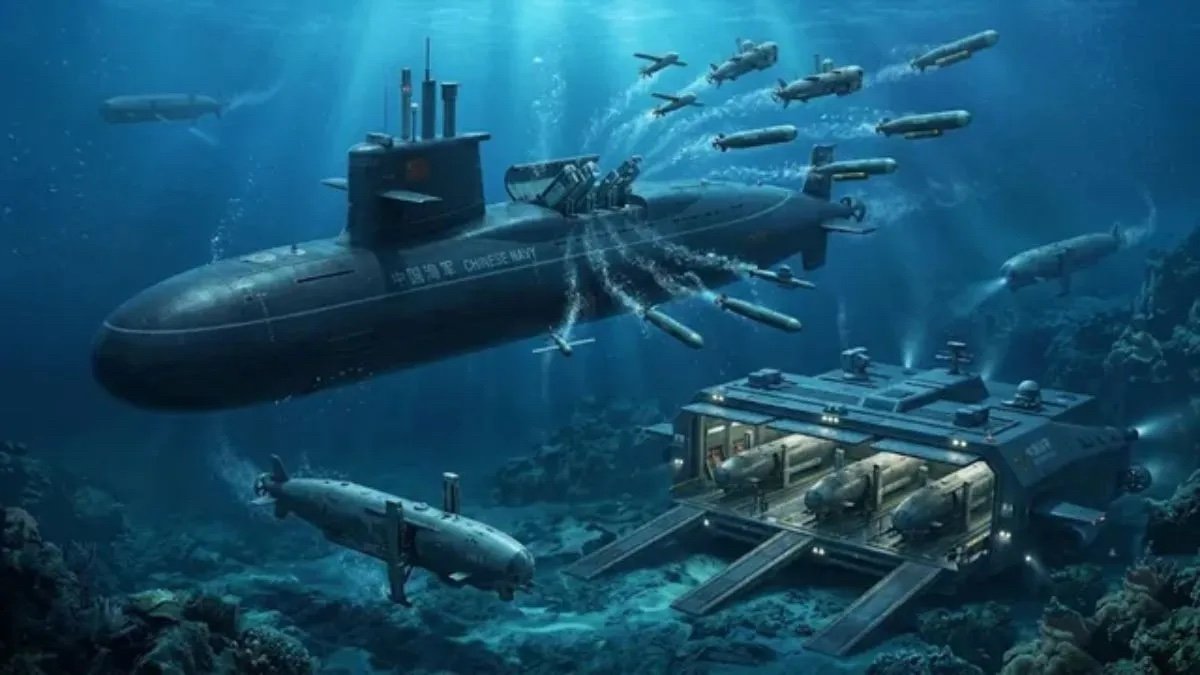
Japan's recent tests of Tomahawk and upgraded Type-12 missiles mark a decisive move beyond its traditional interception-only defense posture, signaling a more assertive counterstrike capability. But the country's rapidly expanding missile reach is outpacing the targeting networks, stockpiles, and alliance arrangements needed to employ these weapons credibly.
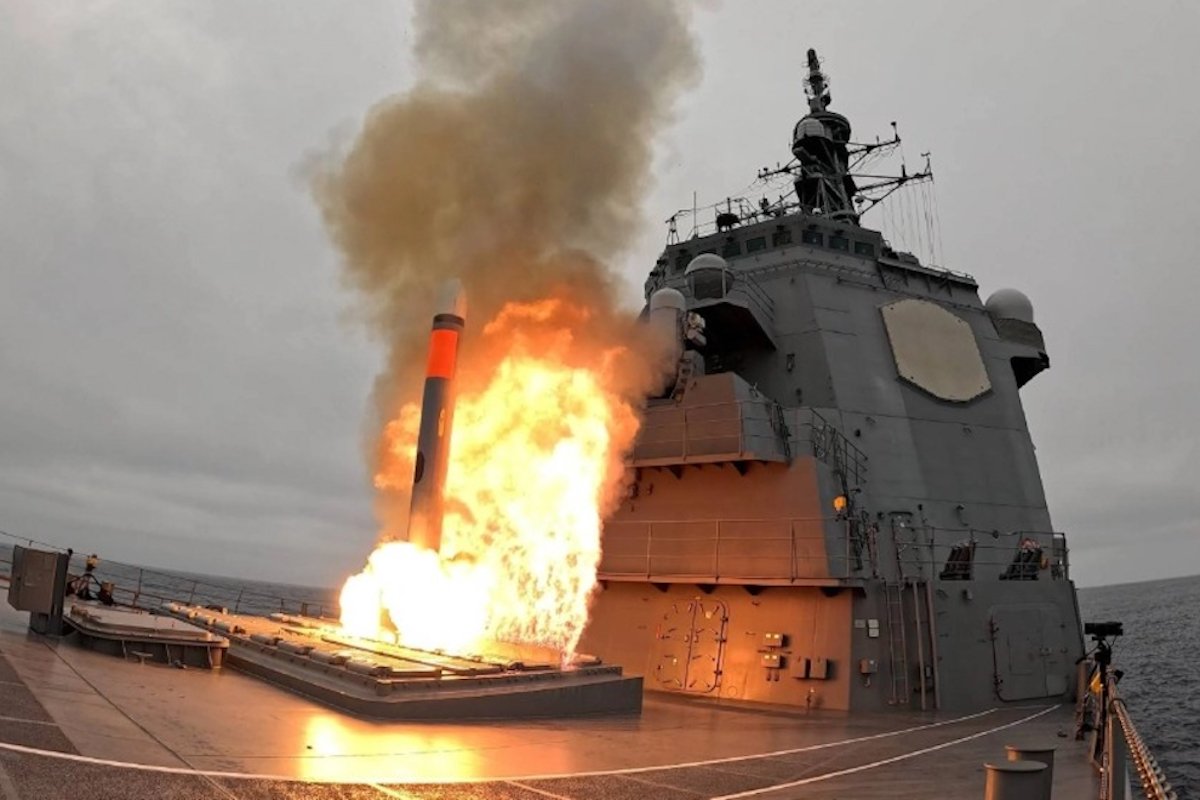
In late July, the Japan Maritime Self-Defense Force, with support from the US Navy, launched a Tomahawk land-attack cruise missile from the Kongo-class Aegis destroyer JS Chokai in the Pacific. This made Japan the third foreign country to fire the weapon from a surface warship. At Gifu Air Base, the Japan Air Self-Defense Force began flight testing an F-2 fighter equipped with the air-launched Upgraded Type-12 Surface-to-Ship Missile, a system designed to strike targets at ranges up to 1,600 kilometers.
Japan is procuring 400 US Tomahawk missiles as an interim capability while developing indigenous standoff missiles for deployment by fiscal year 2027. The goal is to deter China without formally abandoning its exclusively defense-oriented posture.
Capabilities vs. architecture
In a March 2026 report by the International Institute for Strategic Studies (IISS), Rupert Schulenburg places these new standoff weapons within a broader strike architecture. He argues that ship-launched Tomahawks would give Japan a naval capability for deep precision strikes, while the Upgraded Type-12 missile, with a reported range of at least 900 kilometers, will substantially expand the Japan Self-Defense Forces' (JSDF) maritime-strike reach compared to existing systems like the ground force's 200-kilometer Type-12 and the air force's 180-kilometer ASM-2.
However, a December 2025 International Crisis Group (ICG) report notes that Japan still lacks an independent kill chain capable of finding and tracking targets, launching strikes, and assessing damage. It remains dependent on US capabilities across those functions.
That dependence leaves Japan's counterstrike force vulnerable to alliance friction and Chinese disruption, argue Kaitlyn Early and Carl Rehberg in a 2026 Helms School of Government conference paper. They contend that Japanese missiles become credible only when the US synchronizes intelligence, surveillance, and reconnaissance (ISR), planning, and targeting within a unified denial posture; otherwise, they appear fragmented and exert less influence on China.
Mixed US signaling, force-posture gaps, and incomplete integration further weaken that credibility, particularly in a Taiwan contingency where compressed timelines would leave little room for delayed intelligence, political hesitation, or disrupted command networks.
Logistics and industrial base
The logistics picture is equally problematic. Masashi Murano and William Chou argue in a June 2026 Hudson Institute report that Japan's munitions industry lacks scale, relies on fragile supply chains, and remains dependent on foreign components and allocation decisions. Tomahawk deliveries are particularly exposed: US production increases will take years, while active wars and global demand intensify competition for scarce munitions. Murano and Chou cite lead times of up to 47 months for the missile.
Japan has also prioritized expensive platforms—including F-35 fighters, upgraded F-15s, and Aegis-equipped vessels—over sufficient stocks of missiles and interceptors, leaving its inventories and industrial capacity ill-prepared for sustained, high-intensity combat. This echoes broader concerns about US missile stockpile shortfalls that affect allied planning.
Doctrinal and alliance challenges
The doctrinal problem is how to strengthen deterrence without destabilizing the alliance arrangements that have long governed Japan's use of force. Satoru Mori and Shinichi Kitaoka argue in a 2022 RAND report that China's growing missile capacity and saturation tactics make relying solely on ballistic missile interception inadequate for Japan's defense. They propose adding a limited counterstrike capability—conducted as a proportional, retaliatory measure after being attacked first—targeting fixed coastal military infrastructure such as air bases, naval ports, logistics hubs, radar sites, and command headquarters.
In the same report, Jeffrey Hornung analyzes the operational implications for the alliance, noting that the allies are “woefully behind the curve” on bilateral planning. He stresses that integrating long-range fires will require deep synchronization across joint targeting, command-and-control structures, C4ISR hardware dependencies, and active/passive force protection for Japanese launch sites.
Those coordination problems persist. In an April 2026 Center for Strategic and International Studies (CSIS) report, Kristi Govella and Nicholas Szechenyi argue that US-Japan alignment is being strained by divergent priorities and incomplete mechanisms for employing Japan's new capabilities. The US emphasizes allied burden sharing while dividing its attention among the Indo-Pacific, Western Hemisphere, and Middle East; Japan remains focused on China, North Korea, and preserving the regional order.
New command structures still lack clarity over delegated authority, frontline decision-making, and coordination with US Indo-Pacific Command. The allies have also yet to settle arrangements for intelligence sharing, targeting, real-time decisions, and the operational division of labor surrounding Japanese strikes. Legal limits on Japanese force employment, doubts about extended deterrence, and unresolved alliance roles could therefore leave the new missiles operationally disconnected despite otherwise smooth cooperation at lower levels.
The domestic debate has meanwhile shifted from whether Japan should possess long-range missiles to how it will use them effectively. As Japan builds its counterstrike capability, it must also build the supporting architecture—targeting, logistics, and alliance integration—to make those weapons credible. Without that, the missile leap may be more symbolic than strategic.