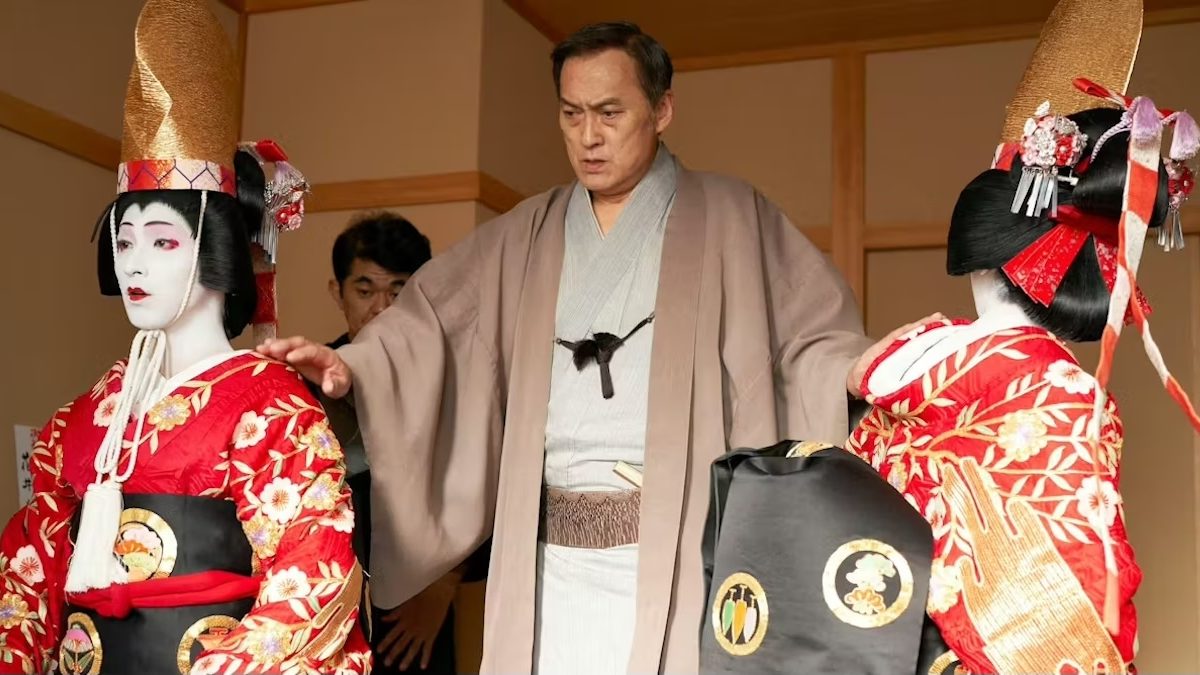
In Japan, a film about kabuki—the country's most celebrated traditional theater—has shattered box office records. Kokuho, which translates to “national treasure,” is now the highest-grossing live-action film in Japanese history. The nearly three-hour epic spans five decades and immerses viewers in the rigorous, hereditary world of kabuki, where only a handful of actors ever earn the official title of ningen kokuho (living national treasure).
The term “national treasure” in Japan typically evokes Buddhist temples, tea bowls, or imperial calligraphy. But Kokuho focuses on the human embodiment of tradition: artisans like potters, dyers, and swordsmiths, but most famously, kabuki actors. Today, only six kabuki actors in Japan hold this rarefied status.
An Orphan's Ascent in a Closed World
The film traces Kikuo (played as an adult by Ryo Yoshizawa), the orphaned son of a Hiroshima gangster. Entering kabuki in the late 1940s, he trains as an onnagata—a male actor specializing in female roles—under the stern guidance of Osaka master Hanjiro (Ken Watanabe). Kikuo's journey includes a fraught friendship with Hanjiro's son Shunsuke (Ryusei Yokohama) and culminates in his elevation to kokuho in the 1980s.
Professional kabuki is an all-male, family-dominated world where stage names pass from father to son. Outsiders rarely succeed. Kokuho poses a culturally specific question: what makes a star kabuki actor—hard work or blood? This is a far more nuanced take than typical A Star is Born narratives.
The film excels in depicting kabuki's offstage and backstage life. Training is brutal: teenage Kikuo and Shunsuke strip to the waist, sweating through endless dance sequences until they internalize them to Hanjiro's satisfaction. Real kabuki actors begin training at age five or six, growing up on stage under the watchful eyes of audiences who age alongside them.
Kabuki has survived as commercial theater for over 400 years, and impresarios constantly seek handsome actors to attract new fans. This often means pushing young performers into roles before they are ready—a reality Kokuho captures when Kikuo, trembling backstage before his first starring female role, begs Shunsuke for a cup of his blood to drink, fearing his training may not suffice.
The onstage scenes, shot by Tunisian cinematographer Sofian El Fani (Blue is the Warmest Color, Timbuktu), are visually stunning. They draw on kabuki's vibrant costumes and sets, with carefully selected historical plays—mostly spectacular dance pieces that emphasize rapid costume changes (hikinuki). These choices also allow quick cuts that disguise Yoshizawa's mere 18 months of kabuki training versus the typical 25 years.
The film's answer to its central question—blood or art—is nuanced. It steers clear of sexual or gender identity issues, despite focusing on an onnagata. The only hint comes from butoh dancer Min Tanaka's portrayal of older onnagata Mangiku, who embodies the “fearsome, negative narcissism” that writer Yukio Mishima saw in the great Utaemon Nakamura VI. Instead, the film suggests that Kikuo's traumatized blankness—untouched by lost loves, abandoned children, or his father's violent death—is the true source of his art.
This culminates in the final dance sequence, where the spirit of a heron whirls alone in theatrical paper snow. For Kikuo, identity is created through concentrated beauty in performance. What Japanese audiences have taken from this epic remains an open question.
Kokuho arrives amid broader shifts in Japan's cultural and strategic landscape. As Tokyo navigates tensions with Iran and debates its military normalization, the film offers a deep dive into a tradition that remains fiercely relevant. For more on Japan's evolving role, see our analysis on how the Iran conflict is eroding Japan's trust in US leadership and why some argue it's time to scrap postwar constitutional constraints.