East Asia is entering an era where military balance, economic resilience, technological leadership, and alliance politics are no longer separate policy domains but interconnected elements of a broader contest over regional order. This evolving environment is reshaping assumptions about the timing and drivers of a potential Taiwan crisis.
While many Western analysts have focused on 2027 and key People’s Liberation Army modernization milestones, the more consequential question may be how Beijing evaluates the political conditions under which military capabilities might be employed. In this context, Taiwan’s 2028 presidential election appears to be a greater strategic inflection point than any single military benchmark.
Jonathan Czin, a former CIA and National Security Council China specialist writing in Foreign Affairs, argues that Beijing is focused on Taiwan’s political trajectory rather than on immediate military action. At the same time, a former US naval attaché in Beijing, who continues to travel regularly to China and meet with Chinese officials, offers a different perspective. In conversation with me, he has argued that Washington and Beijing may be moving toward a period of managed coexistence resembling the strategic stability that emerged following normalization in the late 1970s and early 1980s.
Within such a framework, the most important long-term question may become not Taiwan itself but Japan’s place within any emerging US-China understanding. Taiwan remains the focal point of regional tensions, but its future may depend increasingly on broader questions involving China, Japan, American commitments, and Taiwan’s own democratic politics.
Japan and the Taiwan question
The election of Sanae Takaichi marks one of the most significant shifts in Japanese strategic thinking since Shinzo Abe’s second tenure as prime minister (2012-2020). Takaichi has embraced higher defense spending, expanded military capabilities, stronger Indo-Pacific partnerships, and a security agenda built on the assumption that Taiwan’s security and Japan’s security are inseparable. She has repeatedly argued that conflict in the Taiwan Strait would threaten Japanese trade routes, energy supplies, and national security. Her position builds directly upon Abe’s assertion that a Taiwan contingency would become a Japanese contingency.
For Taiwan’s governing Democratic Progressive Party (DPP), Takaichi strengthens deterrence and expands Taiwan’s integration into a broader democratic security network. Beijing, however, continues to portray such developments as evidence that Japan is moving toward a more assertive security posture while failing to adequately address its wartime legacy.
Taiwan Deep Blue’s response and the 2028 election
The strongest opposition to Takaichi’s approach comes from Taiwan’s Deep Blue current within the Kuomintang (KMT). Figures such as Ma Ying-jeou, Hung Hsiu-chu, and Chang Ya-chung emphasize Chinese cultural identity, expanded cross-Strait dialogue, and eventual reconciliation with Beijing. They argue that Taiwan should not become the front line of a broader confrontation between China and an emerging coalition of regional democracies.
To Deep Blue supporters, Takaichi’s vision risks placing Taiwan at the center of a great-power struggle. To Takaichi’s supporters, stronger regional partnerships are precisely what prevent coercion and preserve peace. The rise of Cheng Li-wun as KMT chair has introduced a new variable into cross-Strait politics. Czin argues that Beijing increasingly sees political pathways as offering greater opportunities than immediate military confrontation. Cheng’s emphasis on dialogue and renewed engagement has created expectations in Beijing that Taiwan’s political trajectory could eventually become more favorable.
Yet support for explicitly pro-Beijing policies remains limited within Taiwan, and divisions inside the KMT remain significant. As a result, Beijing’s expectations remain uncertain. This is why the 2028 election looms so large. A KMT victory could validate Beijing’s strategy of patience, political pressure, and economic engagement. A fourth consecutive DPP victory could convince Xi Jinping that years of coercion and persuasion have failed to move Taiwan politically closer to the mainland.
A different strategic perspective: The question is Japan
Where the former US naval attaché in Beijing differs from conventional Taiwan-focused discussions is in his contention that Taiwan may not be the central strategic question at all. He argues that President Trump has not fundamentally altered longstanding US policy and remains broadly within the framework established through earlier understandings between Washington and Beijing. In his view, Washington and Beijing may be moving toward a period of managed coexistence resembling the stability that followed normalization. If such a framework develops through continued Trump-Xi engagement, the central strategic question becomes Japan.
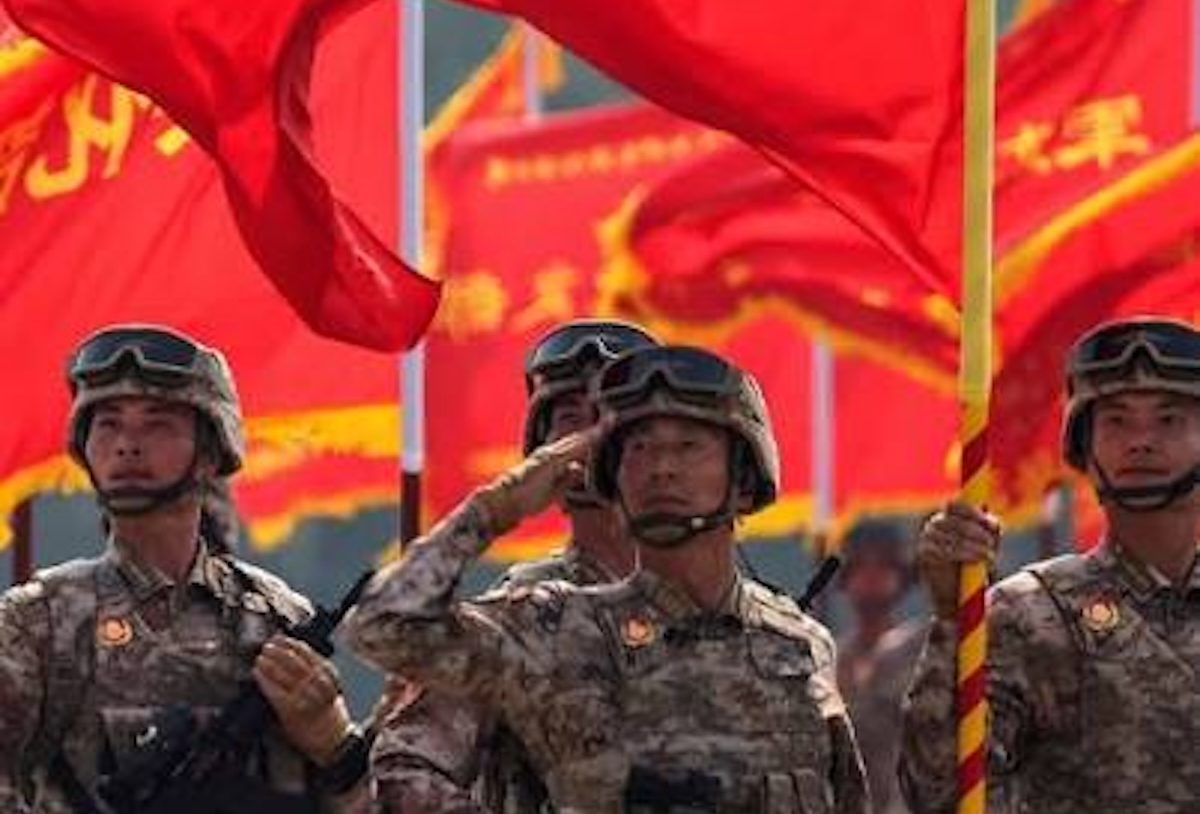
In that context, Takaichi has elevated Taiwan’s security from a regional concern to a core Japanese national security interest. Her position complicates any future US-China condominium and raises the question of how Tokyo fits into a more stable US-China relationship. These competing visions were visible at China’s Xiangshan Forum in September 2026. Taiwan emerged not simply as a territorial dispute but as a test of whether regional order will be defined by Beijing’s sphere of influence or by a network of democratic alliances. As China's amphibious buildup continues, Taiwan's defense calculus becomes ever more intertwined with Japan's posture.
The 2028 election will be a pivotal moment, but the deeper contest is over the rules of the Indo-Pacific. Whether Japan remains a junior partner in a US-China understanding or asserts itself as an independent strategic actor will shape the region for decades. As Taiwan moves to criminalize AI chip exports, the economic and technological dimensions of this rivalry become as critical as military posturing. The coming years will test whether Beijing's patience or Tokyo's resolve prevails.