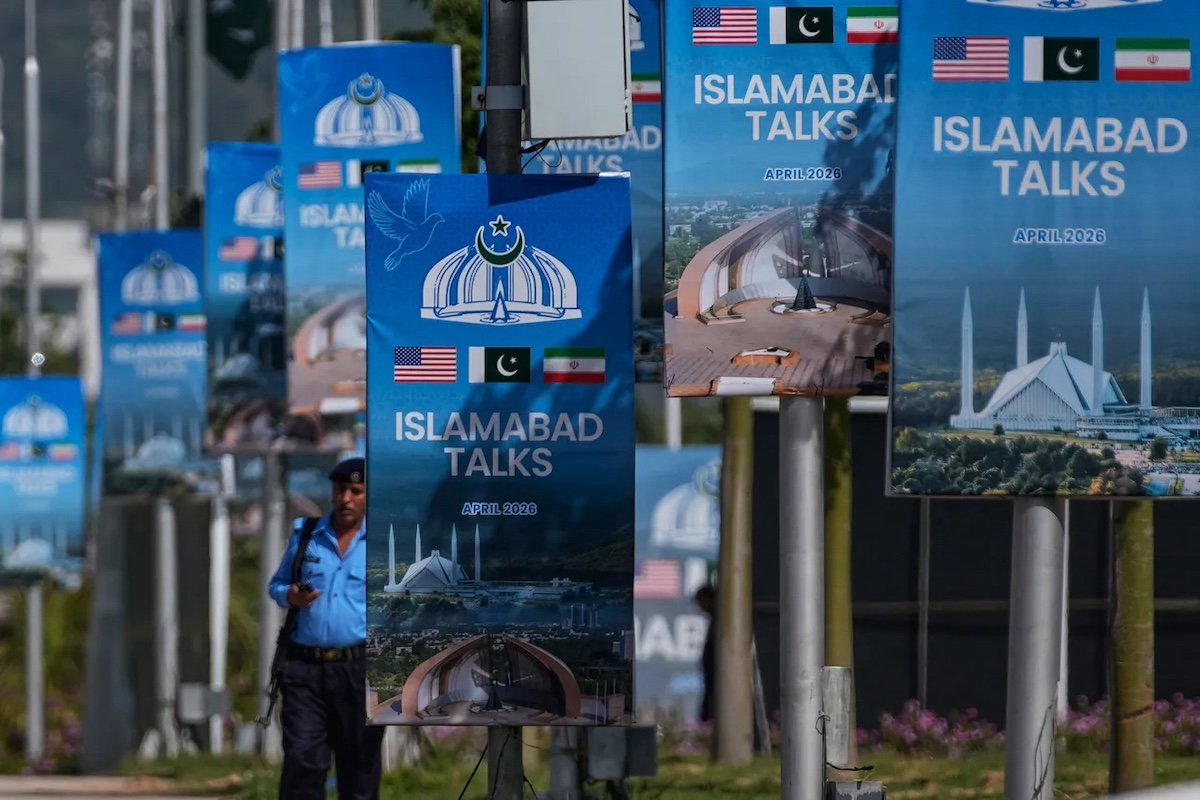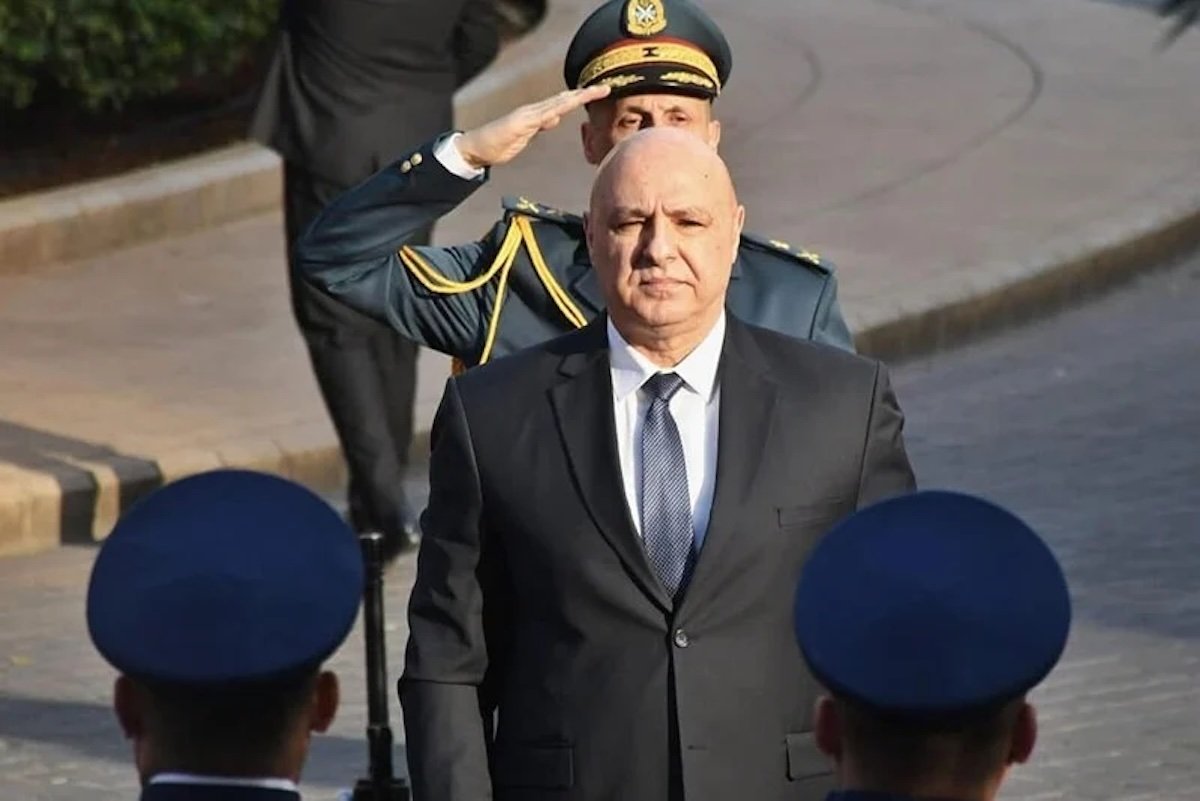
As the United States and Iran edge closer to a framework agreement in Swiss-mediated talks, Lebanon's President Joseph Aoun is fighting to ensure his country is not treated as a mere footnote in the broader Middle East realignment. The Christian president, whose office is one of the few unifying institutions in Lebanon's fractured sectarian system, has grown increasingly vocal in demanding that both Tehran and Washington respect Lebanese sovereignty.
Iran's parliamentary speaker, Mohammad Bagher Ghalibaf, has publicly framed Tehran's support for Hezbollah as a guarantor of Lebanon's territorial integrity. “The efforts of Lebanon's brave fighters and the powerful diplomacy of Iran will guarantee the sovereignty and territorial integrity of beloved Lebanon,” Ghalibaf said. But Aoun sees it differently. In a pointed rebuke, he told Iranian leaders: “It is not your country, it is our country. You are not trying to help us. It is the Lebanese who are paying the price for your own interests, and our interests do not coincide with yours. We are tired and we want to live in peace.”
The United States, for its part, has shown little patience for Lebanon's internal dilemmas. President Donald Trump has publicly criticized Israel's bombing campaign in Lebanon, complaining that Israel “can't just bomb buildings,” but Vice President J.D. Vance, who is overseeing the US-Iran negotiations, has also warned Israel that it “can't just kill your way out of solving every single national security problem.” Yet Washington's primary focus remains the nuclear and regional deal with Iran, not the delicate balance of power in Beirut.
Aoun's frustration boiled over after a weekend phone call with Vance, in which the US vice president briefed him on the expected talks with Iran. “We welcome any assistance to end the war, but we distinguish between assistance and interference in internal affairs,” Aoun said. “We are a sovereign country and no one negotiates on our behalf.”
Two Demands, Two Rejections
Lebanon is sending envoys to Washington on Tuesday, June 22, for a fourth round of negotiations that Trump ordered Israeli Prime Minister Benjamin Netanyahu and Aoun to organize this year. Aoun's agenda is clear: Hezbollah must disarm, and Israel must withdraw from southern Lebanon. But both demands face immediate rejection.
Netanyahu declared on Monday that Israeli forces in southern Lebanon have “full freedom of action to thwart any direct or emerging threat to them or to the residents of the North. The IDF has no restrictions in this regard.” Israel has proposed that Lebanon's army disarm Hezbollah, with Israeli forces providing backup if the militia resists. Aoun calls that unrealistic. Lebanon's army is undertrained and ill-equipped, and Shiites make up 40 percent of its ranks. “Any controversial domestic issue in Lebanon can only be approached through conciliatory, non-confrontational dialogue and communication,” Aoun said. “If not, we will lead Lebanon to ruin. We can't let the country descend into another civil war.”
History offers little comfort. In the early 1980s, the government ordered the army to crack down on Muslim militias; Shiite soldiers deserted en masse. In 2008, when the government tried to dismantle Hezbollah's secret communications network and end its use of Beirut Airport as a transit point for Iranian weapons, Hezbollah forces occupied Sunni-dominated West Beirut. The government capitulated.
Hezbollah's current leader, Naim Qassem, has warned that efforts to disarm the group would lead to a “serious crisis.” “There will be no life in Lebanon,” he said. Mahmoud Qamati, another Hezbollah leader, threatened that “a confrontation with the political authority is inevitable after the war” and vowed that Lebanese officials cooperating with Israel “would pay the price for their betrayal.”
Lebanon's sectarian political system, born under Ottoman and French rule and codified at independence in 1945, divides power among Christians, Sunni Muslims, and Shiite Muslims. The presidency is reserved for a Christian, the prime minister's post for a Sunni, and the speakership of parliament for a Shiite. The system was designed to reduce conflict but has instead entrenched rivalries that have repeatedly turned violent. Outsiders have often made things worse. In 1982, Israel invaded to expel the Palestine Liberation Organization and install Christian leader Bashir Gemayel as president, hoping for a peace treaty. Syria orchestrated Gemayel's assassination, and guerrillas drove Israeli forces into southern Lebanon, where they remained for 18 years.
Iran, a Shiite-majority state, along with Syria, backed Hezbollah's rise. Israel withdrew from southern Lebanon in 2000, unable to subdue the militia. Hezbollah did not disband but instead found a new mission: to expel Israel from the Sheba Farms, a small territory at the edge of the Golan Heights that Israel seized from Syria in 1967. That conflict remains unresolved, and Lebanon's latest attempt to find its place on the map is once again overshadowed by the ambitions of larger powers.
For Aoun, the stakes could not be higher. As the US-Iran framework agreement takes shape, Lebanon risks being treated as a bargaining chip rather than a sovereign state. The president's message to both Washington and Tehran is simple: Lebanon will not be negotiated over.