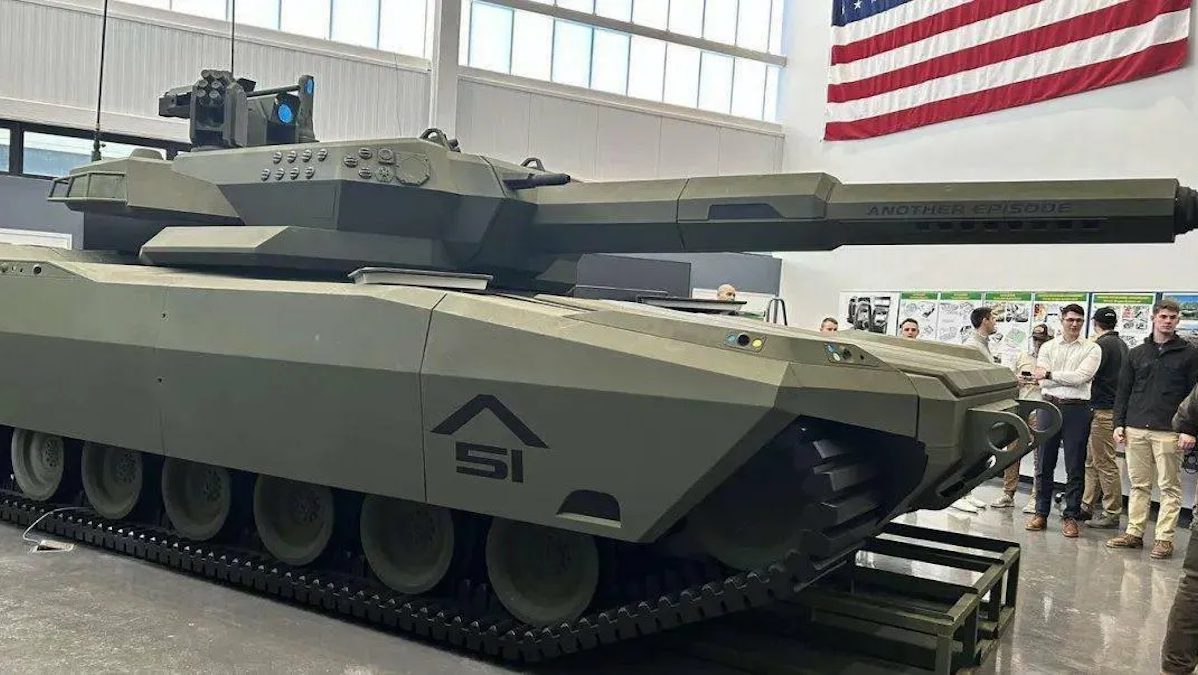
The United States is planning to field a new main battle tank by the early 2030s to replace the Abrams M1, a design that dates back to the mid-1970s. But as the Pentagon looks ahead, the question is no longer just about upgrading armor and firepower—it is whether the heavy tank itself still belongs on the modern battlefield.
The Abrams has been the backbone of US armored forces for decades, but its performance in Ukraine has been sobering. Of the 31 tanks sent by Washington, open-source trackers and defense assessments indicate that more than 25 have been destroyed, severely damaged, or captured. The German-made Leopard 2 and the British Challenger 2 have fared little better. Dozens of Leopards have been knocked out, and multiple Challengers have been lost, with their non-standard rifled ammunition adding to logistical headaches.
Why tanks are struggling
The reasons are not hard to find. In Ukraine, tanks have been vulnerable to first-person-view (FPV) drones, anti-tank guided missiles, landmines, and other kinetic weapons. They are heavy—often over 60 metric tons—and sink into muddy terrain. Most lack active protection systems (APS) that could intercept incoming projectiles. The US has purchased Israeli-made Trophy APS for some Abrams, but none of the tanks sent to Ukraine were so equipped.
The new Abrams is supposed to address these weaknesses. It will be lighter, use a hybrid power pack, feature an unmanned turret with an autoloader, and come with built-in active protection. But the design is unproven, and the US Army has no combat experience with it. Even prototypes are years away from deployment.
The poor record of NATO tanks suggests that current-generation platforms cannot withstand the combined arms of a well-equipped adversary. Russia's own tank losses have been staggering, depleting its reserves and costing thousands of experienced crew members. Estimates put Russian tank crew casualties in the range of 10,000 to 12,000 or more.
What tanks still offer
Tanks have not evolved much since World War II. Their core role remains punching through fortified lines and prepared defenses where infantry and wheeled vehicles stall. A tank combines heavy armor, all-terrain mobility, and a large-caliber cannon capable of destroying bunkers and enemy armor with precision. This creates shock and psychological impact on the battlefield.
But in any realistic future war in Europe, tanks will play a reduced role. Europe has too few tanks, and the US would face a major logistical challenge shipping Abrams from inventory to the front. The attrition in Ukraine has shown that even the most advanced tanks are not invulnerable.
Some analysts argue that the era of the main battle tank is ending, replaced by lighter, networked, and more autonomous systems. Others point to the continued need for heavy armor in breakthrough operations. The debate is far from settled, but the evidence from Ukraine is clear: the tank's dominance is no longer assured.
As the US and its allies look to the future, they must weigh the cost of developing new heavy tanks against the rise of drones and precision-guided weapons that have already reshaped warfare. The cost asymmetry between drones and superpowers is a stark reminder that expensive platforms may no longer guarantee superiority.
For now, the tank remains a symbol of military power, but its utility on the modern battlefield is increasingly questioned. The next decade will determine whether the heavy tank has a future or becomes a relic of a bygone era.