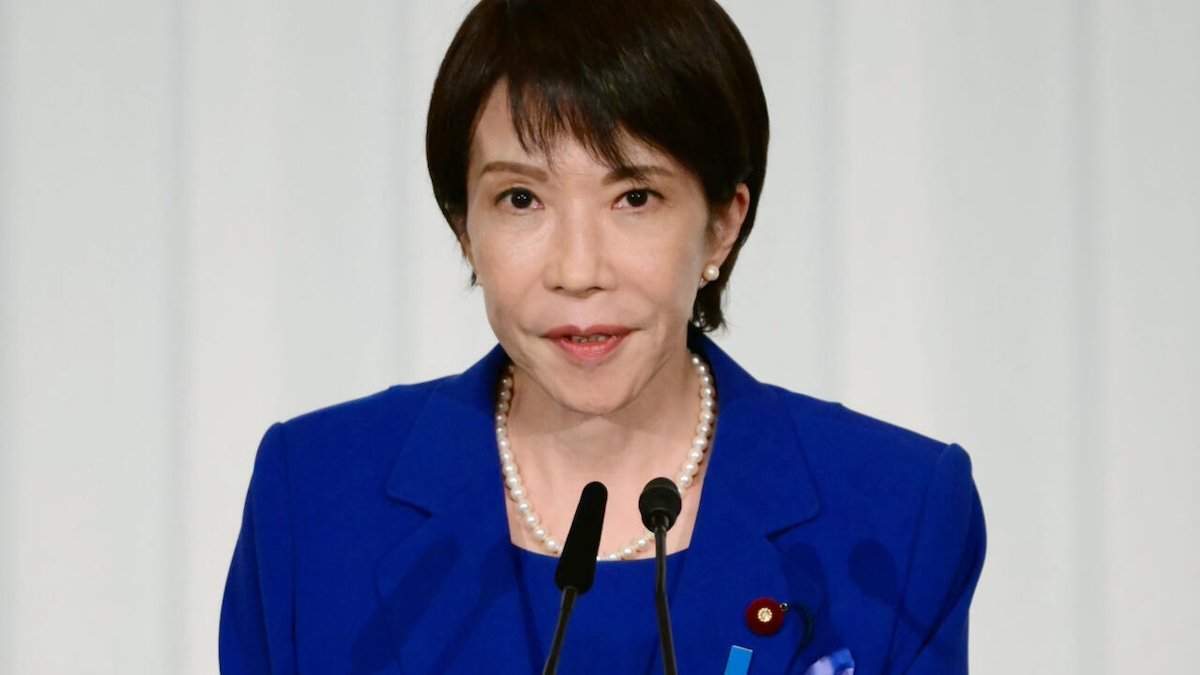
When Sanae Takaichi became Prime Minister of Japan in October, she entered office with a pledge to tackle the nation's persistent economic challenges. A long-serving Liberal Democratic Party (LDP) lawmaker, she positioned herself as a reformer, promising tax relief, measures to reduce the cost of living, and a revival of the supply-side economic strategies associated with her political mentor, the late Shinzo Abe.
However, a growing chorus of economists and analysts now express concern that these domestic priorities are being eclipsed. Takaichi's deeper, long-held political ambition—to revise Japan's postwar, pacifist constitution—has moved to the forefront of her agenda. This pivot, while rooted in a shifting geopolitical landscape, carries significant peril if it comes at the expense of addressing Japan's fragile economic recovery and a weakening yen.
A Strategic Pivot Driven by Global Upheaval
Takaichi's renewed drive for constitutional change is not occurring in a vacuum. It is a direct response to profound disruptions in the international order and, specifically, the security umbrella provided by the United States. The administration of US President Donald Trump has demonstrated a willingness to engage in military conflict, notably with Iran, creating global instability. More critically for Tokyo, Trump has redeployed critical missile defense assets from Japan and South Korea to the Middle East, a move that signals a recalibration of American strategic priorities.
This has triggered a fundamental reassessment in Tokyo and other Asian capitals about the reliability of US security guarantees. For Japan, a nation that has relied on the US-Japan security treaty as the cornerstone of its defense for decades, the implications are stark. Prime Minister Takaichi has legitimate reason to question whether Washington will consistently uphold its treaty commitments, particularly as the US focuses on conflicts elsewhere and the President's foreign policy grows increasingly unpredictable.
The situation compels a difficult choice: continue to depend on a potentially capricious ally or accelerate efforts to build a more autonomous and robust national defense. For Takaichi, a known advocate for a "normal" military posture, the answer is clear. Revising Article 9 of the constitution, which renounces war and prohibits maintaining war potential, is seen as a necessary step to grant Japan's Self-Defense Forces full legal standing and greater operational flexibility.
The Domestic Cost of a Security-First Agenda
The political and economic costs of this shift, however, could be substantial. Takaichi's initial economic promises were aimed at alleviating pressure on households and businesses. Yet, a protracted focus on the politically divisive and complex process of constitutional revision—which requires a two-thirds majority in both houses of the Diet and a public referendum—threatens to consume the government's political capital and legislative bandwidth.
Economists warn that neglecting economic revitalization now is a dangerous gamble. Japan faces an aging population, high public debt, and the need to secure its position in critical technology supply chains. Furthermore, the conflict in Iran has already strained global logistics, highlighting vulnerabilities that a domestic economic upgrade strategy was meant to address. Diverting attention and resources toward a long-term security project risks leaving the country more exposed to immediate economic shocks.
The debate echoes the classic dilemma of "guns versus butter." Takaichi appears to be choosing guns, arguing that a secure nation is a prerequisite for a prosperous one. Her supporters contend that in an era where US counterterrorism strategy is in flux and great-power competition intensifies, strengthening Japan's sovereign defense capabilities is an urgent necessity, not a distraction.
Critics, however, see a leader returning to her ideological comfort zone at the expense of the pressing bread-and-butter issues she was elected to solve. They argue that a weakened economy ultimately undermines national security by reducing the fiscal capacity to fund defense and diminishing Japan's overall influence in the region.
The international reaction, particularly from neighbors like South Korea and China, will also be a critical factor. Any move to alter Japan's pacifist constitution is watched closely in Seoul and Beijing, where historical grievances remain potent. A more militarily assertive Japan could alter the delicate balance in the Indo-Pacific, potentially fueling an arms race and complicating diplomacy at a time when coordination on challenges like a protracted Middle Eastern crisis is crucial.
Prime Minister Takaichi's tenure will be defined by her ability to navigate this treacherous crossroad. She must convince the Japanese public that constitutional revision is essential for their future security while simultaneously demonstrating that she has not abandoned the economic future they were promised. The peril lies in failing at either task, or in allowing the pursuit of one to irrevocably damage the other. The stability of Japan, and its role in a rapidly changing Asia, hangs in the balance.