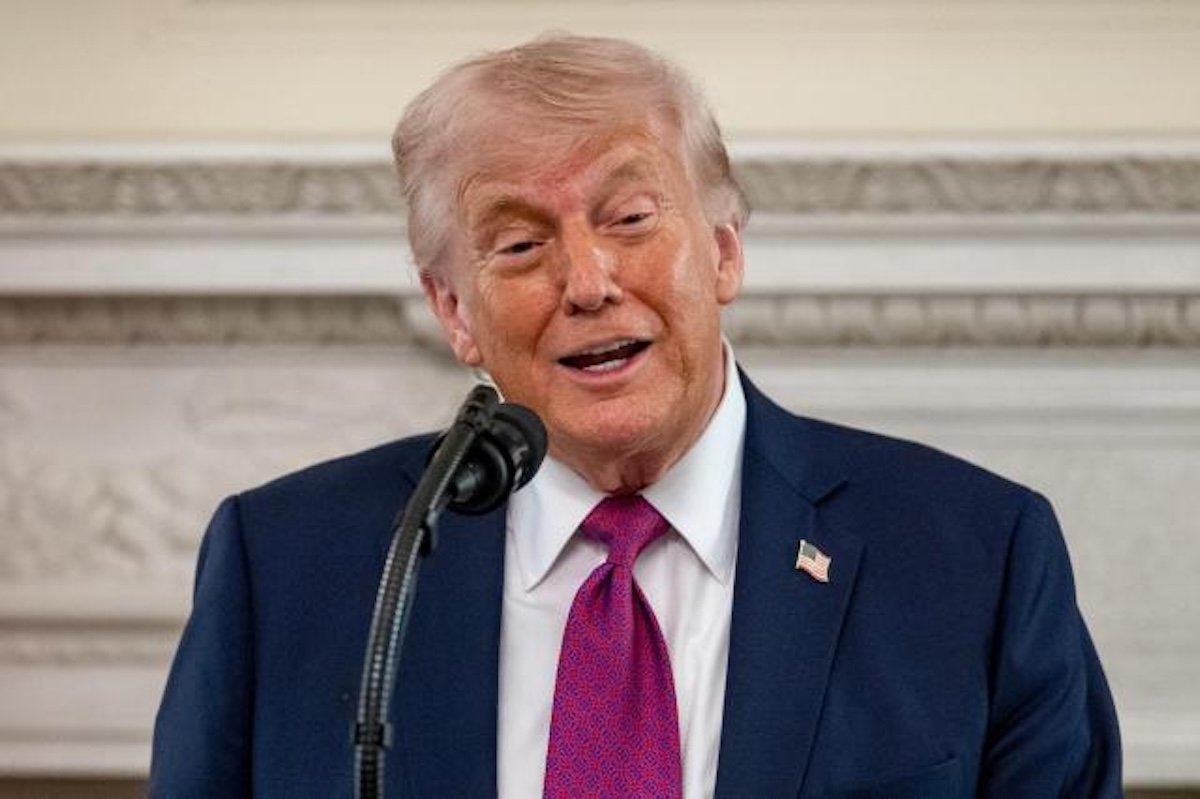
US President Donald Trump has announced an extension of a temporary ceasefire in the ongoing hostilities with Iran, but has simultaneously ordered the continuation of a US naval blockade against the country. The decision, communicated via the president's Truth Social platform, leaves the conflict in a precarious state of managed tension rather than resolution.
Trump stated the extension was granted at the request of Pakistan's Prime Minister Shehbaz Sharif and Field Marshal Asim Munir, to allow Iran's leadership time to present a unified proposal. "I have therefore directed our Military to continue the Blockade and, in all other respects, remain ready and able," Trump wrote, without specifying a new deadline for the ceasefire.
Blockade and Stalemate
The US imposed the blockade in response to Iran's earlier closure of the Strait of Hormuz, the critical chokepoint for global fossil fuel exports from the Persian Gulf. As part of this enforcement, US forces recently seized the Touska, a large Iranian-flagged cargo vessel. The blockade remains a central point of contention, with Iranian officials telling journalists that its lifting is a non-negotiable condition for any further diplomatic engagement.
Analysts interpret the US move as an attempt to freeze the conflict without conceding to core Iranian demands. Trita Parsi, executive vice president of the Quincy Institute for Responsible Statecraft, concluded that Trump's action "reflects the outcome I have argued is the most likely: No deal, no sanctions relief, no nuclear compromise, no return to war, while Iran continues to control the strait." He described it as an unstable situation where the US achieves a pause in fighting while Iran is denied the sanctions relief it seeks.
While United Nations Secretary-General António Guterres welcomed the ceasefire extension as "an important step toward de-escalation," signals from Tehran suggest deep skepticism. An adviser to Iranian Parliament Speaker Mohammad Bagher Ghalibaf told Reuters that the extension could be a ploy to buy time for a surprise US strike, arguing that the continuing blockade is tantamount to bombardment and warrants a military response.
Risk of Renewed Escalation
Experts warn the fragile pause could shatter at any moment. Sina Toossi, a senior fellow at the Center for International Policy, noted that after suffering surprise attacks, some factions in Tehran are advocating for Iran to take the initiative with preemptive strikes against US assets. "Trust between the sides remains at zero and renewed war could break out at any time," Toossi stressed.
In a recent analysis, Toossi argued that Iranian officials, believing they have weathered an existential war with the US and Israel, feel little pressure to make major concessions. Their priority is to manage the conflict, reduce the immediate risk of war, and preserve core strategic assets like control of the Strait of Hormuz and their nuclear program. The likelier outcome, he suggests, is an interim arrangement that defers key details rather than a decisive breakthrough.
The economic costs of the conflict are already severe. A report from the climate group 350.org estimates that soaring fuel costs during the first 50 days of the war have cost global consumers and businesses an additional $158 to $167 billion. The human and infrastructural toll within Iran and the wider region is also significant, with thousands reported killed and tens of thousands of civilian sites damaged since US and Israeli attacks began in February.
The strategic implications of this US-Iran standoff ripple far beyond the Middle East. For Indo-Pacific nations heavily dependent on energy imports transiting the Strait of Hormuz, the sustained blockade and threat of renewed conflict force difficult recalculations regarding energy security and strategic partnerships. This ongoing crisis is a primary driver for nations across Asia to reassess their nuclear energy and broader security postures in the face of persistent volatility in a key maritime corridor.
Furthermore, the diplomatic stalemate highlights the complex network of international relationships surrounding Iran. While Pakistan was cited as an intermediary by Trump, Toossi downplayed its influence, stating, "They're a conduit, not a driver. More a convenient excuse and diplomatic cover." A more pivotal role may eventually fall to other major powers with significant stakes in regional stability. As the conflict persists, China's role is emerging as potentially key to reviving any viable nuclear diplomacy and forging a path toward ending the conflict, given its substantial economic and political ties with Tehran.
The situation remains a volatile holding pattern, with a naval blockade enforcing a tense peace. The path forward hinges on whether diplomatic channels can produce a face-saving framework for both sides, or if the simmering tensions boil over into a renewed and even more destructive phase of conflict.



