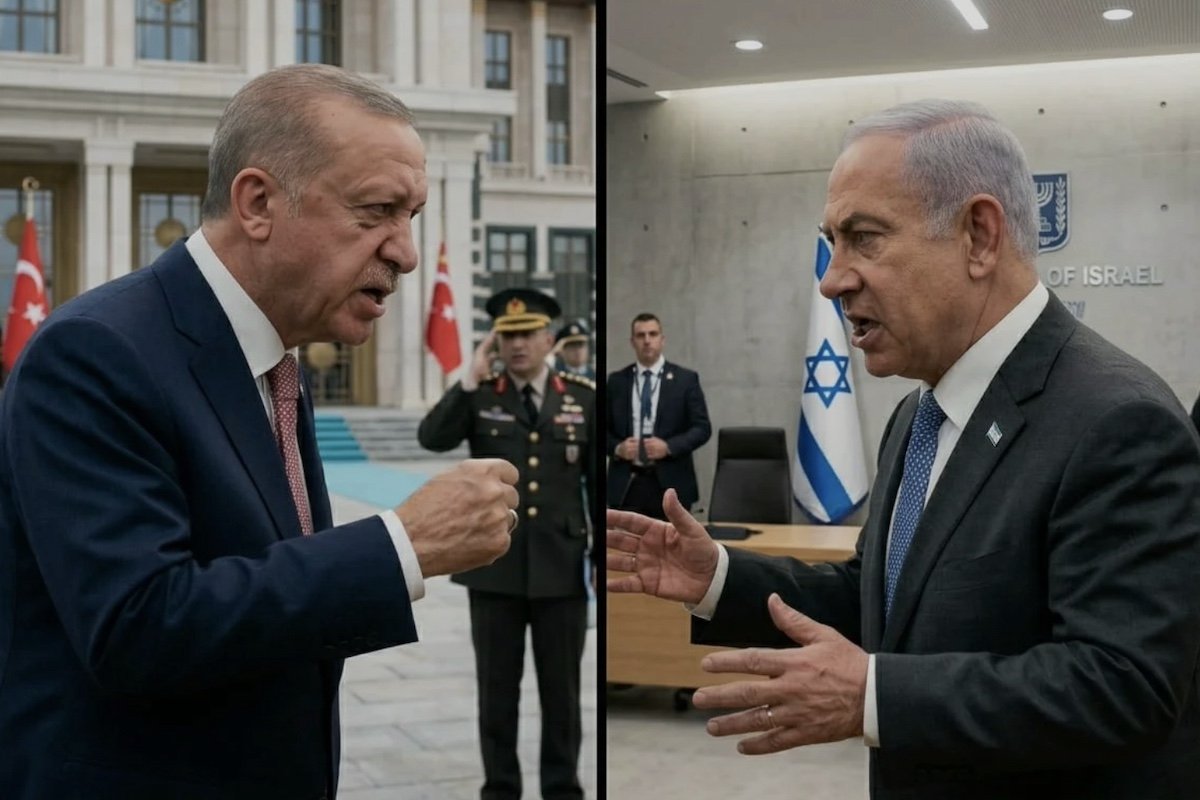
When two regional powers trade accusations of genocide and dictatorship, it is tempting to frame the moment as a clash of civilizations. The current rupture between Turkey and Israel invites exactly that reading: President Recep Tayyip Erdogan comparing Prime Minister Benjamin Netanyahu to Hitler, Israeli ministers calling Turkey an enemy state, and Jerusalem suddenly discovering a moral obligation to recognize the Armenian genocide after a century of avoidance.
But a realist lens suggests something less dramatic and more familiar: two middle powers, each overextended and losing the regional order that once constrained them, reaching for whatever instruments—historical memory included—serve an immediate strategic purpose.
Genocide Recognition as Statecraft
For decades, Israeli governments of every stripe declined to use the word genocide for the Ottoman-era massacres of Armenians. That was not due to historiographical doubt—the scholarly consensus was never in serious dispute—but because Turkey was a valued military and diplomatic partner, and later because Azerbaijan, an important oil supplier and intelligence partner against Iran, also strongly opposed recognition.
That calculus held for 100 years. It changed in June 2026, not because new archives surfaced, but because Ankara and Jerusalem are now open rivals across Syria, the Eastern Mediterranean, and Washington's corridors of influence. The timing tells the story: this was a message aimed less at Yerevan than at Ankara—and, more precisely, at the US Congress, where an energized Armenian-American lobby can complicate Turkey's defense-industrial ambitions.
Realists have long argued that moral foreign policy gestures deserve scrutiny for the interests hiding underneath them. This is as clean an example as one is likely to find. That does not make the underlying history any less real—the genocide happened—but it should make observers skeptical that Israel discovered a moral truth in 2026 that it could not see in 1996 or 2016. The truth did not change; the utility of saying so did.
Structural Drivers: Geography, Not Ideology
Strip away the rhetoric and the structural sources of friction are unglamorous and predictable from a balance-of-power standpoint. In Syria, with Bashar al-Assad gone and Iranian-aligned militias degraded, both Ankara and Jerusalem are filling the vacuum. Turkey backs the new government in Damascus and is arming its military. Israel has struck Syrian military assets repeatedly and backs Druze and Kurdish communities that Ankara regards with deep suspicion given the Kurdistan Workers' Party's (PKK) history. This is a textbook security dilemma: each side's defensive hedge reads as an offensive threat to the other.
In the Eastern Mediterranean, a deepening Israel-Greece-Cyprus defense and energy partnership—joint exercises, an Israeli air-defense sale to Cyprus, a new US-backed energy hub—lands directly on top of Turkey's Blue Homeland maritime claims and its decades-old dispute over Cyprus. Ankara reads encirclement; Jerusalem reads diversification of alliances away from a Turkey it no longer trusts. Both readings are rational given each capital's vantage point, which is exactly what makes the dynamic hard to defuse through goodwill alone.
Turkey's NATO membership is the strangest variable. It gives Ankara a security umbrella it increasingly resents relying on, while giving Washington a headache: an alliance built to deter Russia now must manage a rivalry between one member and its closest non-member partner. Any American administration serious about avoiding a wider Eastern Mediterranean crisis has an interest in keeping this rivalry rhetorical rather than kinetic, but Washington's bandwidth for quiet mediation has never been thinner. The US-Israel alliance shows signs of strain amid these shifting dynamics.
The Case for Restraint
None of this counsels indifference—a NATO member and a nuclear-armed US partner sliding toward confrontation is not a minor story. But it does counsel against treating either government's public framing at face value. Erdogan's talk of liberating Jerusalem is aimed at a domestic and pan-Islamist audience as much as at Israel. Israeli officials branding Turkey the new Iran serve to justify further entrenchment in Syria and closer alignment with Greece and Cyprus, alignments that carry their own escalation risks.
The realist instinct is not to dismiss the moral content of any of these claims—the Armenian genocide occurred, Turkey's authoritarian drift is real, Israel's conduct in Gaza has drawn serious international scrutiny—but to separate the claims from the timing of their deployment, and to resist treating a regional power rivalry as a referendum on civilizational values. In the Indo-Pacific, where similar dynamics play out between China and its neighbors, the lesson is the same: petty border walls stifle regional integration, and strategic interests often masquerade as moral imperatives.