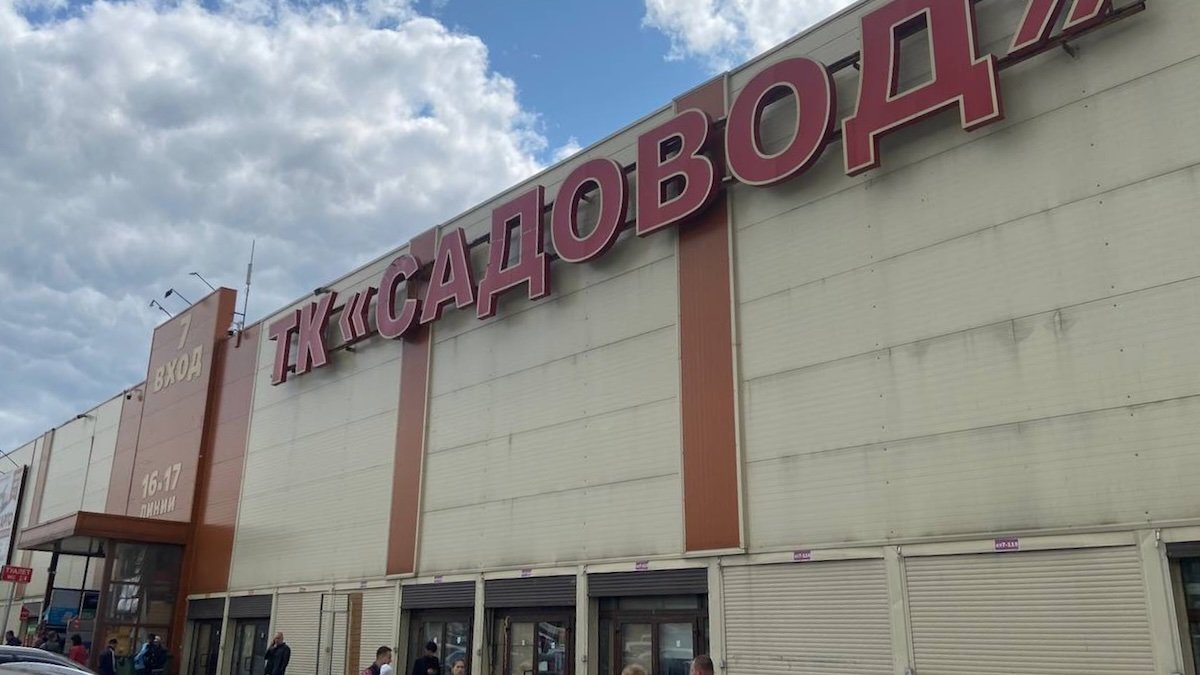
At the sprawling Sadovod market in southeast Moscow—a 160-acre warren of clothing, jewelry, and appliance stalls—at least eight discreet teams operate away from the daily bustle. Known internally as “departments,” they receive a steady stream of customers, almost always carrying bags of various shapes and sizes. Inside those bags are piles of Russian rubles. These teams, staffed by payment brokers, are the intake points for one of the largest and most secretive cash-processing operations in the world.
That operation is A7, a payments giant backed by the Russian state. Between November 2024 and July 2025, A7 processed at least 283 tons of cash rubles—worth more than $14 billion—according to an investigation by the International Consortium of Investigative Journalists (ICIJ) and the Russian independent outlet Proekt. The scale is staggering: that is roughly the weight of 40 adult elephants, moved in physical currency.
A shadow banking network under US scrutiny
On October 1, the US Treasury sanctioned A7 as a “significant transnational criminal organization,” accusing it of using “money laundering methodologies to fraudulently move vast sums of money in violation of sanctions and other laws.” Western governments and banks have been scrambling to trace A7’s flows through the international financial system. But ICIJ’s investigation reveals that the origins of most A7 transmissions are, in fact, untraceable.
Internal A7 records seen by ICIJ, along with people familiar with the matter, show that a huge portion of A7’s payments do not stem from conventional bank transfers by clients inside Russia. Instead, they come from hundreds of tons of cash rubles. Leaked records allowed ICIJ to identify that a handful of wholesale markets and other cash-heavy businesses around Moscow—including Sadovod—made up a significant share of the cash A7 processed.
The records show that while the source of the cash is untraceable, its destination is not: most of it is bound not for Western markets, but for China. This flow underscores a growing financial interdependence between Moscow and Beijing, even as Western sanctions tighten. It also highlights how China-Russia economic ties are deepening in ways that bypass traditional oversight.
Cash as a laundering risk
Experts say the fact that cash drives A7 raises the specter of a money laundering operation limited only by the size of the market and A7’s capacity to physically handle the cash. “Cash is considered one of the highest risk methods of payment and store of value because it’s anonymous, it can travel across borders, and it doesn’t attach to any specific individual or company,” George Voloshin, an expert at ACAMS, a global anti-financial crime training body, told ICIJ.
“The A7 network not only helps Russia circumvent Western sanctions and export controls,” Voloshin continued. The fact that A7 takes massive volumes of cash from Moscow’s wholesale markets suggests that the company “is also likely to facilitate cash-based money laundering by effectively legitimizing potential proceeds of crime,” he said.
Voloshin added that international banks bear an additional burden. “The main risk is that [foreign] intermediary or beneficiary banks become complicit in [a] form of criminal activity that they know nothing about, because they don’t have any visibility into what’s happening in Russia where the money originates from.”
A7 did not respond to ICIJ’s requests for comment. In public statements, A7 has strongly rejected the US allegations, saying it “employs a modern, multi-tiered compliance system” and was “established to ensure uninterrupted settlements for the Russian market, which has been subjected to unlawful restrictive measures.” It added that “all clients undergo screening to identify risks and prevent the servicing of individuals or organizations whose activities violate regulatory requirements.”
The cash-based model presents not-previously-understood challenges to both the conventional banking system and law enforcement. Unlike electronic transfers, cash leaves no digital trail, making it nearly impossible for foreign banks to know the true origin of funds. This opacity is particularly concerning given that A7’s cash is flowing toward China, a country that has become a key destination for Russian goods and payments since the invasion of Ukraine.
For the Indo-Pacific, this story is a reminder that sanctions evasion is not just a European problem. As China’s economic model evolves, its role as a financial haven for Russian capital could have ripple effects across the region. The US Treasury’s designation of A7 is a signal that Washington is watching these flows closely, but the sheer scale of cash movement suggests that enforcement will be an uphill battle.
The investigation also raises questions about the effectiveness of sanctions themselves. If billions of dollars can move from Moscow’s markets to Chinese banks in physical cash, then the sanctions regime is only as strong as the willingness of third countries to enforce it. For now, the cash machine at Sadovod keeps running, and the money keeps moving east.