Samsung Electronics is rolling out an aggressive retention strategy to keep its memory chip engineers from being poached by Chinese competitors. According to Samsung's largest union, a worker earning about $60,000 a year could receive roughly $560,000 in bonuses before tax, combining the company's existing profit-sharing scheme with a new special payment. Samsung has not officially confirmed the figure.
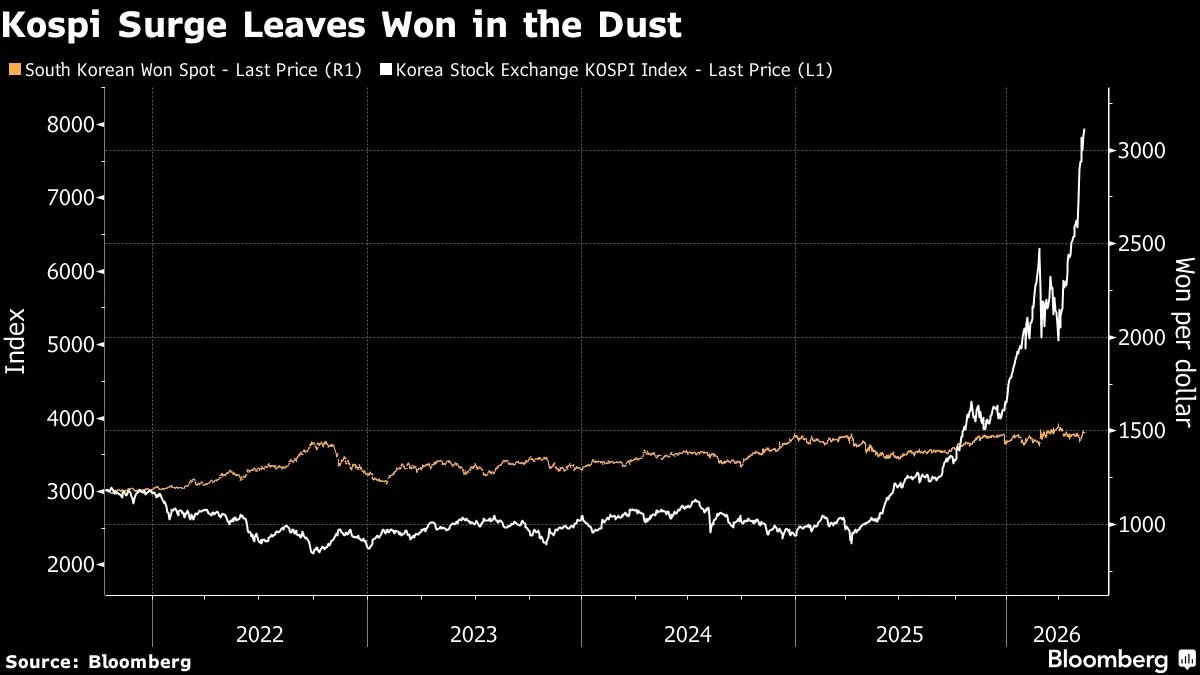
On October 7, Samsung detailed the mechanics of the special bonus: 10.5% of its chip division's 2026 operating profit would be placed into an uncapped pool, with payouts in shares, subject to shareholder approval. The next day, the company estimated its third-quarter operating profit at 107.4 trillion won (about $80 billion), nearly nine times the year-earlier figure—a windfall that makes such generosity possible.
Why the urgency?
The urgency stems from a parliamentary audit that revealed a steady drain of experienced engineers to China. The office of Choi Soo-jin, a lawmaker from the People Power Party on the National Assembly's science and ICT committee, reviewed LinkedIn and other public career records. It found at least 27 senior engineers from Samsung and SK Hynix who later joined ChangXin Memory Technologies (CXMT), China's largest DRAM maker.
These engineers collectively spent 415.9 years at the two Korean companies, averaging 15.4 years each. Six held principal or executive-level positions with over two decades in mass production. Eight specialized in circuit design, seven in process integration, and others came from equipment, yield analysis, and advanced packaging—a skill set that, as the Dong-A Ilbo noted, could run an entire chip factory.
Chinese headhunters, according to Choi's office, offered pay increases of 60% to 100%, three to five years of guaranteed employment, rental housing, and help with children's school costs. Interestingly, 15 of the 27 did not move directly to CXMT; they first took jobs at equipment suppliers, foreign companies, or universities, likely to circumvent non-compete agreements that typically last one to two years.
The engineers stayed at CXMT for an average of 2.9 years. Public profiles show that 26 of the 27 have since left, with seven moving to other Chinese chip firms, including Huawei's Hong Kong research center and HiSilicon. While these records don't prove technology transfer, CXMT's rapid growth—its R&D staff jumped from 2,606 at the end of 2022 to 7,491 by June 2026, and it began mass-producing fifth-generation DRAM in September—suggests the engineers' experience helped build its capabilities.
Choi's office argues that this illustrates a retention problem: experienced engineers can help a competitor build lasting capabilities, even after they leave. The Korean government's legal options are limited. As the industry ministry told Dong-A Ilbo, “There is no legal basis to crack down on or restrict lawful overseas hiring.” Non-compete clauses expire, and the detours through suppliers and universities show they can be waited out.
Interest in working abroad extends beyond chips. A Bank of Korea survey of 2,694 researchers with master's or doctoral degrees found that 42.9% of those working in Korea were considering moving abroad within three years.
So companies are competing on pay. SK Hynix moved first, setting aside 10% of operating profit for employees and removing the old cap of 1,000% of base salary for the next decade. Its first payout under the new terms reached 2,964% of base salary, with a fifth deferred over two years, as KED Global reported. A company official said the system was expected to curb talent losses to domestic and overseas rivals.
Samsung's plan follows the same logic. The special bonus is paid in shares, with a third sellable immediately, another third after one year, and the final third after two years. That ties two-thirds of the payout to Samsung's share price for up to two years, though it's unclear if employees must stay to keep the award.
The cost is significant. Samsung counts the bonus as an expense before paying it, setting aside about 15.4 trillion won for the first half of 2026, with an estimated third-quarter charge of 11.4 trillion won.
Is pay enough? I'd argue that keeping experienced engineers in Korea has become a national-security concern. Bonuses on this scale give workers more reason to weigh an overseas offer against what they would leave behind. But an uncapped bonus isn't guaranteed—if memory profits fall while overseas offers stay generous, Samsung and SK Hynix will struggle to compete on pay.
Choi wants a national system to track key personnel and incentives to bring them back to jobs in Korea. “Semiconductor technology is not just blueprints,” she said. “It is the experience and know-how that people have built up over 20 to 30 years.” For now, record profits give chipmakers room to pay more. The test is whether they can keep those engineers through the next downturn.