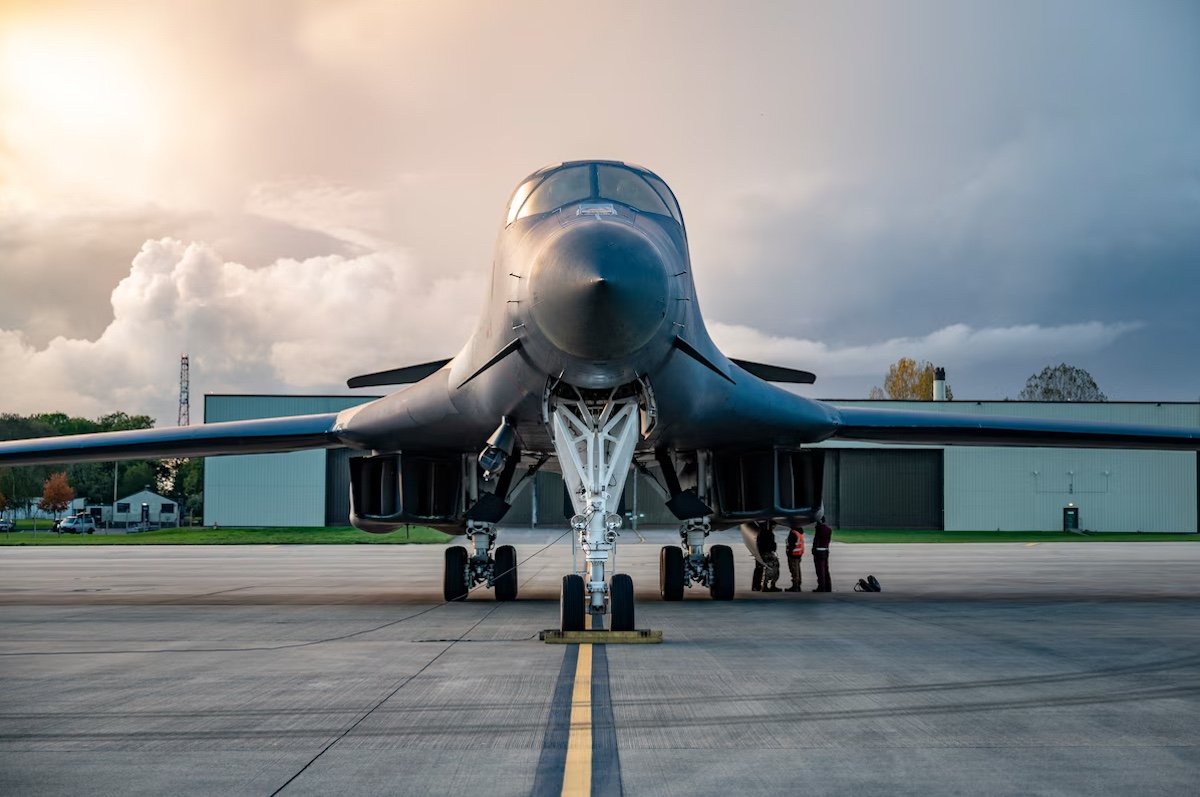
On October 4, the United States withdrew its dozen B-1 strategic bombers from RAF Fairford in the UK, returning them to Ellsworth Air Force Base in South Dakota. The move came after intelligence indicated an imminent drone attack on the base, reportedly planned by Iran. While the Pentagon may have dodged a specific threat, the broader problem remains: drone incursions are not confined to overseas bases, and moving aircraft does not make them safe.
Domestic bases are not sanctuaries
Ellsworth itself has seen multiple unauthorized drone sightings. The Meade County Sheriff's Office has issued warnings about waves of drones flying near the base, and officials have reminded the public that the installation is a strict no-drone zone. The pattern of repeated, organized incursions suggests reconnaissance by an adversary, not random hobbyist activity.
Across the United States, the scale of the problem is staggering. In late 2024, over 350 unauthorized drone incursions were detected at roughly 100 military installations, alongside widespread civilian sightings in the Northeast and New Jersey. In 2025, the volume continued to rise, with tens of thousands of drone movements tracked along the southern border, prompting congressional investigations and expanded counter-drone authorities. The trend has persisted into 2026.
Most of these drones are commercial models, primarily of Chinese origin, which are cheap, easily modified, and nearly impossible to trace. There is no licensing system, no control on purchases, and ownership is opaque. Drones can be bought domestically or smuggled across the border, making them a persistent and versatile threat.
The UK and Cyprus are equally exposed
The UK has not been spared. Four Royal Air Force bases used by the US Air Force—Lakenheath, Mildenhall, Feltwell, and Fairford—have experienced unauthorized drone incursions. More dramatically, on March 1, 2026, an Iranian-manufactured Shahed-type loitering munition struck RAF Akrotiri in Cyprus, a base that hosts US reconnaissance units, including Detachment 1 of the 9th Reconnaissance Wing with U-2 aircraft, as well as shared intelligence operations.
At Fairford, the suspected attack was to be launched from trucks carrying drones, a tactic reminiscent of Ukraine's Operation Spiderweb in June 2025. In that operation, Ukrainian operatives smuggled FPV attack drones into Russia concealed in wooden cabins on commercial trucks, then launched them from close range against multiple deep-interior air bases, including Olenya, Ivanovo Severny, Dyagilevo, Belaya, and Ukrainka. The strikes damaged or destroyed several Tu-95MS and Tu-22M3 bombers, demonstrating the devastating potential of such low-cost attacks.
The US and UK authorities rarely disclose drone incursions unless forced by public pressure, so the full extent of the threat remains unclear. But the pattern is consistent: surveillance is turning into kinetic strikes, and no base—domestic or foreign—is immune.
Relocating bombers from the UK to the US is a tactical adjustment, not a strategic solution. The drone threat is global, and as long as bases remain vulnerable, the risk of a successful attack persists. The Pentagon's future warfare initiatives, such as the one led by Pete Hegseth's advisory group, may eventually provide answers, but for now, the drones keep coming.