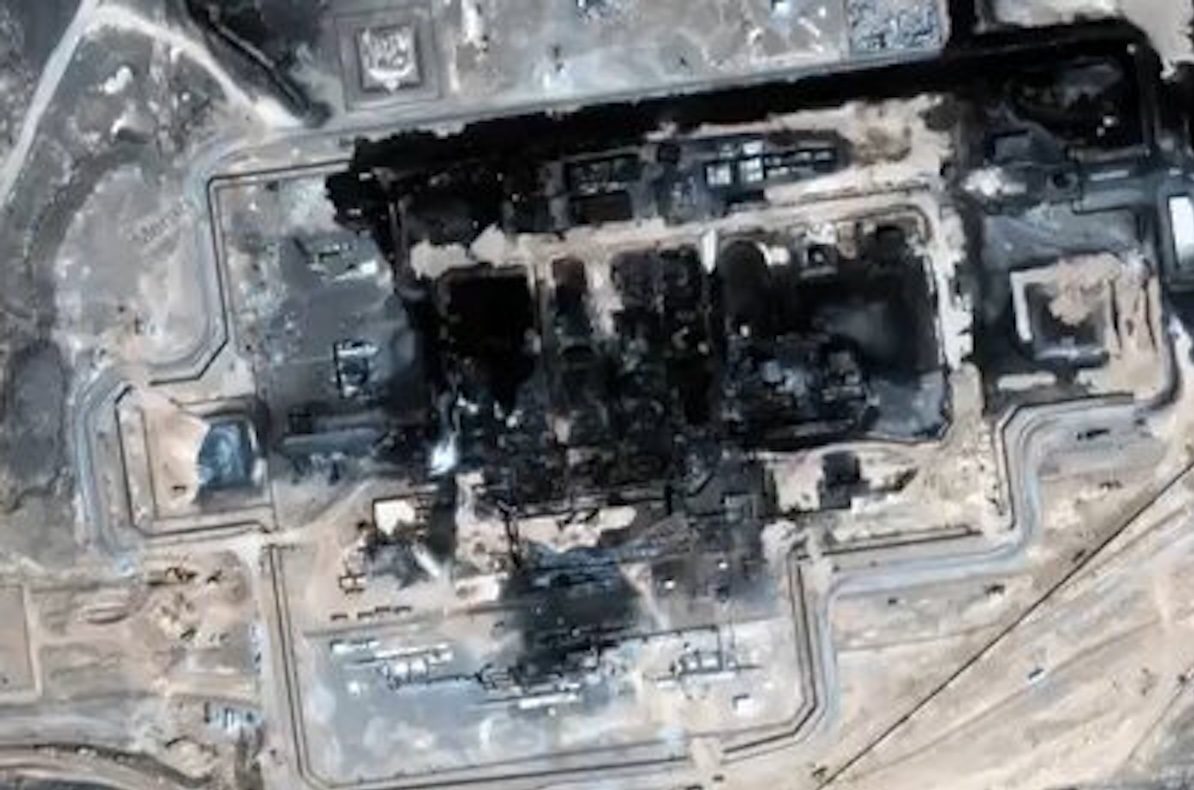
Fresh satellite imagery has confirmed extensive fire damage to a key Saudi Arabian oil pipeline, raising the specter of a prolonged disruption to global energy markets. The East-West Pipeline, which carries crude from the kingdom's eastern fields to the Red Sea, was struck by a drone last Thursday, and repair work is expected to take three to five weeks, according to regional officials cited by The Associated Press.
The attack, which Saudi Arabia attributes to Iran-backed militias operating from Iraq, has forced the shutdown of a major pumping facility. The Guardian reported that if the pipeline is not restored within days, Saudi Arabia could exhaust its available export stocks, potentially removing up to 4% of global supply.
Strategic chokepoint under pressure
The pipeline is central to Riyadh's strategy of bypassing the Strait of Hormuz, which has been largely closed to commercial shipping since the United States launched military action against Iran in February. With the strait effectively shut, the Red Sea route has become the kingdom's primary outlet for exports, making the pipeline's integrity all the more critical.
Bloomberg's Alex Longley noted that the timing could not be worse for energy markets already strained by the Iran conflict and the ongoing Russia-Ukraine war. "Whatever happens, the oil market will need a quick fix," he wrote. "It's currently screaming for barrels."
Even a swift repair would not immediately ease prices. The Strait of Hormuz remains closed, and Houthi fighters in Yemen have intensified their campaign against Red Sea shipping. On Thursday, the Houthis seized the port city of Mocha from Saudi-backed forces, giving them a stronger position to attack vessels transiting the Bab el-Mandeb Strait.
Brent crude surged past $109 per barrel on Monday following the news, adding to months of upward pressure. For consumers in the United States, the average price of gasoline has climbed to $4.32 per gallon, while diesel has hit a record $6.23, according to the American Automobile Association.
The disruption comes as Asian economies, heavily reliant on Middle Eastern oil, watch nervously. Japan, for instance, has been rethinking its energy security strategy in response to the Hormuz crisis, while China, the world's largest crude importer, faces a tightening squeeze. The US-Venezuela oil deal has done little to offset Beijing's concerns.
Analysts warn that the longer the pipeline remains offline, the more severe the impact on global inventories. "The market is pricing in a prolonged outage," said one Singapore-based trader. "If repairs stretch beyond five weeks, we could see prices test $120."
The attack also underscores the vulnerability of energy infrastructure across the region. As decentralized energy gains ground in Asia, the reliance on long-distance pipelines and maritime chokepoints remains a structural risk.
Diplomatic efforts to de-escalate the Iran conflict have stalled, with Washington showing no appetite for negotiations. Meanwhile, the Houthi advance in Yemen threatens to close another vital waterway, the Bab el-Mandeb, which would further constrict global oil flows.
For now, the world waits on Saudi repair crews. But even in the best case, the episode is a stark reminder of how fragile the global energy system has become—and how quickly a single strike can ripple through economies from Tokyo to New Delhi.