A landmark oil agreement between Washington and Caracas is set to disrupt China's access to discounted crude, handing the United States greater leverage over global oil prices and deepening Beijing's energy security concerns.
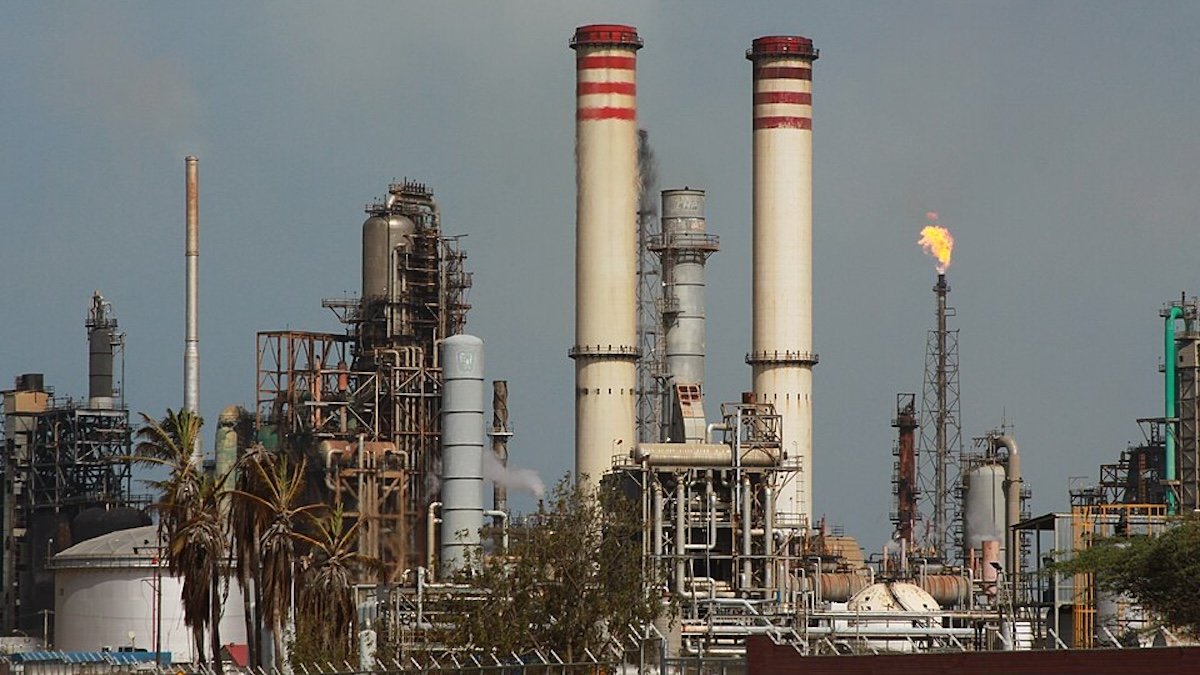
US President Donald Trump announced on August 28 that Washington had secured what he called the biggest oil deal in world history with Venezuela, gaining majority control of more than 65 billion barrels of the country's proven oil reserves at no cost to American taxpayers. Under the arrangement, a US-backed private venture will hold a 55% stake in oil output from fields across 17 blocks, with development rights extending for 100 years. Venezuela is projected to collect over $209 billion in additional tax revenue, while the deal is expected to attract nearly $100 billion in private investment.
Secretary of State Marco Rubio, who led the US negotiations alongside Defense Secretary Pete Hegseth and Venezuela's acting President Delcy Rodríguez, called the deal "a huge win for both the American and Venezuelan people."
The agreement comes amid Washington's broader economic pressure campaign, including Operation Economic Outcast, a sweeping sanctions effort unveiled by Treasury Secretary Scott Bessent on August 24 to cut off remaining income sources for Iran's government. That campaign has already squeezed China's access to discounted Iranian crude, with Chinese imports falling to 534,000 barrels per day in August from 823,000 bpd in July as sanctions targeted tankers, brokers, and banks.
China's energy calculus
Chinese commentators have largely framed the US-Venezuela deal as a setback for Beijing's energy security. They expect Washington to rely less on oil imports from Canada and the Middle East, while pushing China toward pricier Canadian barrels and potentially raising fuel costs at home even as Americans pay less.
"The US is already the world's largest oil producer and, with control over these 65 billion barrels added on, its say over global oil prices will reach an unprecedented level," writes a Shaanxi-based columnist using the pen name "Xiaoche." "The Organization of the Petroleum Exporting Countries (OPEC) will see its influence further weakened, and the geopolitical standing of traditional producers like Saudi Arabia and the United Arab Emirates will be challenged."
"For a major energy importer like China, the US now holds another card it can play at any time to apply precise pressure. If Washington one day says it wants oil prices below a certain level, it may actually be able to make that happen," he adds.
Xiaoche argues that Venezuela has effectively become an economic vassal of Washington, ceding control over pricing, output, and sales of its 65-billion-barrel reserve. Rodríguez's political survival now depends on US backing, leaving Caracas with limited independence. He notes that China and Russia, which are owed substantial debt by Venezuela, are unlikely to stand aside and will use diplomatic pressure and economic aid to back factions inside Venezuela resistant to US influence.
Venezuela is reportedly weighing an exit from OPEC, according to a Bloomberg report on August 29, following the new oil deal and the capture of former President Nicolás Maduro by US forces earlier this year. Exiting would free Venezuela from OPEC's production quotas just as the country, currently pumping only 1.16 million bpd, looks to ramp up output under the agreement.
Zhenqing, another Shaanxi-based writer, says that if Venezuela leaves OPEC, the international energy market would undergo a deep reshaping, touching at least three key pieces on the board:
- The dollar would likely reclaim its role as Venezuela's primary oil-settlement currency under US ownership, reversing a partial shift toward euros, yuan, and crypto that sanctions had encouraged, reinforcing the petrodollar system.
- US Treasury yields could become easier to manage, as more US-controlled oil supply raises the odds of steadier prices, easing inflation pressure and giving the Federal Reserve more room to keep rates in check.
- OPEC+'s cohesion would take a further hit, as its remaining spare capacity concentrates in Saudi Arabia and Russia, especially if Caracas ramps up output outside the group's control, complicating efforts to manage the market ahead of 2027.
Zhenqing adds that China would be hit indirectly by these trends, with Chinese refiners needing to find crude suppliers outside Venezuela and potentially facing a modest price increase. However, the impact would be mild and manageable since Venezuelan crude accounts for less than 3% of China's total oil imports.
The Trump Corollary
Washington's pivot toward the Western Hemisphere traces to December 4, 2025, when the Trump administration's National Security Strategy asserted a "Trump Corollary" to the Monroe Doctrine, pledging to expand US military and economic influence across the Americas. It called for developing the hemisphere's strategic resources with regional partners, repositioning US forces toward hemispheric threats, and making energy dominance in oil, gas, coal, and nuclear power a top priority.
Chinese state media have celebrated Washington's shift as a retreat from the Indo-Pacific, but the energy implications are more complex. As China gets caught in the US economic squeeze on Iran, the Venezuela deal adds another layer of pressure. Meanwhile, India-China ties remain fragile, and Beijing's energy security strategy must navigate a more assertive US posture in the Americas.
The deal also raises questions about the future of law and power in the South China Sea, as Washington's focus shifts. For China, the message is clear: energy security is now a geopolitical battleground where the US is willing to rewrite rules and redefine sovereignty.