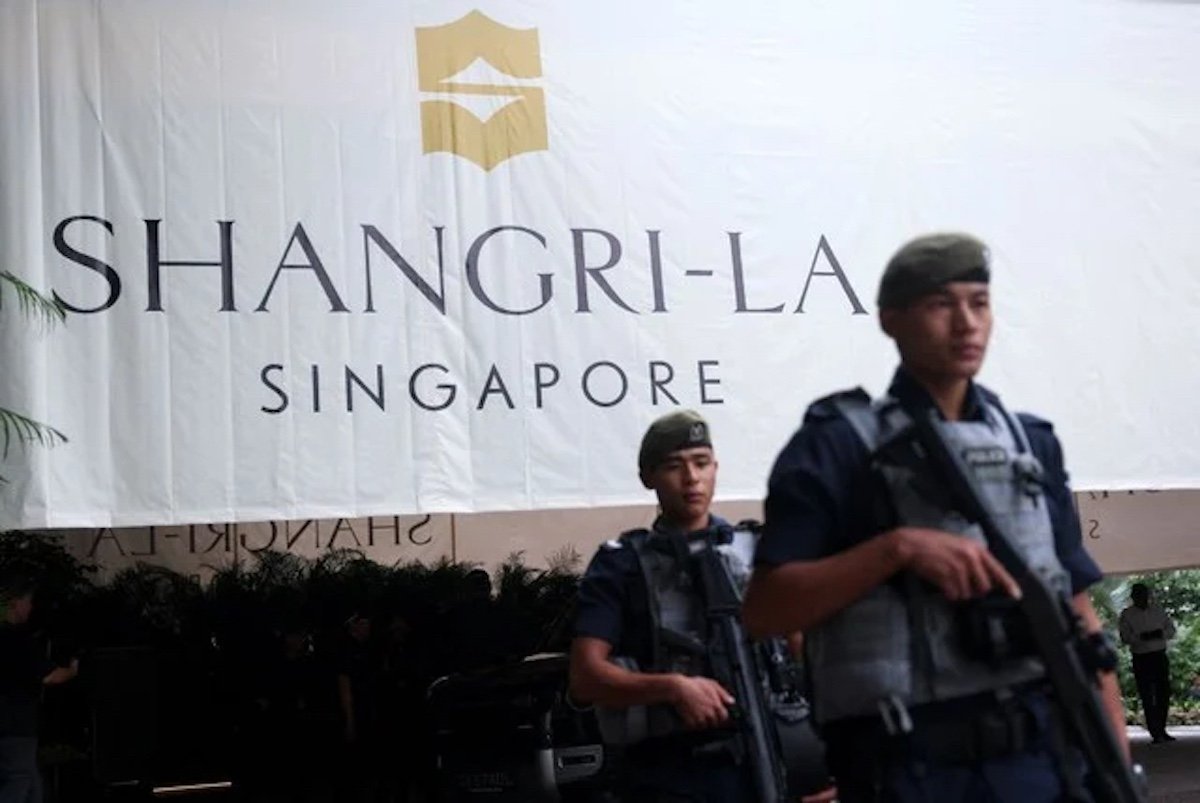
Under Singapore's increasingly sweltering skies, the lobby of the Shangri-La Hotel in late May 2026 offered a revealing snapshot of a world edging toward deeper fragmentation. The 23rd edition of the Shangri-La Dialogue, held from May 29 to 31, brought together representatives from 44 countries, including dozens of defense ministers and military chiefs who shared remarkably similar concerns.
In the quiet corridors between sessions, an unspoken realization hung in the air: the security architecture that has underpinned Asia's stability for decades is showing signs of profound structural strain. Diplomacy is no longer guided primarily by shared norms and collective aspirations, but increasingly by calculations of self-reliance and strategic resilience.
A Volatile Global Backdrop
The forum unfolded against an exceptionally volatile global backdrop. In Eastern Europe, the war in Ukraine has entered its fourth year and continues to consume Western military resources on an enormous scale. Meanwhile, escalating tensions in the Middle East, particularly the direct confrontation involving the United States, Israel and Iran, have generated economic shockwaves across Asia. Partial disruptions in the Strait of Hormuz have affected crude oil and naphtha supplies, forcing petrochemical industries throughout the region to operate under severe pressure. The crisis has underscored a stark reality: the distinction between peacetime stability and emergency contingency planning has become increasingly blurred.
The opening address by Vietnam's President and Communist Party General Secretary To Lam provided the intellectual framework for many of the discussions that followed. He warned of three overlapping crises: the erosion of the international order, the fragmentation of development models through disrupted supply chains, and a growing crisis of strategic trust. According to To Lam, trust has become the silent killer of interstate relations. When international law is applied selectively and power increasingly dictates outcomes, middle and smaller powers become particularly vulnerable to coercion.
His concerns echoed a broader sentiment across Southeast Asia. Many governments are increasingly uncertain about the durability of American security commitments. Despite repeated assurances regarding a free and open Indo-Pacific, regional policymakers see a United States frequently distracted by crises elsewhere, occasionally delaying critical military support even to close partners. The resulting question has become impossible to ignore: should Asia spend less time debating security and more time building military capabilities? Among defense officials, a new saying has begun to circulate: perhaps Asia now needs fewer dialogues and more warships and submarines.
US Pragmatism, Chinese Distance
This changing strategic environment was reflected clearly in the security doctrine presented by the US. Represented by US Defense Secretary Pete Hegseth, Washington no longer frames its regional role primarily in terms of idealistic commitments or universal values. Under President Donald Trump, American policy has increasingly embraced what officials describe as pragmatic idealism. The message was straightforward: the era in which the US subsidized the defense of wealthy allies is over. Washington now expects burden-sharing and insists that it seeks partners rather than dependents.
Calls for Asian allies to raise defense spending toward 3.5 percent of GDP have become a central pillar of America's effort to balance China's growing military influence in the Indo-Pacific. Yet Washington's strategy continues to display significant ambiguity. Following the Trump–Xi summit in Beijing earlier in May, Hegseth adopted a noticeably softer tone toward China. Most strikingly, Taiwan — long a focal point of US strategic messaging — was absent from his keynote remarks, a sharp departure from previous years. This transactional approach has fueled regional concerns that security commitments could eventually become bargaining chips in broader economic negotiations with Beijing. For many Asian governments, uncertainty regarding American priorities has become almost as consequential as China's rise itself.
China, meanwhile, approached the Dialogue with calculated restraint. For a second consecutive year, Beijing chose not to send Defense Minister Dong Jun, instead dispatching a delegation from the National Defense University led by Major General Meng Xiangqing. Though lower in political profile, the delegation remained highly active, using question-and-answer sessions to challenge Western narratives while promoting China's Global Security Initiative, which emphasizes inclusive security arrangements over exclusive military blocs. Former Vice Foreign Minister Cui Tiankai responded directly to Washington's burden-sharing demands. How the United States manages its alliances, he argued, is fundamentally its own business. However, he warned that those alliances should not be structured to target third parties—particularly China. From Beijing's perspective, a genuinely free and open region must be open to all states rather than serving as a vehicle for any single power's strategic dominance.
Japan's Military Rise, Indonesia's Strategic Tightrope
Ironically, the combination of China's assertiveness and America's inconsistencies has accelerated Japan's security transformation. Under Prime Minister Sanae Takaichi, Tokyo is increasingly positioning itself as an independent pillar of regional defense in the Western Pacific. Defense Minister Shinjiro Koizumi firmly rejected Chinese accusations that Japan is reviving militarism. Instead, he argued that strengthening defense capabilities is a sovereign necessity, enabling nations to preserve their freedom of choice in an increasingly coercive international environment. Japan's revised arms-export framework, expanded in April 2026, has already enabled deeper cooperation with partners like Australia and the Philippines. For a deeper look at how the Dialogue reshaped Japan's security posture, see Shangri-La Shockwave: End of Automatic Assurance Reshapes Japan's Security.
Indonesia, meanwhile, walked a careful line. President Joko Widodo's government has sought to maintain strategic autonomy while deepening ties with both Washington and Beijing. The Dialogue underscored Jakarta's growing unease with being caught between great-power competition. As one Indonesian delegate noted privately, neutrality is becoming a luxury that few can afford. For more on Indonesia's economic vulnerabilities, see Capital Flight and Trade Fraud Keep Indonesia's Rupiah Under Siege.
The 2026 Shangri-La Dialogue may not have produced grand breakthroughs, but it forced a reckoning. Asia's security order is no longer a given; it is something that must be actively built, defended, and paid for. The question now is whether the region's leaders have the will to do so.