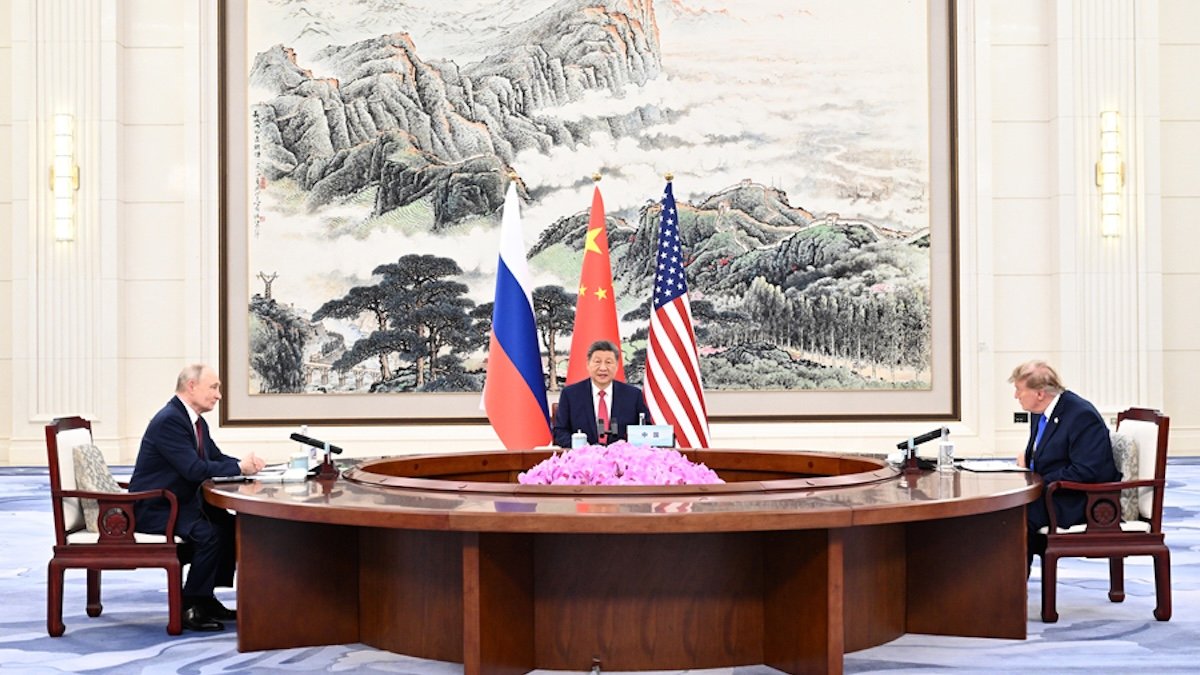
In a historic first, the presidents of the United States, China, and Russia gathered in Shenzhen on Thursday for a trilateral summit on the sidelines of the Asia-Pacific Economic Cooperation (APEC) forum. The meeting, which lasted ninety minutes, produced a four-point declaration aimed at easing great power tensions and addressing global challenges.
The joint statement, titled the US-Russia-China Heads of State Declaration toward Peace, commits the three nations to reforming the United Nations to better respond to modern threats, increasing production of refined petroleum products to stabilize energy markets, limiting the jurisdiction of international courts, and opening a dialogue on reducing nuclear risks.
Chinese President Xi Jinping, who hosted the meeting alongside US President Donald Trump and Russian President Vladimir Putin, called the gathering "groundbreaking" and noted it was the first time the leaders of the three countries had met in this format. He stressed that history shows when major powers cooperate, the world enjoys peace, and when they clash, chaos follows.
"More than 80 years ago, China, Russia, and the US fought side by side as the backbone of the world’s anti-fascist forces and won a great victory," Xi said. "History is the best textbook. We must remember it, learn from it, and use it to shape the future."
Xi's four principles for major power relations
Xi outlined four principles for how major powers should interact: mutual respect for sovereignty and core interests, peaceful coexistence under the postwar order, win-win cooperation in trade and energy, and dialogue to resolve conflicts. He explicitly rejected the inevitability of the Thucydides Trap, arguing that the choices of major powers determine whether rivalry leads to war.
"The Thucydides Trap is by no means inevitable. The key lies in the choices that major powers make," Xi said. "China, Russia, and the US should be partners and friends, and should not engage in conflict or confrontation."
The declaration also reaffirmed that a nuclear war cannot be won and must never be fought, echoing previous statements from the five permanent members of the UN Security Council. The three leaders agreed to hold further talks on nuclear risk reduction and non-proliferation.
On energy, the three countries pledged to increase the production and supply of refined petroleum products, underscoring the importance of stable energy flows for the global economy. This comes amid ongoing volatility in oil markets and supply chain disruptions.
The declaration also took aim at international courts, stating that state consent and the immunities of state officials are paramount, and that bodies like the International Criminal Court (ICC) must not abuse their jurisdiction. This reflects long-standing objections from all three nations to what they see as overreach by international tribunals.
Before the meeting, observers had expected discussions on the wars in Ukraine and Iran. Putin, who has set a high price for ending Russia's "special military operation" in Ukraine, reportedly refused to soften Moscow's claims to annexed territories and ruled out foreign peacekeepers. He also revived demands for NATO to withdraw to its 1997 borders.
On Iran, Beijing and Moscow side with Tehran, while Washington backs Israel. The trilateral statement did not directly address these conflicts, but Xi emphasized the need for political solutions and crisis communication mechanisms.
Chinese analysts see the summit as a diplomatic win for Trump, who is seeking to recover from the Republican Party's midterm setbacks. "The midterm results are prompting the Trump administration to take a more active part in the three-way dialogue," said Cui Hongjian, a professor at the Academy of Regional and Global Governance at Beijing Foreign Studies University, in an interview with Guancha.cn. "Diplomacy may become the area where the Trump administration focuses its efforts to recover from the midterm defeat."
Cui added that China played a key role in making the meeting happen, as Putin trusts Beijing more than Washington. He said the success of the trilateral meeting should be judged by whether it signals stable major-power ties and builds a framework for future talks.
The summit comes amid broader shifts in the Indo-Pacific, where China's arms exports are reshaping defense choices and the US-China tech rift is widening. Beijing will closely watch next month's US-hosted G20 summit, where Washington has previously sought to rally allies against China on trade and technology issues.