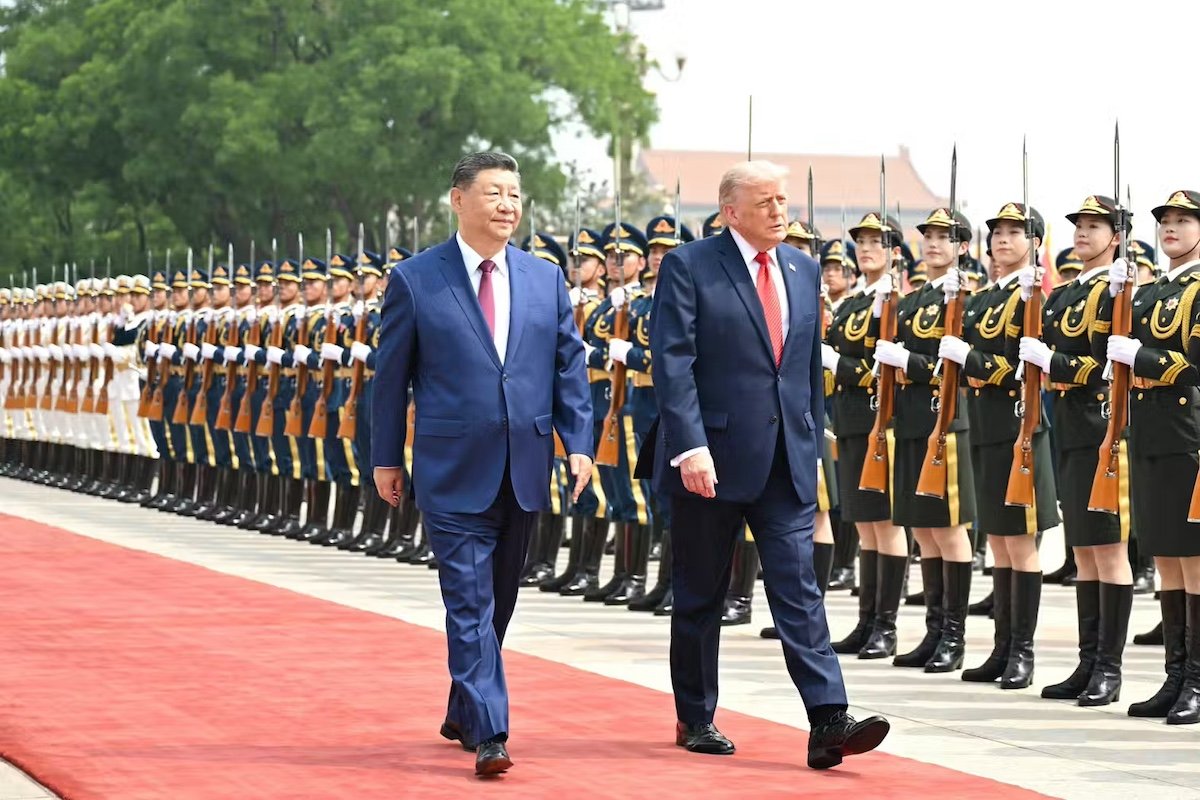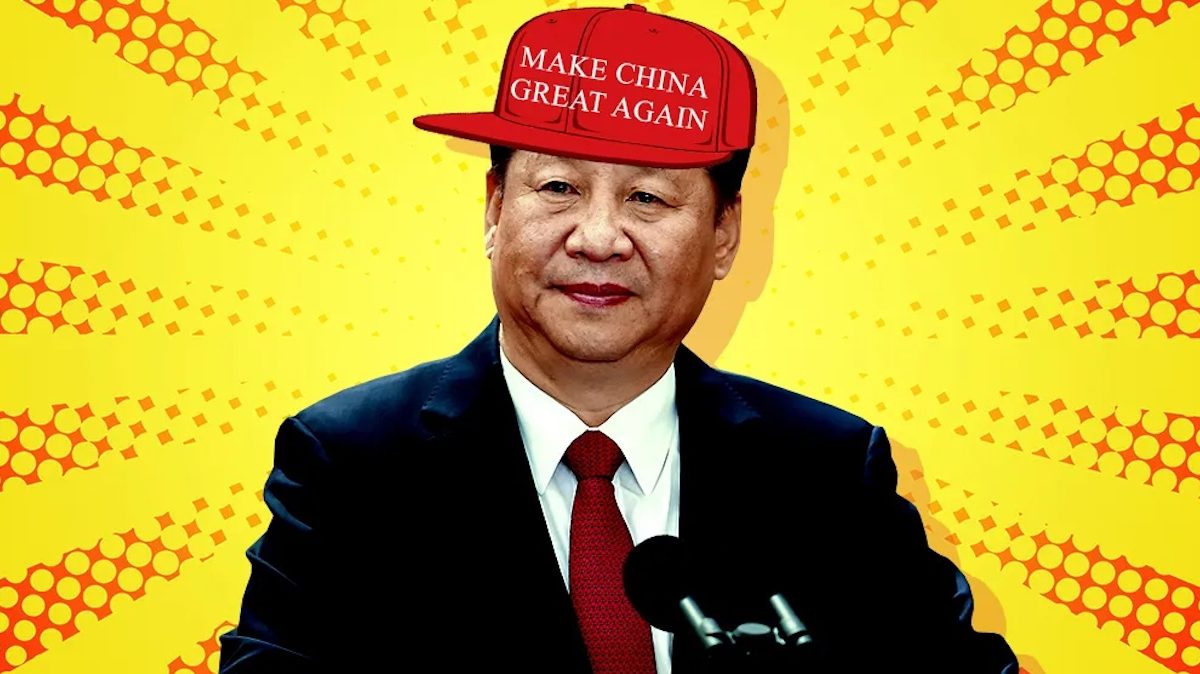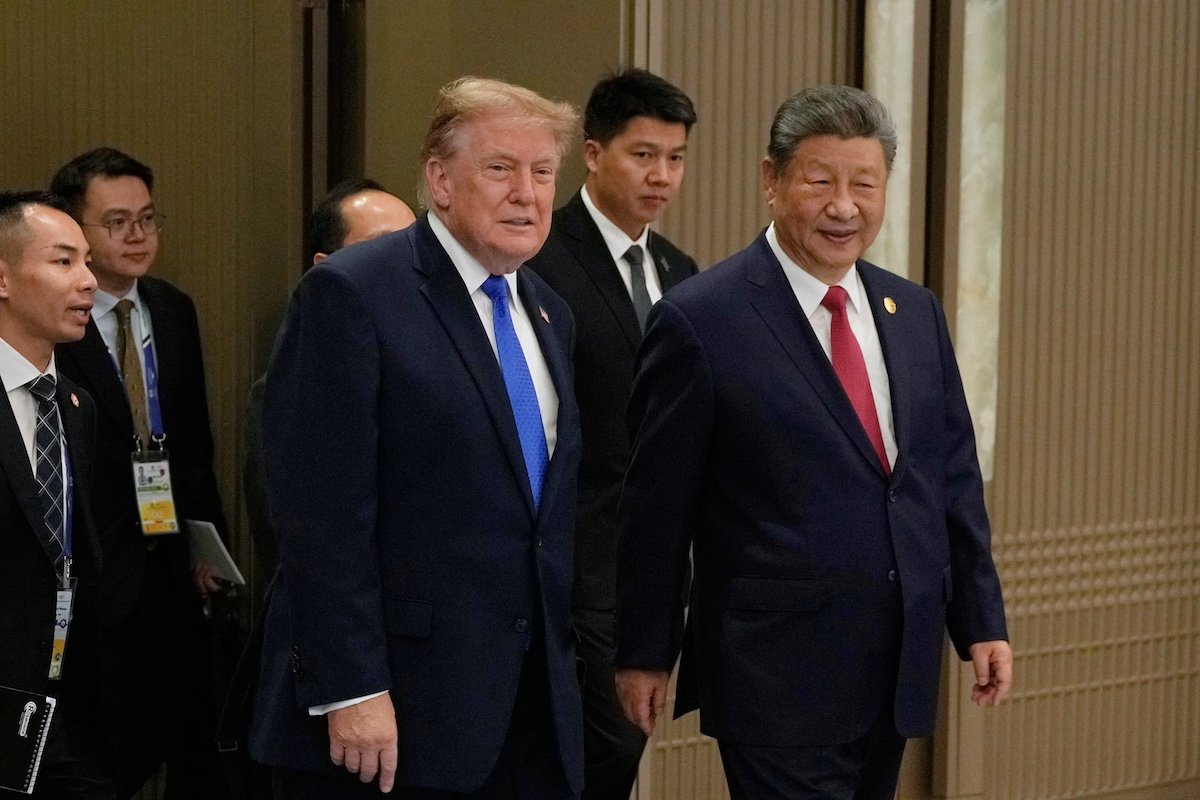
At the APEC leaders' summit in Shenzhen on Thursday, the contrasting addresses by US President Donald Trump and Chinese President Xi Jinping laid bare the widening technological chasm between Washington and Beijing. Speaking back-to-back, the two leaders offered Pacific Rim economies a stark choice: America's deregulatory rhetoric versus China's institutional embrace.
Trump, addressing delegates, dismissed global governance of artificial intelligence, declaring, "We oppose any form of globalist regulation or anything to control or stifle SI (superintelligence), and we won't allow that to happen, frankly." His remarks, aimed at Silicon Valley and his domestic political base, came just after he acknowledged that Pacific Rim economies produce "more than 90% of all semiconductors." Yet his speech offered no shared frameworks for computing or digital public goods. Instead, he pitched an Alaska liquefied natural gas pipeline—a project Seoul has yet to commit financing to—and expanded US oil operations in Venezuela, leaving Beijing to address Southeast Asia's urgent need for low-carbon data center power.
Xi responded with a four-pillar blueprint for an "Asia-Pacific community," emphasizing open regionalism, harmonized rules, and concrete institutional funding. "We should uphold open regionalism, steadily advance economic integration and develop a cooperation pattern that is open and integrated rather than exclusive or fragmented," he said, a pointed rebuke to Washington's unilateral chip and cloud export curbs. He pledged $20 million for practical APEC projects, announced a new Center for Asia-Pacific Community Studies in Shenzhen, and proposed regional mechanisms for digital technology, cross-border data flows, clean energy, and small business development.
Deregulation paradox
Trump's anti-regulation message collided with the reality facing regional telecom operators and cloud providers. On the same day, new Commerce Department rules took effect, imposing know-your-customer verification and licensing mandates on overseas data centers providing remote compute access to Chinese clients. Across Southeast Asia, operators hosting both Western hyperscalers and Chinese tech firms are now forced to police Washington's export perimeter, even as Trump dismisses international rules as "globalist" overreach.
Xi seized on this opening, positioning Beijing as the guarantor of institutional predictability. He promised regional institutions to govern cross-border data and smart customs without unilateral political interference. Russian President Vladimir Putin, speaking on the same stage, reinforced the message of regional integration, calling Russia an "integral part of the Asia-Pacific region" and urging members to use Russian logistics infrastructure.
Yet Thursday's speeches also suggested why neither Beijing nor Southeast Asian capitals see Washington's tech crackdown as immovable. Xi, who broke protocol to greet Trump personally on the tarmac, framed Beijing's hospitality as an expectation of concrete policy restraint. In bilateral talks at Shenzhen's Kylin Villa, Trump cast the relationship in transactional terms, touting a "30 for 30" tariff-reduction package covering $30 billion in bilateral commerce, while pressing for more agricultural purchases and citing a 97% drop in seaborne fentanyl.
Asked about the espionage scandal surrounding former Nvidia chief executive Jensen Huang, which had hardened support in Washington for tighter cloud controls, Trump waved it aside as "a tragedy" and added, "we have to take care of geniuses." He told Xi, "As long as you and I are in charge of things, we'll never have a problem," before confirming a brief sideline meeting with Putin.
Xi told Trump, "I am very firm in my conviction to working with you," framing their stabilization effort around a "new definition of a constructive China-US relationship of strategic stability" based on "respect, fairness and reciprocity."
For Southeast Asian governments, the upshot is an unmistakable strategic asymmetry: Beijing offers institutional architecture, cross-border data rules, and development cash, while Washington denounces global AI governance even as its own unilateral export restrictions take effect across Singapore, Malaysia, Indonesia, and Thailand. As the summit concluded, the region's leaders were left to navigate a landscape where great-power pageantry masks a hardening tech divide. For more on the shifting power dynamics, see Xi's upper hand in Shenzhen and Trump's Manila leverage play.