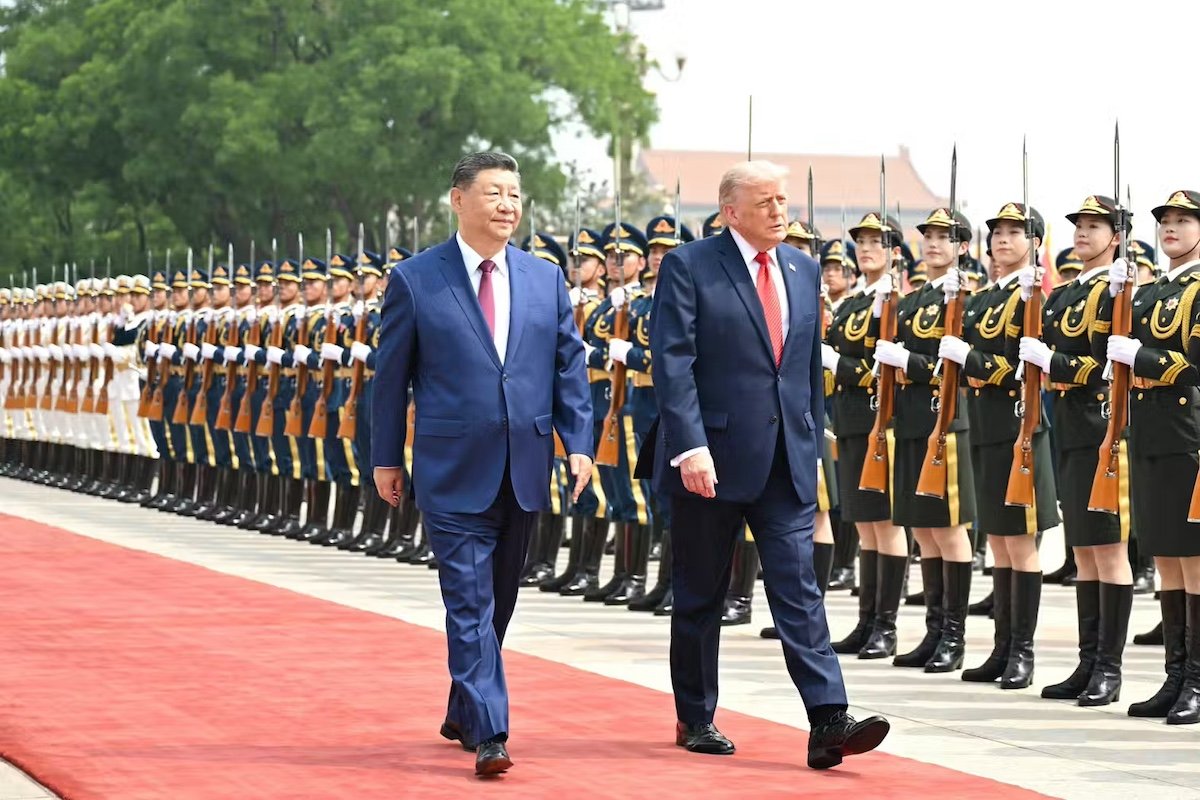
The Trump administration is considering whether to require American companies to disclose their use of Chinese artificial intelligence, according to a Reuters report from November 18. The move comes as models from Chinese developers—DeepSeek, Alibaba, and Moonshot AI—gain traction among US enterprises seeking capable, lower-cost alternatives to flagship offerings from leading American labs. Airbnb, for instance, runs its customer service bot on Alibaba's Qwen.
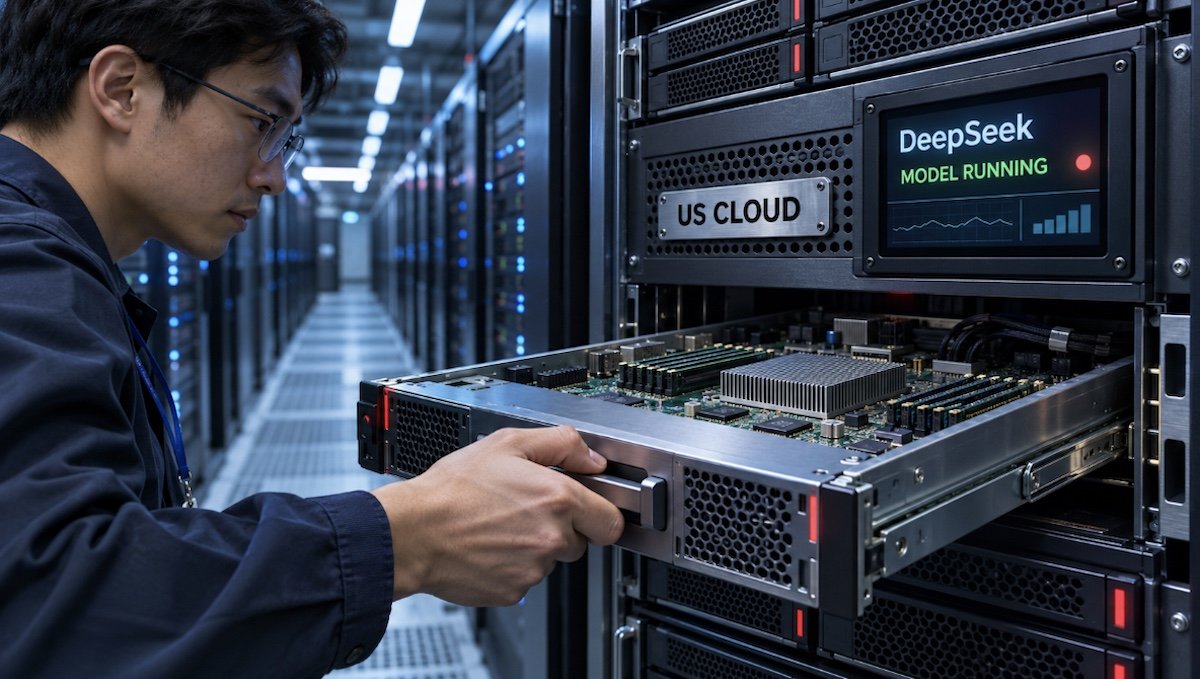
Yet even as Washington debates disclosure rules, American tech giants are actively selling access to those very rivals. In March 2025, Amazon Web Services added DeepSeek-R1 to Bedrock, its cloud AI platform. A US business can now deploy an AI engine built in China while paying an American provider to run it securely on domestic servers.
That arrangement captures a fundamental shift in the US-China tech rivalry. Chinese developers are building global market share by giving their software away, while American cloud providers make money from the infrastructure required to run it. For frontier AI labs like OpenAI and Anthropic, which rely on premium subscription and API fees, the pressing question is how much pricing power they can retain when a free-to-download alternative performs nearly as well.
What China gains by opening the weights
Alibaba's Qwen and DeepSeek's R1 are frequently described as "open source," implying their underlying code is entirely free to inspect and rebuild. "Open-weight" is the more accurate term. Think of weights as the mathematical memory a model builds up while training on vast amounts of data. Publishing these weights allows anyone to download and run the finished AI, even though reconstructing it from scratch still requires the original training data and engineering recipe.
For corporate buyers, downloadable weights alter the financial equation. A firm can run a model on its own hardware, host it through a preferred cloud vendor, or lock in a vetted version without worrying about sudden changes from an outside provider. Running the software still costs money for computing power, maintenance, and legal compliance, but open weights give buyers control over where that money goes and who touches their data.
For Alibaba, the strategy serves a clear commercial funnel: every engineer who learns to build on Qwen becomes a prospective customer for its cloud business. Familiarity carries from one project to the next, extending Alibaba's technological footprint far beyond its own servers even when it collects nothing upfront. This approach only succeeds if the models deliver in practice. Stanford's 2026 AI Index found that the performance gap between top US and Chinese models has effectively closed on standard benchmarks, though American systems still hold an edge in certain specialized domains.
The same report adds a caveat that matters here: the best closed models have pulled slightly ahead of the best open ones again, by about 3%. For an enterprise processing thousands of invoices a day, leaderboard rankings matter far less than two practical measures: reliability on its own documents and cost at scale.
Where the money goes
Cheaper, downloadable models place different parts of the US tech sector under very different pressures. Pure-play AI labs like OpenAI and Anthropic operate much like utilities, selling access to proprietary intelligence over the internet. When buyers find comparable capability at a fraction of the cost, those margins come under pressure.
Cloud giants like Amazon and Microsoft play a different game. Acting as digital landlords, they host dozens of competing models and collect rent regardless of which engine a client selects. More importantly, they sell the indispensable "plumbing": the security layers, databases, and monitoring tools that connect an AI brain to a company's internal data. Paying a cloud provider to manage an open-weight model has clear advantages. A bank can demand strict contractual guarantees on data privacy, uptime, and technical support, so that someone is on call if the system breaks.
Running a downloaded model in-house gives the bank full control, but it shifts the burden of cybersecurity and maintenance onto its own IT staff. Widely distributed weights also raise unresolved questions about how security patches reach users and whether firms can fully verify the supply chain behind a downloaded file.
Meanwhile, competitive strategies on both sides of the Pacific are converging. OpenAI has released its own downloadable gpt-oss models under an Apache 2.0 license, allowing developers to run them freely. Alibaba, for its part, gives away model weights while competing aggressively for enterprise cloud contracts. Both are using free software to win developers, and both are banking on hosting, support, and enterprise integration to generate returns.
The stakes grow sharper as this dynamic moves from computer screens into the physical world. China already dominates global manufacturing of drones, industrial robots, and electric vehicles. Open-weight models are a natural fit for these machines: a delivery drone or warehouse robot can run a downloaded model directly on its onboard chip, avoiding network delays, per-query cloud fees, and the security risk of sending sensitive camera feeds off-site. If Chinese models become the default brain for physical machines as well as for enterprise software, the consequences will extend well beyond cloud computing—potentially reshaping Indo-Pacific security dynamics and widening the US-China tech rift.
What Washington would be regulating is thus not just software, but a complex ecosystem where Chinese innovation and American infrastructure are deeply intertwined. The disclosure proposal, if enacted, would force companies to reveal their reliance on Chinese AI—a step that could have far-reaching implications for trade, security, and the global balance of technological power.