On November 18, as APEC leaders convened, China quietly introduced a new form of geopolitical leverage: strict export controls on tunnel boring machines (TBMs). Two days later, leaders from Indonesia, Australia, Singapore, Malaysia, and Thailand skipped their flights home and instead converged on Shenzhen for extended bilateral meetings with Chinese President Xi Jinping.
Official readouts from state media painted a picture of regional stabilization. Xi hailed a “full turnaround” in China-Australia relations, while Beijing and Jakarta launched negotiations for a Bilateral Comprehensive Economic Partnership. But beneath the diplomatic pleasantries lies a harder economic reality: Beijing is shifting its leverage from the digital realm to the physical foundations of developing economies.
From chips to tunnels
For years, geopolitical discourse centered on semiconductors, artificial intelligence, and critical minerals. In 2025, Beijing tightened controls on rare earths and magnets. Now, the focus has moved to massive, finished industrial products that dominate global market share.
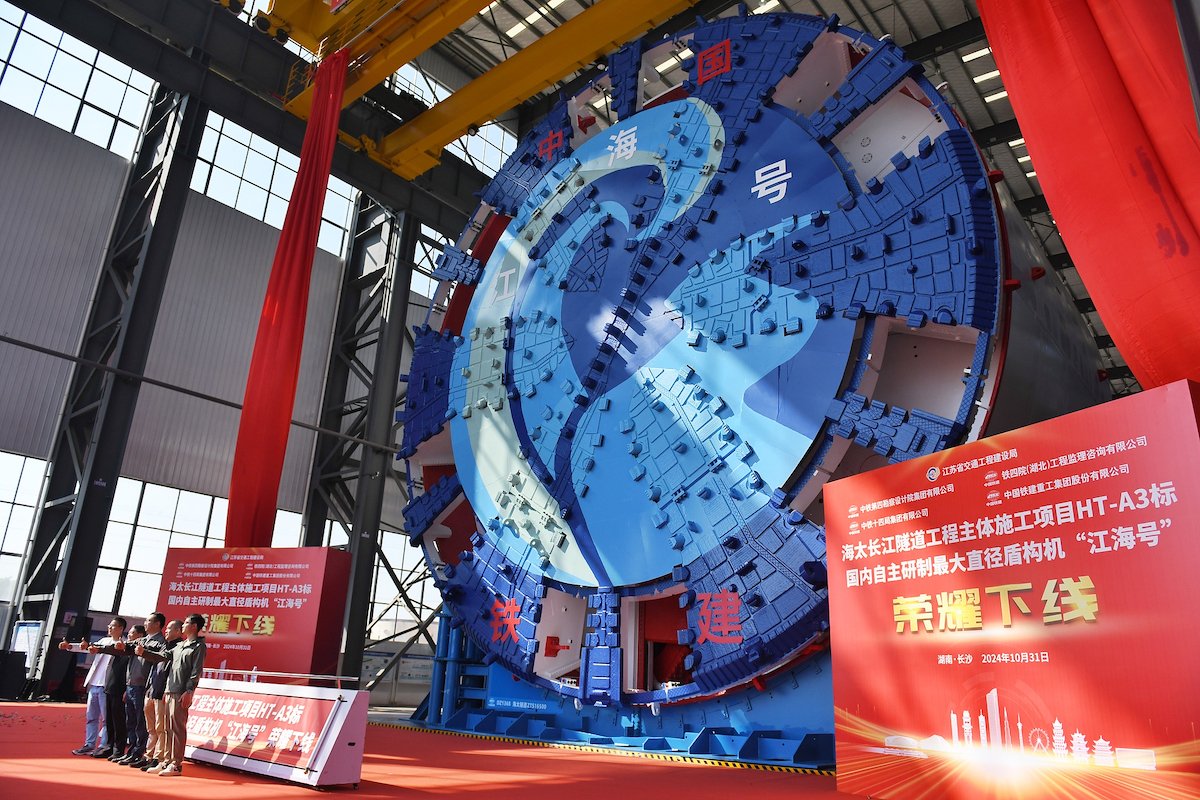
China’s Ministry of Commerce (MOFCOM) Announcement No. 50 of 2026, which took effect mid-APEC, placed export restrictions on TBMs—the mechanical leviathans that make modern urbanization possible. These machines carve out the subway systems of Jakarta, build high-speed rail networks in India, and dig the subterranean arteries of Singapore and Malaysia.
China holds a near-monopoly on TBM production. According to data cited by the Payne Institute, Chinese manufacturers account for roughly 70% of global output, churning out over 700 units annually—more than double the rest of the world combined. China Railway Engineering Equipment Group (CREG) has ranked number one worldwide for nine consecutive years, with its domestic rival China Railway Construction Heavy Industry (CRCHI) close behind.
The financial scale is staggering. UN Comtrade data reveals that in 2025, China exported approximately US$793 million in tunneling machinery under HS code 843031—about seven times the US figure of $109 million. However, the true value is likely higher, as these machines are often bundled into massive design-build civil contracts, making their commercial weight far larger than export statistics suggest.
Take a single underground metro package in the region, such as Manila’s $1.6 billion CP101 or Jakarta MRT Phase 2A’s $1.7 billion build-out. These multi-billion-dollar mega-projects are entirely anchored by the delivery of these machines.
Western firms still exist in this space. Germany’s Herrenknecht AG holds a 19% revenue share, and the US-based Robbins Company about 15%, but they compete fiercely for ultra-high-value, specialized contracts in the West. They simply cannot match the mass-market volume and state-backed pricing power of their Chinese counterparts.
This is exactly why the extended stays of Southeast Asian leaders in Shenzhen make profound sense. Nations in the Global South are undergoing rapid urbanization. They need subways, sewers, and transit tunnels—and they need TBMs.
By placing these critical machines under export controls, MOFCOM has created a new, highly potent diplomatic bargaining chip. This is not merely about protecting domestic technology; it is about raw geopolitical leverage. When nations like Thailand, Indonesia, or Malaysia come to the table to discuss trade imbalances or border controls, Beijing now has a trump card.
The unspoken message is clear: align with Western regulatory policies or isolate our exports, and the machinery required to build your future cities could be delayed or denied.
Furthermore, the corporate architecture of China’s TBM dominance makes this leverage uniquely effective. Unlike Western competitors, CREG and CRCHI are state-owned enterprises. They do not merely answer to shareholders; they answer directly to Beijing. This allows the Chinese government to align corporate export strategies seamlessly with national security and foreign policy objectives.
For years, Western analysts have assumed that China’s domestic economic reforms are stalling, and that the country is overly reliant on exports for growth. While there is truth to that, Beijing is proving highly adept at maximizing the geopolitical yield of the exports it currently dominates.
The Shenzhen summit showed that the era of “soft” infrastructure diplomacy is evolving into something much harder. As the US and its allies continue to build fences around microchips and AI, China is quietly taking control of the literal bedrock of global development. The leaders who shook hands in Shenzhen know this all too well: in the 21st century, whoever controls the tools of urbanization shapes the future.
Related: China's new carrier drone and ocean research ships show Beijing's expanding reach, while the Shenzhen summit itself revealed the limits of diplomatic theater.