When India placed the Indus Waters Treaty (IWT) in abeyance last year following the April 2025 Pahalgam attack and subsequent hostilities, most observers concentrated on the diplomatic and legal fallout. Yet a more consequential dimension has emerged: the gradual erosion of transparency in one of the world's most durable transboundary water-sharing arrangements.
The treaty, which has survived wars and military standoffs for over six decades, established a framework for managing competing interests over the Indus River system—a basin that supports roughly 90% of Pakistan's food production and nearly 80% of its cultivated land. Agriculture contributes about one-fifth of Pakistan's GDP and remains a primary source of employment in rural areas. The treaty's endurance was long seen as proof that technical cooperation could withstand political hostility.
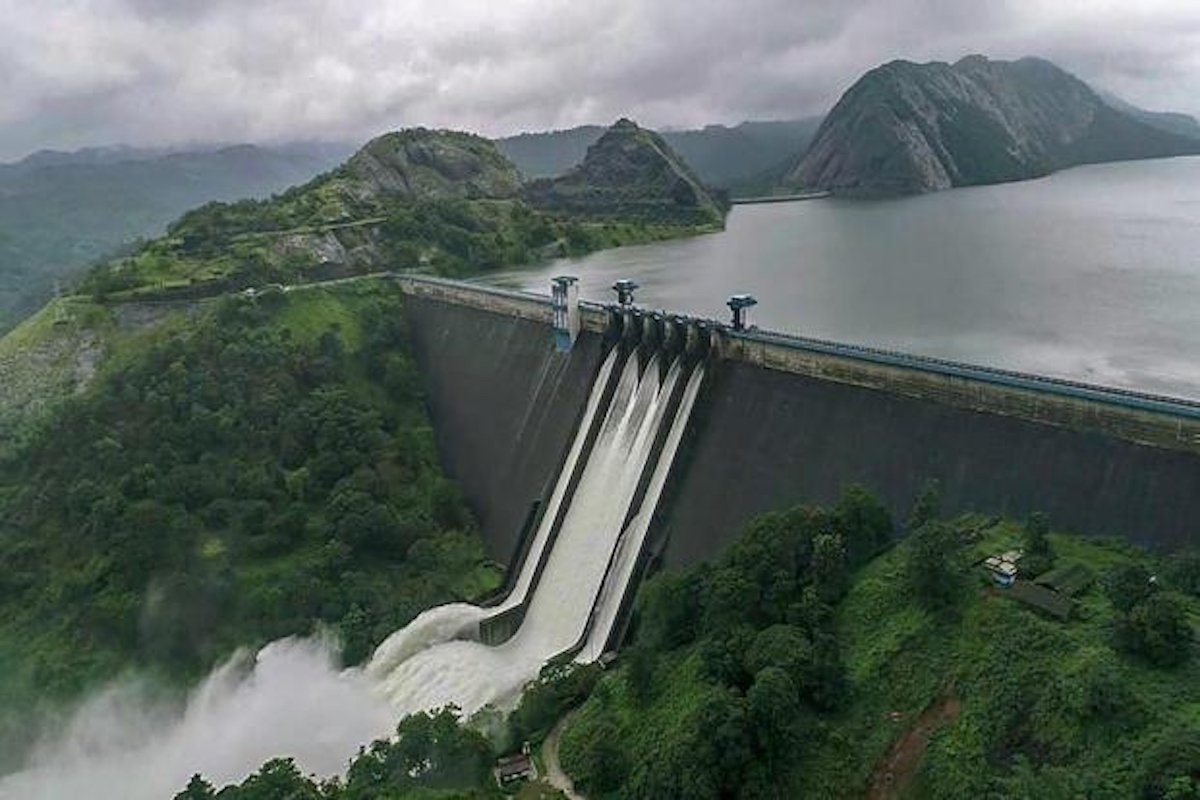
Today, however, the challenge extends beyond water allocation. It centers on transparency, compliance, and the growing strategic value of information in shared river basins. The controversy surrounding India's Kishanganga Hydroelectric Project in Jammu and Kashmir illustrates this shift. The project, which diverts water from the Neelum River to a power plant, has been a flashpoint between New Delhi and Islamabad for years, with Pakistan arguing it violates the treaty's provisions on environmental flows.
Environmental Flows as a Security Issue
The debate over environmental flows is often framed as a technical matter, but it is increasingly a security issue. The Neelum Valley is a fragile mountain ecosystem dependent on sustained river flows that support biodiversity, agriculture, and local livelihoods. Reduced flows can alter aquatic habitats, affect sediment transport, accelerate riverbank erosion, and place additional pressure on communities already adapting to environmental change. Over time, such disruptions can produce economic and social consequences far beyond the immediate project area.
In an increasingly water-stressed region, access to timely hydrological information is arguably becoming as important as access to the water itself. This shift is transforming water data into a strategic resource with implications extending far beyond a single hydroelectric project. The Indus Basin supports one of the world's largest irrigation networks, and even relatively small uncertainties regarding river flows, seasonal releases, or reservoir operations can generate significant economic consequences.
The Kishanganga dispute ultimately raises a larger question about the future of international river management. The IWT had long been regarded as a rare example of institutional success in a region otherwise characterized by geopolitical rivalry. Its endurance demonstrated that legal frameworks, technical cooperation, and dispute-resolution mechanisms could survive even when broader political relations deteriorated. That achievement should not be taken for granted.
Similar disputes over upstream data sharing have emerged along the Mekong River, where downstream Southeast Asian states like Thailand and Laos have been adversely affected by the limited transparency of China's dam operations, complicating their drought management, flood forecasting, and agricultural planning. The real danger is not simply the possibility of reduced river flows. It is the gradual erosion of trust that occurs when information becomes contested and treaty mechanisms lose credibility. Once confidence in institutional safeguards begins to weaken, technical disputes can quickly escalate into political and strategic conflicts.
India's water infrastructure push has already raised concerns about regional stability, as noted in our analysis of how New Delhi's dam-building ambitions threaten South Asia's fragile peace. The Indus Waters Treaty endured because both sides, despite their differences, generally accepted that cooperation remained preferable to confrontation. Preserving that principle will be essential as the basin enters an era of mounting environmental and geopolitical pressures.
In an age of climate uncertainty, control over hydrological information may prove as consequential as control over dams themselves. The future of the Indus Basin will depend not only on how water is shared, but on whether the data needed to verify that sharing remains available. Once transparency erodes, trust often follows. In South Asia, where water security, food production, and strategic stability are crucially intertwined, that may prove the most consequential risk of all.