Spend enough time in airports, and you notice a small comedy: lounge-access holders rarely pause to consider whether the sandwich outside tastes better. The lounge is a privilege, and privileges exist to be used. So the holder walks past the food court and settles behind the frosted glass, because the door carries a members-only sign.
SpaceX spent its private years running the same arrangement. Capital arrived through layered special-purpose vehicles, each one another rope across the entrance. Investors bought the rockets and, at the same time, bought the seat behind the glass. As valuations rose, the pitch increasingly shifted toward joining early, staying early, and later arrivals paying to take your place.
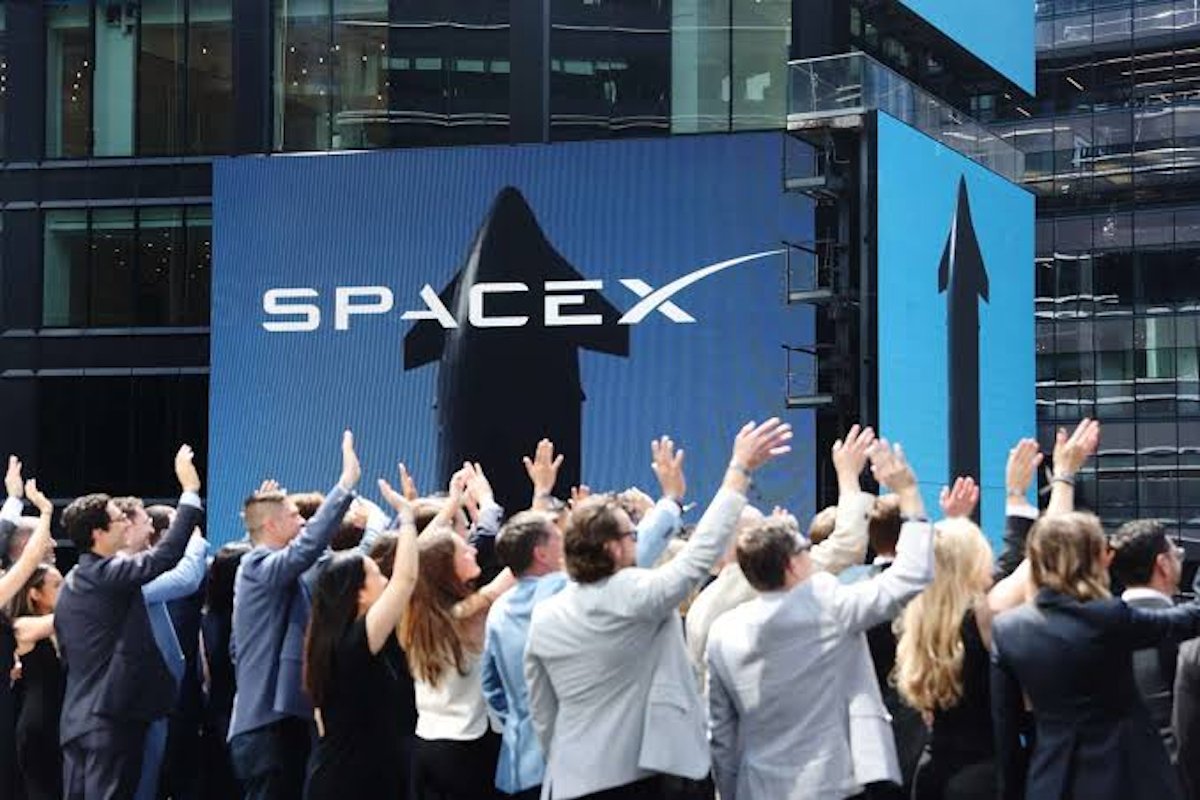
Last week, the doors opened, and they did so strangely. The price was not discovered by the market. It was announced: a fixed $135. The public float is tiny—4%—to ensure the FOMO does not disappear. The listing date also looks suspiciously well chosen. It ensures that the days insiders are first legally allowed to sell sit right next to the days the big indices are mechanically forced to buy.
That last bit ensures continued extension. In the World Cup month, we might as well call it Extra Time. The Nasdaq rewrote its rules so a giant can join in 15 days. It abolished the minimum float and replaced it with a cap that counts a 4% float as if it were closer to 13%. What’s ahead is even better: unlike most popular indices globally, Nasdaq does not have provisions to exclude majority-holder or insider ownership. Musk may not intend to sell meaningfully for a long time, but his stake will be counted as available float once the lock-ups on his shares expire. The result is that SpaceX’s weight in the index could rise multi-fold in the coming months. For the next few months, this stock will move on plumbing, not rockets. Who must buy, who may sell and when.
Capital Markets and Asia's Tech Ambitions
Reading the motives on both sides of a trade is the oldest game in any liquid market. The skilled play it with every trick in the book. The rest get swept along, often with lasting damage. This dynamic has particular resonance for Asian markets, where tech listings have often been punctuated and punctured by cash raisings. The recent history of Hong Kong-listed equities does not bode well given the pipeline of US issuances. The bears often point out that massive issuances cause markets to peak historically, although in reality, it’s generally the other way around. Ever more ambitious capital issuances continue in a raging bull market until a prolonged reversal brings a complete halt.
As large as the near-$160 billion raises of SpaceX and Alphabet may sound, amounts even multiple times higher are not sufficient by themselves to exhaust the market, given how small these amounts are as a percentage of the size of the markets and liquidity pools available these days. A latter-day historian may still see peak market coinciding with peak cash raises, but the reasons why the prices go up or down lie somewhere else.
For Asian investors, the SpaceX IPO is a reminder of the structural advantages of US capital markets. The ability to rewrite index rules, the tolerance for concentrated insider ownership, and the sheer depth of liquidity create an environment where companies like SpaceX can thrive. This contrasts with the more cautious approach in markets like Tokyo or Mumbai, where Japan's Takaichi navigates budget, party, and defense spending challenges while also trying to attract tech listings. Similarly, US-India ties remain resilient, but the flow of capital for innovation still heavily favors Silicon Valley over Bengaluru.
Football fans obsess over possession statistics. They argue endlessly about which team completed more passes or controlled the midfield. But possession is a vanity metric. A team with 35% possession can easily win the match if its striker is simply more desperate to reach the ball first. Flows from arbitrarily defined groups of investors are the vanity metric of the stock market. They seem to explain everything that has happened if selected carefully, and, in the hands of master storytellers, have the perfect prognosis for the future, but all one can truly say about them is that they exist all the time, like market moves.
In emerging markets, investors spend endless hours studying foreign inflows, domestic inflows, retail inflows, pension inflows, and every other flavor of buying. In developed markets, the groups discussed most often are retail investors and the passives. Optimists gravitate towards whichever number is positive, or they deem is about to turn positive, and rest their case on the buyers of tomorrow. Pessimists choose the opposite side. Both sides treat the data as revelation. Entire narratives emerge from one side of the trade. Yet on an ordinary trading day, stripped of new issuance and capital raisings, net buying and net selling must sum to exactly zero. Every share purchased is a share sold. Every enthusiastic buyer is matched with an equally enthusiastic seller. The price moved up or down only because of the marginal imbalance at the moment of trade.
The SpaceX IPO is a masterclass in market mechanics, but its implications extend far beyond Cape Canaveral. For Asian tech ecosystems, it underscores the need for deeper capital markets and more flexible listing rules. As China's missile swarm strategy targets US carrier groups and Japan's defense overhaul gains urgency, the race for technological supremacy is also a race for capital. The two sides of the SpaceX coin—privilege and plumbing—offer lessons for the entire Indo-Pacific.