In a seminal article on peace processes, scholar Stephen Stedman warned that “peacemaking is a risky business,” with the greatest risk coming from “spoilers—leaders and parties who believe that peace emerging from negotiations threatens their power, worldview and interests, and use violence to undermine attempts to achieve it.” That warning is proving prescient for the US-Iran peace process, which survived its first major test in Switzerland last week but remains vulnerable to multiple spoilers.
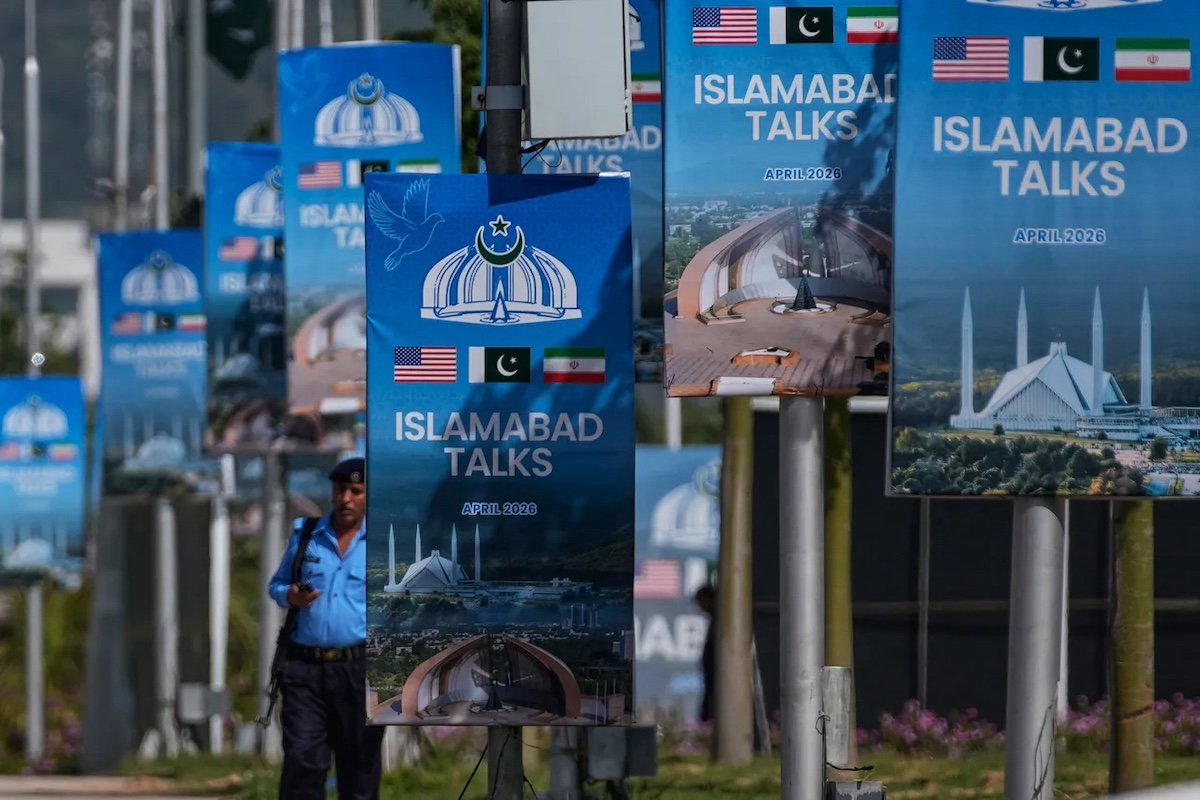
The memorandum of understanding (MOU) between Iran and the United States, announced on June 14 after weeks of Pakistani mediation, set the stage for face-to-face talks in Bürgenstock, Switzerland, on June 19. The talks, dubbed the Lake Lucerne Summit, were co-mediated by Pakistan and Qatar. However, heavy fighting in Lebanon between Israel and Hezbollah—which violated the MOU’s first clause calling for a cessation of military operations “including in Lebanon”—prompted Iran to initially refuse to attend and threaten to reclose the Strait of Hormuz. US Vice President JD Vance, slated to lead the American delegation, also canceled his flight.
Yet by June 20, Iranian state TV announced that a delegation led by Speaker of Parliament Mohammad Bagher Ghalibaf and Foreign Minister Abbas Araghchi had arrived in Switzerland. Vance then departed the US to join Special Envoy Steve Witkoff and Jared Kushner, who had traveled earlier. The talks began on June 21 with separate meetings between each delegation and the mediators, followed by quadrilateral discussions.
Vance opened with a conciliatory statement: “Never before has the Iranian and American leadership met at such a high level… What the President has asked us to do is turn over a new leaf to transform our relationship with the people of Iran, and to extend an outstretched hand.” But 80 minutes later, the Iranian delegation learned that President Donald Trump had told Fox News in a phone call that unless the Strait of Hormuz remained open, the negotiators “will never make it back to their country—in fact, they will have no f**king country to return to at all.” The Iranians protested to the mediators and staged a walkout, though it proved temporary. Vance later described the talks as “messy” but noted that negotiations continued past 1 a.m., totaling about 18 hours of intensive discussions.
Outcome and Substance
The talks produced a roadmap for a final deal within 60 days and established a High-Level Committee for Political Oversight to manage the process. Three working groups—Nuclear, Sanctions Tracking, and Monitoring and Dispute-Resolution—will report weekly. Two crisis management mechanisms were also agreed: a Strait of Hormuz Secure Communication Channel (a hotline) to ensure safe passage for shipping, and a Lebanon De-Confliction Cell to prevent further military escalation.
Vance called the talks “a good foundation,” while Araghchi said the mediators delivered “major progress.” A joint statement by the mediators described “encouraging progress” and a “positive and constructive atmosphere.” The Swiss Foreign Ministry also welcomed “constructive progress.” Technical talks between working groups began the next day.
However, the process remains threatened by multiple spoilers. Israel and Hezbollah, long-term enemies, reengaged in fighting on March 2 after Hezbollah launched missiles to protest the assassination of Ayatollah Ali Khamenei. Their ongoing hostilities directly violate the MOU’s first clause. Meanwhile, Trump’s inflammatory remarks and hardliners in Iran continue to test the fragile trust. The mediators appear to have employed what Stedman calls “the departing train strategy”—making clear that the peace process will move forward irrevocably, leaving spoilers behind. Other strategies for managing spoilers include inducement, socialization, deterrence-coercion, and withdrawal.
The success of this process will depend on whether the mediators can contain these spoilers and maintain momentum. As Stedman noted, understanding why a party refuses to honor an agreement is crucial. For Israel and Hezbollah, the motivations are deeply rooted in regional rivalries; for Trump, it may be personal pique; for Iranian hardliners, ideological opposition. The coming weeks will test whether the departing train can outrun its would-be saboteurs.