At Switzerland's Lake Lucerne last week, US Vice President JD Vance announced that Iran had agreed to allow United Nations nuclear inspectors back into the country, calling it a first step toward permanently ending Tehran's nuclear program. Iran's foreign ministry promptly disputed that characterization.
The framework Vance's team is negotiating, brokered through Pakistan and Qatar, would reopen the Strait of Hormuz, lift oil sanctions, and unfreeze billions in Iranian assets. Behind the triumphalism, however, lies a bargain: caps on uranium enrichment, a smaller stockpile, inspectors on the ground, and sanctions lifted in return for compliance.
That was the deal President Donald Trump tore up in 2018, repeatedly calling it “stupid” and “the worst deal ever.” It took a war for him to reopen it. In late February, a joint US-Israeli strike killed Iranian Supreme Leader Ali Khamenei, disrupting Iran's command hierarchy.
A Pattern of Containment
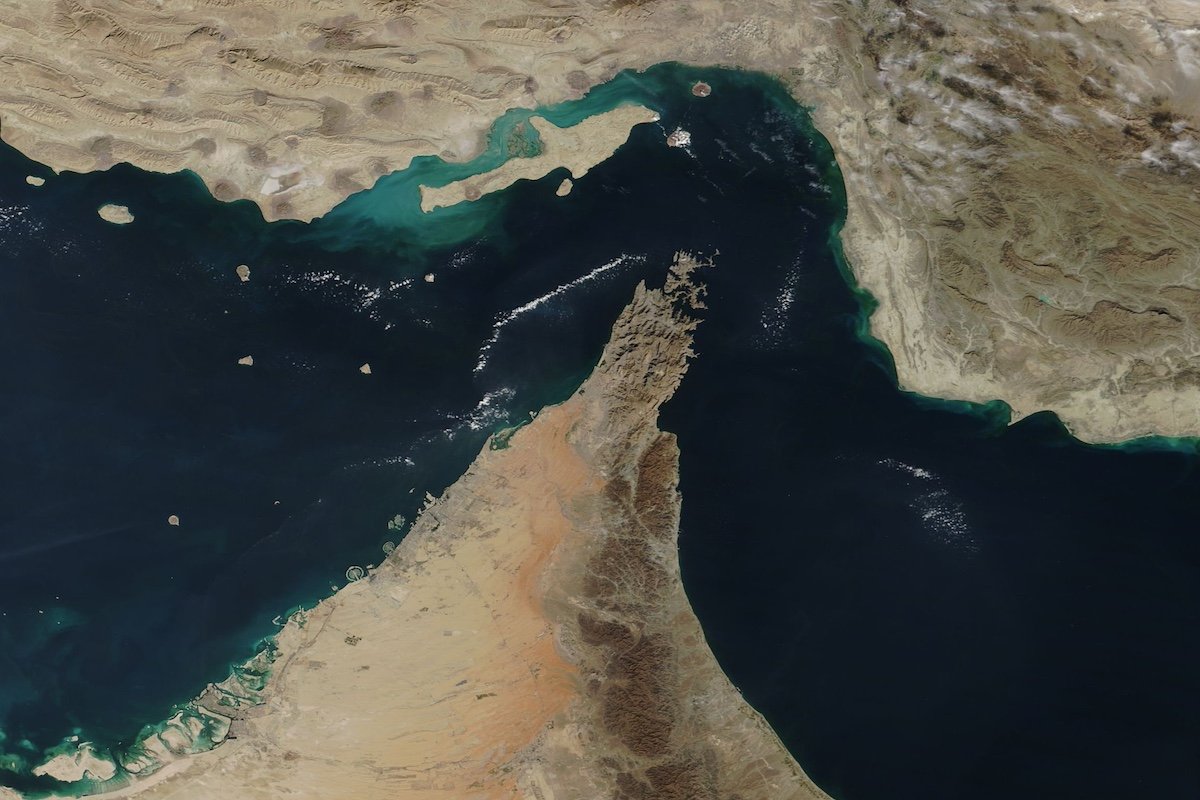
The strait has since been closed, reopened, and threatened, causing global oil prices to spike, fall, and spike again. Tehran now insists it alone will police the waterway while imposing tolls on passing ships, threatening freedom of navigation through a channel that carries one-fifth of the world's oil.
Nine days after the June memorandum of understanding was signed, the US was bombing Iran again, including strikes on coastal missile and radar sites. The attacks came in response to an Iranian drone attack on a cargo ship in the strait.
Iran's regime is weaker but angrier, with President Masoud Pezeshkian still stating flatly that his country will never surrender the right to enrich. The endgame on the table looks less like a victory than containment: a postponement with airstrikes attached, the very policy the deal was built to replace, now rebuilt at gunpoint.
This dynamic echoes how Russian President Vladimir Putin has invoked philosopher Ivan Ilyin to justify his actions after the fact. Strongmen tend to adopt a thinker after executing their decisions, a sequence now visible in Trump's White House. The old order built after 1945—the United Nations, Bretton Woods, NATO—was itself an improvisation, assembled from scars rather than blueprints. Its success led to its downfall, as heirs mistook a hastily improvised safeguard for a permanent rule.
This pattern was particularly pronounced in Iran, where Washington has spent more than 40 years managing the situation rather than resolving it. The 2015 Joint Comprehensive Plan of Action (JCPOA) exemplified this approach: contain, monitor, and delay. Trump saw that the 2015 deal was hollow but mistook the remedy. He believed destroying Iran's nuclear sites would end the threat, when Tehran's real strength lay in its missiles and proxies.
Walking away spent those constraints without securing the better deal that never came. The war that followed did shift the balance of power. Yet the terms now taking shape would be recognizable to the negotiators of a decade ago. The doctrine the war was meant to vindicate—zero enrichment and full dismantlement—is being surrendered at the table. The instinct outran the doctrine, and the reality that you can bomb a facility but not the knowledge of how to build one, or that Iran will trade enrichment caps but not the right to enrich, has reasserted the old logic.
The lesson isn't that force is ineffective. Rather, the old order didn't fall because of a better idea but because the memory sustaining it faded and habit took over. In a crisis, people typically seize the moment without knowing what comes next. Putin found a coat that suited him after the fact. Trump's impulsive decisions, driven largely by grievance, lack a guiding philosophy.
The last order was built under conditions of exhaustion, necessity, and the depletion of easier options. The next one probably will be too. Lake Lucerne, for all its talk of new beginnings, really reflects the cost of past decisions catching up. For Asian nations dependent on stable energy flows through the Strait of Hormuz, this deal offers a fragile reprieve but no lasting solution. As we noted in our analysis of the ceasefire, the crisis has been deferred, not resolved. Meanwhile, the MOU itself represents a defeat for Trump's maximalist stance, reshaping Asian energy security in ways that will take years to unfold.