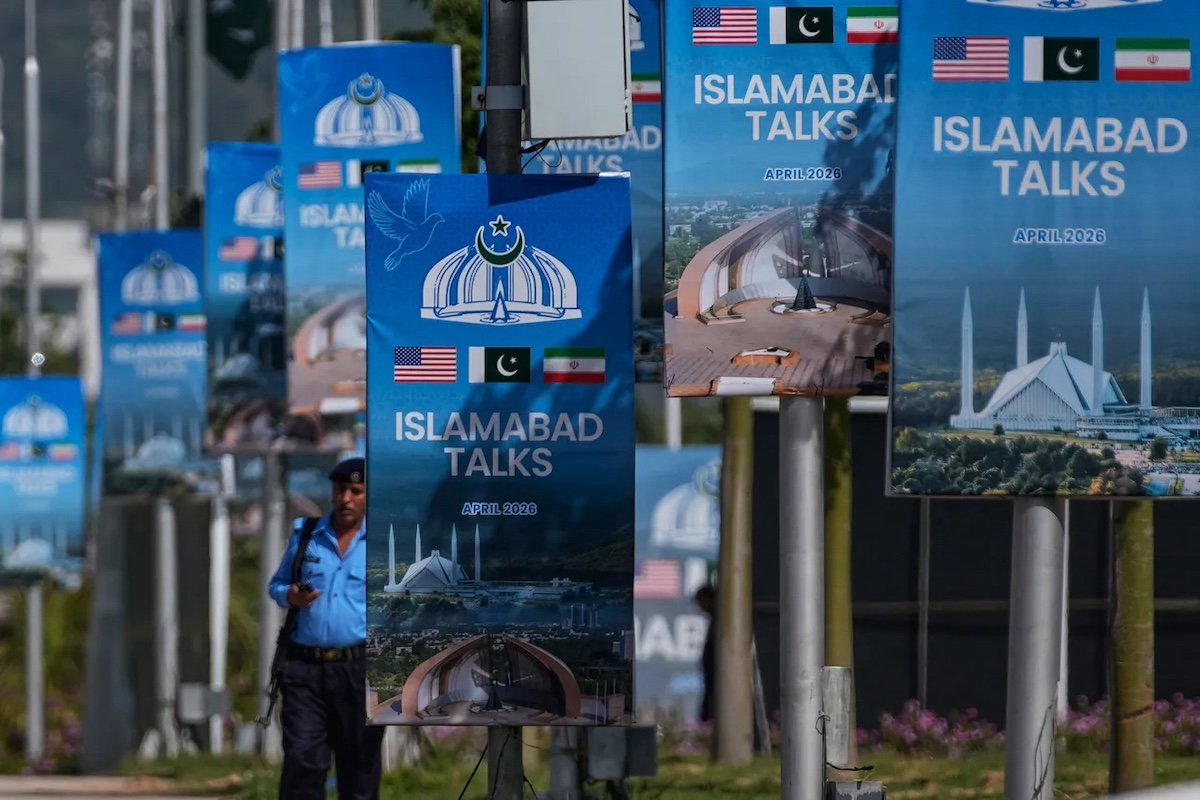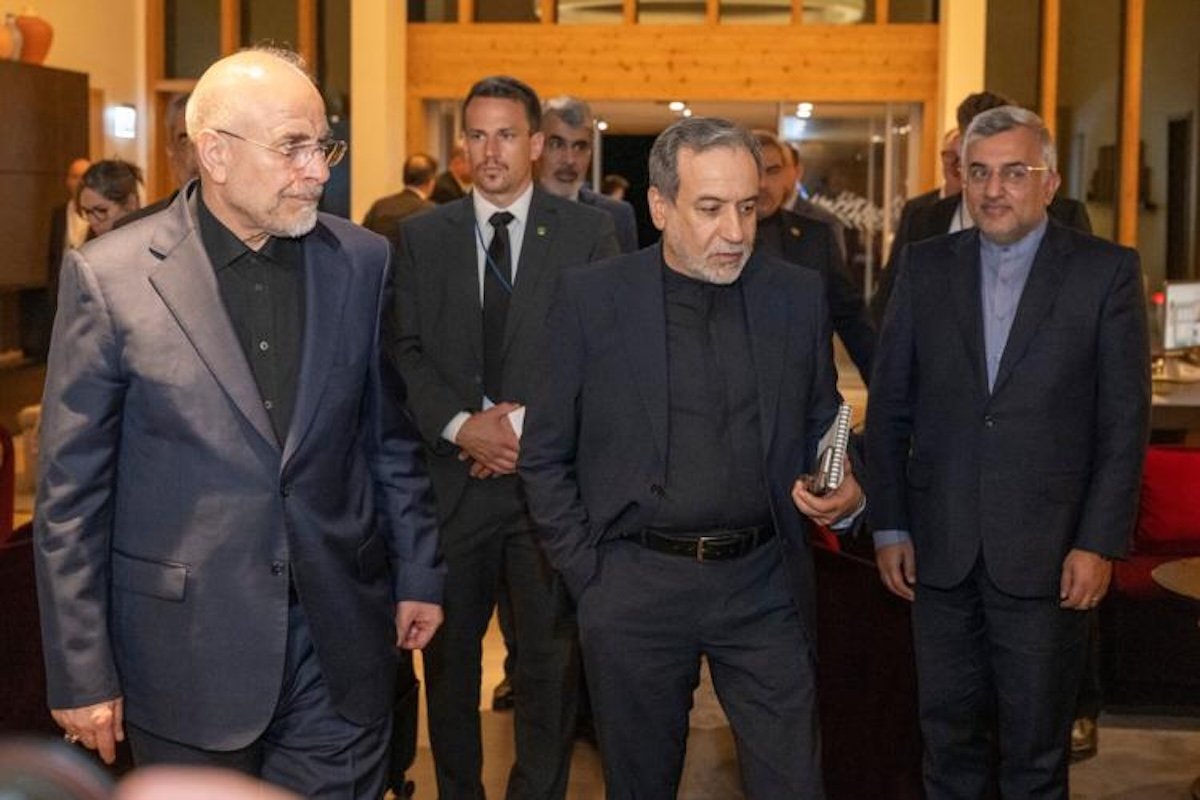
Iranian Foreign Minister Abbas Araghchi declared late Sunday that peace negotiations in Switzerland have achieved “major progress,” even as US President Donald Trump’s belligerent military threats and Israel’s continued assault on Lebanon risked derailing the high-stakes talks. Araghchi credited what he called “tireless Pakistani and Qatari mediation” with securing commitments to establish a “deconfliction cell” aimed at ensuring “the termination of military operations in Lebanon,” as required under a recently signed memorandum of understanding (MOU).
The Iranian delegation reportedly left the Swiss negotiating venue on Sunday in response to Trump’s threat to assassinate Iranian diplomats and “take over” the Middle Eastern country. These threats, Araghchi argued, violated the MOU’s clause requiring parties to “refrain from the threat or use of force against each other.” Despite the walkout, Araghchi said negotiators had agreed to an end to the US blockade on Iran, the release of some of Iran’s frozen assets, and a “major reconstruction and development plan” for Iran.
Mediators Outline Roadmap
In a joint statement late Sunday, the governments of Pakistan and Qatar said that negotiators agreed on “a roadmap toward reaching a final deal within 60 days, laying the foundation for the immediate commencement of further technical talks.” The statement added that “a communication line between the parties has been formed … to avoid incidents and miscommunication with the aim of safe passage for commercial vessels through the Strait of Hormuz.” The mediating parties pledged to “continue to do their utmost to ensure that the negotiations continue to be conducted in a constructive atmosphere with the aim of reaching a final deal.”
The optimistic comments came after the first round of formal talks in Switzerland got off to a shaky start, with Iran’s delegation postponing its arrival due to a deadly barrage of Israeli airstrikes in southern Lebanon late last week. Those strikes, which killed 18 people, were a stark reminder of the fragility of the peace process. As we reported in Israeli Strikes in Lebanon Kill 18, Derail US-Iran Peace Talks in Switzerland, the violence threatened to unravel the negotiations before they even began.
Israel’s leadership, which is not a party to the peace negotiations, has refused to end its occupation of Lebanon, a major obstacle in the way of a final deal to end the war on Iran that the US and Israel launched in late February. Iran has said the Trump administration must force the Israeli government to end its assault on Lebanon. In a social media post on Sunday, Israeli Defense Minister Israel Katz declared that “Israel has no intention of withdrawing from the Beaufort, which is an integral part of the security zone in Lebanon and essential for the defense of the Galilee settlements and IDF forces.” Katz added, “As Prime Minister [Benjamin] Netanyahu and I have clarified – Israel will not withdraw from the security zone in Lebanon.”
The standoff underscores the broader geopolitical stakes. For Asian capitals like Beijing, New Delhi, and Tokyo, the outcome of these talks carries significant implications. A stable Iran could reshape energy markets and reduce tensions in the Strait of Hormuz, a critical chokepoint for oil shipments to Asia. As we noted in US-Iran Peace Deal Shakes China's Energy Calculus and Geopolitical Position, any deal would force China to recalibrate its energy strategy and its relationship with both Tehran and Washington.
The Iranian delegation’s walkout, while dramatic, may be a tactical move rather than a permanent rupture. Araghchi’s upbeat assessment suggests that both sides see value in continuing the dialogue, even as Trump’s threats and Israeli actions create a volatile backdrop. The 60-day roadmap offers a window for technical talks to proceed, but the path to a final deal remains strewn with obstacles, not least the unresolved issue of Israel’s occupation of Lebanon.
For now, the mediating parties—Pakistan and Qatar—are working to keep the process on track. Their role highlights the growing diplomatic influence of Asian and Middle Eastern powers in a region often dominated by Western actors. Whether they can bridge the gap between Iran’s demands and US-Israeli red lines will determine if this fragile peace process can survive the next round of talks.