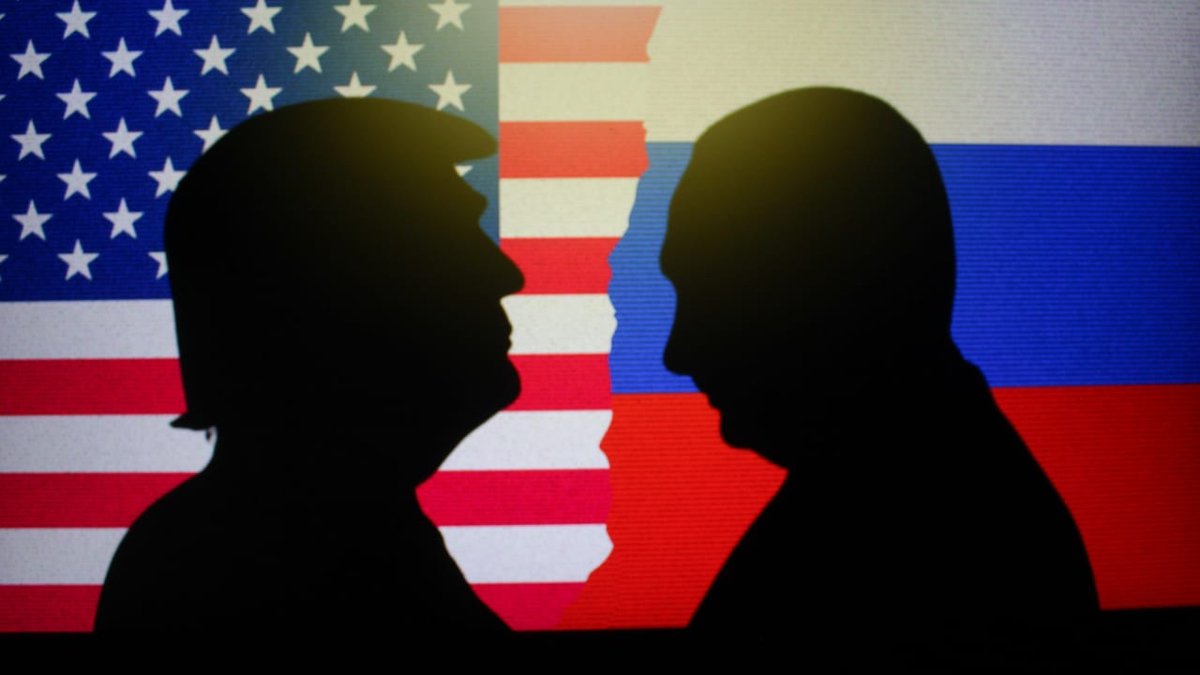
US Secretary of State Marco Rubio stated on May 22 that formal diplomatic talks over the Ukraine war are effectively frozen, signaling that Washington’s relationship with Moscow will continue its decades-long decline. The last meeting between President Donald Trump and President Vladimir Putin took place in August 2025 in Alaska—a location steeped in historical irony—and produced no meaningful engagement. No American president has visited Russia since Barack Obama in 2013.
Russia is the only great power with which Washington maintains an openly adversarial relationship. By contrast, Trump’s visit to China in May 2026 and his emphasis on friendship with President Xi Jinping reflect a desire for amicable ties with Beijing, even if underlying tensions persist. This asymmetry underscores how the US-Russia rivalry has become the defining fault line in global affairs, erasing the cooperative model the two powers built after World War II.
Cold War-era agreements on arms control and maritime encounters once stabilized relations and set global standards. Many of those treaties, along with post-Cold War arrangements, have since collapsed. America’s advantage over a weakened post-Soviet Russia has left the balance uneven, reducing well-defined spheres of influence. Russia’s struggle to control Ukraine and uncertainty over Washington’s global leadership role have reinforced each side’s antagonism.
Historical Roots: From Alaska to the Pacific
The US-Russia rivalry predates the Cold War by centuries. The first official Russian expedition to sight the Alaskan mainland came in 1741, led by Danish navigator Vitus Bering, in search of animals for the lucrative fur trade. By 1784, the first permanent Russian settlement was established on Kodiak Island, and dozens of Russian merchants, explorers, and missionaries began settling the region.
American merchants had already established a transatlantic trade relationship with Russia before the US War of Independence, in violation of Britain’s Navigation Act. The Russian Empire’s neutral stance during the war helped build trust that fueled commerce afterward. By the 1790s, American traders began Arctic trade. Russia established the Russian-American Company (RAC) in 1799 as a state-sponsored colonial trading monopoly, basing its political administration in Novo-Arkhangelsk (now Sitka, Alaska).
Fort Ross, established in northern California in 1812, became the RAC’s southernmost outpost. Spain and later independent Mexico claimed the area, but neither had sufficient presence to deter Russian development, which unsettled Washington. In 1821, Russia officially laid claim to much of the Pacific west coast down to the modern US-Canadian border, before American and British objections pushed its claim back to the present southern border of Alaska.
The overlap between expanding Russian and US activity was also felt in Hawaii. The RAC briefly established a foothold at Waimea Bay after a shipwreck in 1815, but was forced to withdraw in 1817 after pressure from native groups and Americans. In 1823, then-Secretary of State John Quincy Adams told the Russian envoy that the US would “contest the right of Russia to any territorial establishment on… [American continents].” The Monroe Doctrine, revealed later that year and strongly shaped by Adams, explicitly warned Russia and other European powers against further expansion in the Americas.
By the late 1830s, the Russian population in its American territories peaked at just 823 documented colonists, while the Indigenous population was estimated at over 10,000, with many more living beyond Russian reach. Russia’s decision to abandon its American holdings was practical: the 7,500 miles from Alaska across barren Siberia to the centralized leadership in St. Petersburg made governance unsustainable.
Continental Powers and Modern Echoes
In Democracy in America, published in 1835 and 1840, French political thinker Alexis de Tocqueville referred to Russia and the US as emerging continental powers shaped by Europe but expanding across different frontiers. The US appeared centered on freedom for settlers, while Russian society was based on general servitude. Yet both seemed destined to “sway the destinies of half the globe.”
Today, that rivalry continues to shape Asia. The US maintains alliances with Japan, South Korea, and Australia, while Russia strengthens ties with China and North Korea. The China-Russia strategic partnership is strained by mutual suspicion, but both share an interest in countering US influence. Meanwhile, UK-led Northern Navies initiatives aim to contain Russia in the Arctic and Baltic, with implications for Asian shipping routes.
Understanding the deep historical roots of US-Russia rivalry is essential for grasping today’s geopolitical landscape. From Alaska to Ukraine, the pattern of distrust and competition has ebbed and flowed for over two and a half centuries. Stabilizing this relationship remains critical for global well-being—and for the Indo-Pacific region, where both powers continue to project influence.