Not long ago, Washington championed free trade, signing agreements at a rapid pace. American farmers and other exporters benefited handsomely. They would welcome a return to those days, but that era is over.
The erosion of high-wage manufacturing jobs hollowed out support for open markets. The final blow came from a growing consensus in the United States that China's rise as the world's dominant manufacturer poses a strategic threat. Relying on a geopolitical rival for critical supplies is no longer acceptable.
Bessent's Doctrine: Economic Security as National Security
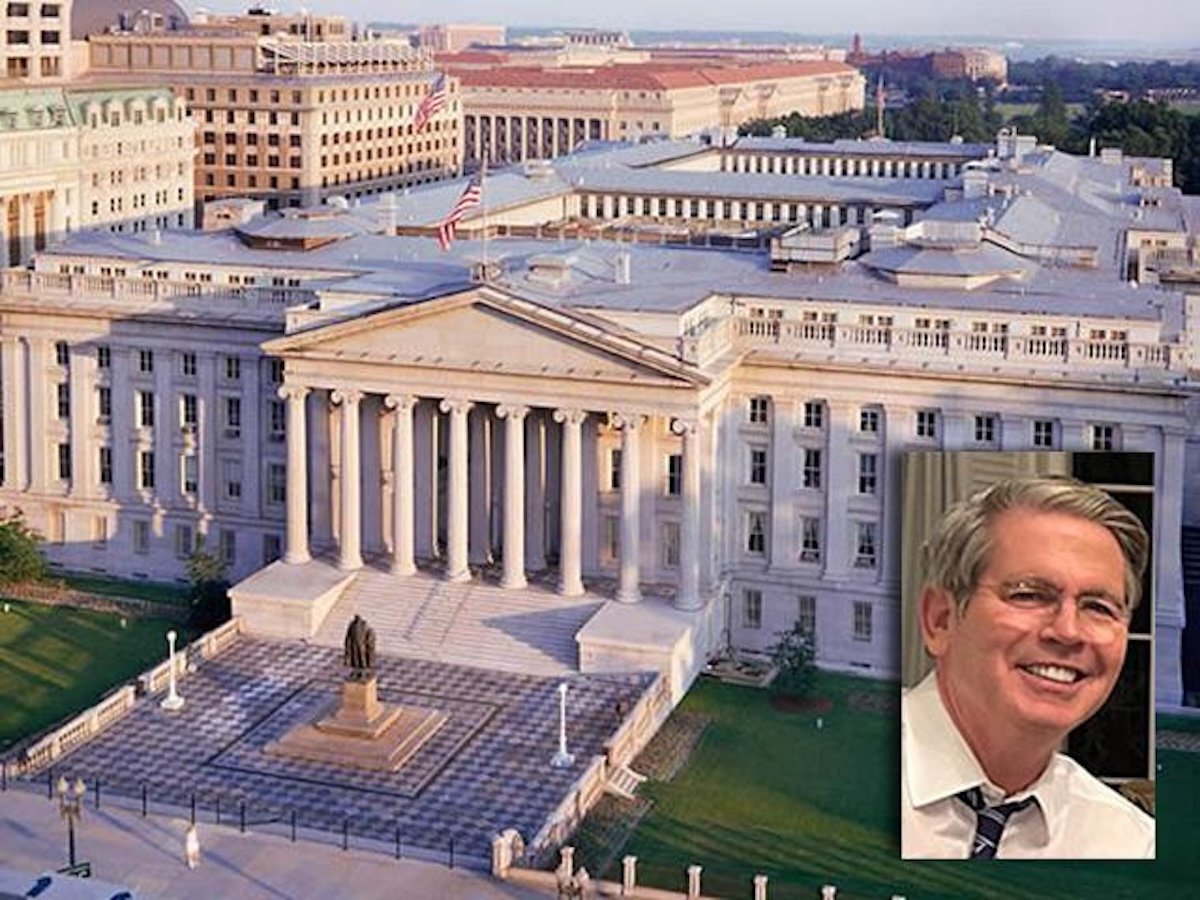
In a late May speech, US Treasury Secretary Scott Bessent articulated the new orthodoxy. He argued that for too long, the United States ignored the national security implications of trade, allowing its industrial base to decay under the assumption that imports would always suffice.
“A nation that cannot manufacture, mine, shop or refine its needs gradually cedes its strength – and sovereignty – to others,” Bessent declared.
Bessent's remarks provide the intellectual foundation for the current administration's tariff policies. Yet this rationale is not partisan. Former Commerce Secretary Gina Raimondo, serving under President Joe Biden, made similar arguments on multiple occasions. The shift reflects a bipartisan consensus in Washington.
In many ways, America's turn toward economic self-sufficiency mirrors Beijing's long-standing strategy. For years, Chinese policy documents have explicitly stated that China should not depend on the outside world for essential goods. Both powers are now prioritizing domestic production and supply chain resilience.
This transformation has profound implications for Asia. Countries like Vietnam, South Korea, and Japan have built their export-led growth models on access to the US market. As Washington raises barriers, these nations must adapt. Vietnam's reforms are being scrutinized for their ability to meet American demands before trade friction escalates.
India, too, faces a delicate balancing act. Prime Minister Narendra Modi's government is negotiating a trade deal with the United States, but New Delhi should approach with caution given Washington's increasingly coercive tactics, as analysts have warned.
The European Union is also tightening its stance. Europe is building high trade barriers against China's export machine, adding another layer of pressure on Beijing's trade position. Combined with US tariffs and EU rules, China faces a tightening vise.
The era of free trade is not coming back. Both Washington and Beijing are turning inward, prioritizing sovereignty over interdependence. For the rest of Asia, the challenge is to navigate a world where the old rules no longer apply.