For decades, US nuclear strategy has been built around a simple mental map: a US-Russia-China triangle at the top, and a China-India-Pakistan triangle below, treated as a separate, almost secondary concern. That map is dangerously outdated. The two triangles are no longer distinct; they are fusing into a single strategic system—a nuclear hexagon—that is now the primary driver of arms racing and posture shifts across Asia.
Washington's focus on the 'three-body problem' of US-Russia-China relations has left it blind to the ways that dynamics in South Asia feed back into the great-power competition. As a result, US policy has not adapted to a world where a border skirmish in the Himalayas can trigger alerts in Beijing that ripple to Washington and Moscow, or where India's response to Chinese missile modernization pushes Pakistan to lower its nuclear threshold.
The mechanics of cascade
China is the connective tissue linking the two triangles. It anchors what analysts call 'transmission belts'—the capabilities, doctrines, and postures through which instability in one triangle spreads to the other. A cascade can start anywhere: a major-power competition at the apex, a regional friction involving allied territories, or a localized subcontinental flare-up.
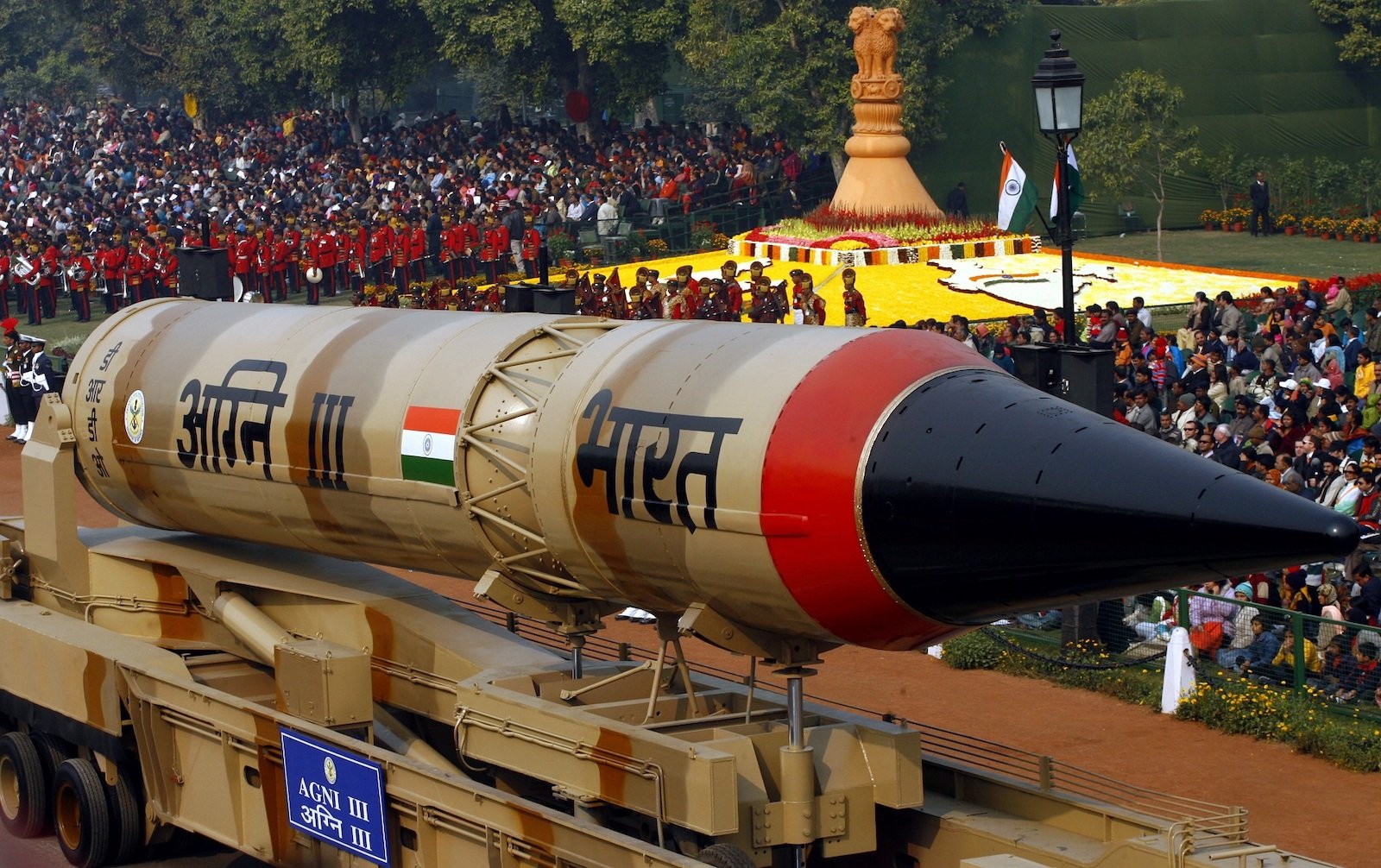
For example, when Beijing expands its arsenal to counter US missile defenses, it often deploys advanced systems near its southern and maritime borders. New Delhi, perceiving a shift toward counterforce capability, fears its minimum deterrence is at risk. To compensate, India accelerates its development of multiple independently targetable reentry vehicles (MIRVs) and moves toward canisterized, ready-to-launch postures. Pakistan, seeing an emerging Indian first-strike capability, builds more warheads, relies more on tactical nuclear weapons, and lowers its launch threshold.
Conversely, a crisis can start from the bottom or the middle. A localized border clash along the Line of Actual Control or in Kashmir could compel Beijing to place its forces on precautionary alert, triggering counter-adjustments by Washington or Moscow. In this interconnected hexagon, competitive postures, regional friction points, and subcontinental flashpoints exist in a continuous, multi-directional feedback loop.
Four risks to stability
This geometry creates at least four distinct risks. First, compressed timelines and lowered operational thresholds. Unlike the 30-minute decision windows of the Cold War, flight times across South Asia are compressed to five to ten minutes, leaving little margin for warning or off-ramps. When modernization drives velocity in major-power competition, regional doctrines are forced into high-readiness modes. New Delhi's shift to canisterized missiles, for instance, pushes Islamabad to lower its own threshold, turning strategic anxieties into hair-trigger realities.
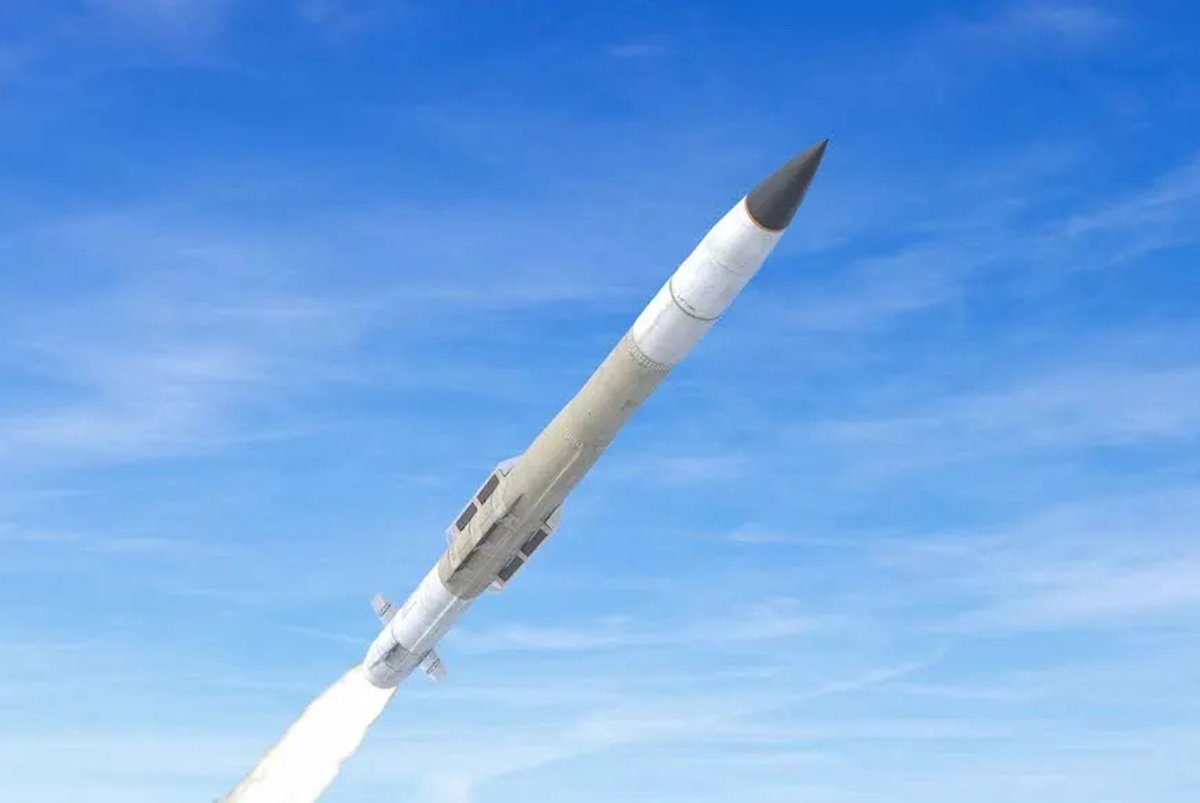
Second, the support-deterrence paradox and technology trickle-down. Deterrence is no longer a bilateral calculation but a cross-theater reaction trap. When the United States fields hypersonic glide vehicles to penetrate Russian and Chinese defenses, those systems trickle down. Beijing deploys similar capabilities near its southern borders; India seeks its own hypersonics or defense systems from Russia. US cooperation with India to balance China fosters a 'use-it-or-lose-it' mentality in Pakistan regarding its nuclear weapons.
Third, horizontal contagion and the transparency vacuum. Multipolar entanglement enables dangerous contagion: a maritime flashpoint in the Taiwan Strait or the South China Sea could trigger precautionary alerts for Indian and Pakistani forces, even if they are not directly involved. The lack of transparency and communication channels between the two triangles amplifies the risk of miscalculation.
Fourth, the integration of artificial intelligence and automated early-warning systems into compressed decision cycles introduces acute dangers of algorithmic miscalculation. Human operators may have little time to intercept a false alarm, turning a technical glitch into a strategic crisis.
Washington's myopia is not just an intellectual failure; it is a policy risk. Failing to recognize the merging of the two triangles means the United States is unprepared for a cascade that could endanger Asian and global stability. The US policy apparatus should stop treating the US-Russia-China triangle as the only game in town and start engaging with the full hexagon—including its allies Japan and South Korea, whose security and extended deterrence needs are inextricably bound to this geometry.
As Japan debates its nuclear submarine options and South Korea tests hypersonic missiles, the region is already adapting to the new reality. The question is whether Washington will catch up in time.