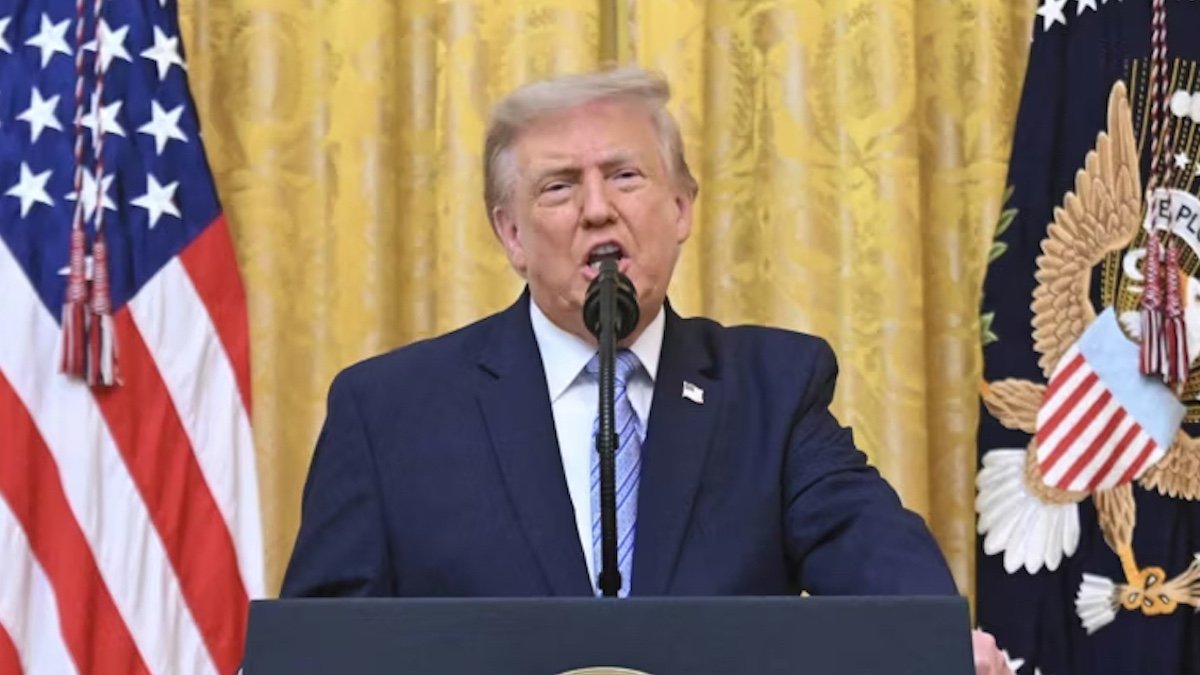
President Donald Trump used a primetime address on Thursday night to allege a sprawling Chinese plot to interfere in US elections, citing declassified intelligence to justify what critics call an unprecedented federal takeover of the voting process. Speaking four months before the November midterms, Trump repeated his baseless claims that the 2020 election was stolen and asserted that China had illicitly acquired 220 million US voter files to manufacture illegal ballots for his opponent.
The speech coincided with the White House release of hundreds of pages of intelligence documents that Trump said proved Beijing's “sinister” scheme to undermine him, aided by “Deep State” bureaucrats who suppressed the findings. However, as The Washington Post noted, raw intelligence reports are often incomplete or contradictory, and the released documents did not support Trump's contention that China interfered to defeat him or that intelligence officials deliberately hid information.
Selective Declassification Draws Bipartisan Criticism
Representative Raja Krishnamoorthi, a senior Democrat on the House Intelligence Committee, said Trump “selectively declassified intelligence to try to rewrite the history of an election he lost.” Krishnamoorthi emphasized that the documents confirm foreign adversaries targeted US democracy but found no evidence they altered a single vote. “President Trump lost the 2020 election fair and square,” he said, accusing the president of weakening intelligence agencies and pushing voter suppression.
Senator Bernie Sanders called Trump's threats to revoke broadcast licenses of NBC and ABC “insane,” noting that the president is “spewing conspiracy theories” while Americans struggle with inflation, healthcare costs, and climate disasters. Sanders urged all Americans to stand against a president “seeking to undermine our Constitution and our basic freedoms.”
Trump's push for the SAVE America Act, which would impose stricter voter ID requirements and limit mail-in voting, has been described by voting rights groups as a voter suppression bill. The president has obsessively worked to push it through Congress, framing it as necessary to prevent foreign interference.
Analysts Question Timing and Motive
Robert Weissman of Public Citizen characterized the speech as a transparent effort to divert attention from Trump's “catastrophic policy failures,” including an escalating standoff with Iran that has driven up gas prices and a tax cut that benefited the wealthy at the expense of social programs. “Trump is waging an illegal, unconstitutional, and utterly pointless war,” Weissman said, referring to the ongoing conflict in the Strait of Hormuz.
Living United for Change in Arizona warned that Trump is “laying the groundwork to dismantle our elections, overturn results he does not like, cancel the will of the people, and hold onto power by any means necessary.” The group called the speech an assault on American democracy.
The controversy comes as Trump's approval ratings slide and his administration faces multiple crises, including a paramilitary kidnapping crisis and record heatwaves. Critics argue the China meddling narrative is a distraction from domestic failures, but the president's base appears energized by the claims. The declassified intelligence, while not proving election tampering, has fueled calls for tighter election security measures that could disproportionately affect minority voters.
As the midterms approach, the debate over election integrity is likely to intensify, with Trump's federal takeover bid facing legal and constitutional challenges. For now, the president's speech has succeeded in shifting the conversation from his policy record to a familiar theme: foreign threats to American democracy.