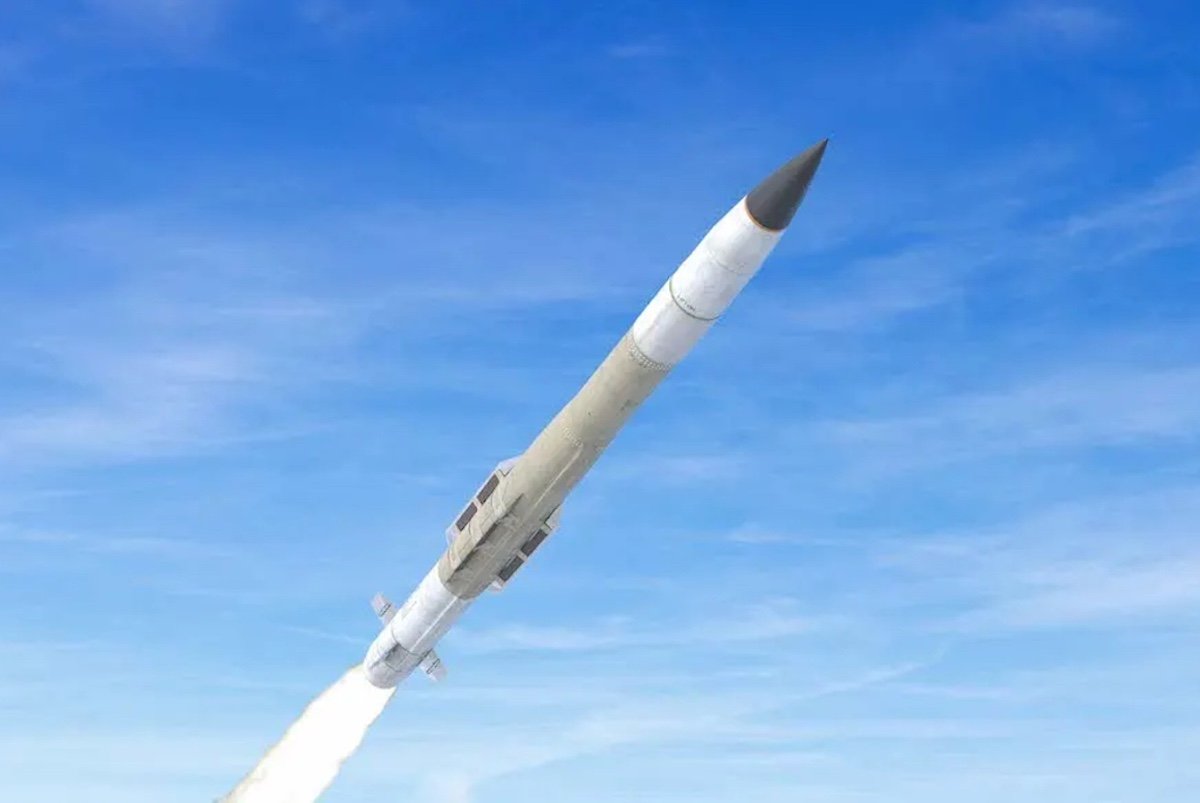
Recent testimony before the US Senate has laid bare a troubling reality: America's homeland missile defenses are increasingly outmatched by the evolving arsenals of potential adversaries. Assistant Secretary of Defense Marc Berkowitz described the current Ground-Based Midcourse Defense (GMD) system as a "very limited" single-layer shield designed primarily to counter a small-scale intercontinental ballistic missile (ICBM) attack from North Korea. He warned that the US currently has "no defense against hypersonic weapons or cruise missiles today," referring specifically to advanced cruise missiles.
The GMD system, which relies on 44 Ground-Based Interceptors (GBIs), has a test success rate of just 57% between 1999 and 2023, according to the Missile Defense Advocacy Alliance. Robert Peters of the Heritage Foundation noted in a March 2026 report that the system is constrained both numerically and technologically, making it highly vulnerable to sophisticated attacks involving multiple warheads or countermeasures.
The Scale of the Threat
A March 2025 assessment by the US Defense Intelligence Agency (DIA) paints a stark picture. China fields approximately 400 ICBMs, Russia about 350, and North Korea 10 or fewer—but even a single nuclear warhead penetrating defenses would be catastrophic. Submarine-launched ballistic missiles (SLBMs) add another layer of risk, as no part of the US is beyond their reach. Hypersonic weapons, estimated at 600 for China and 200–300 for Russia, complicate interception due to their speed and maneuverability. Land-attack cruise missiles (LACMs), with 1,000 in China's inventory and 300–600 in Russia's, exploit low-altitude flight and reduced radar signatures. Emerging systems like fractional orbital bombardment systems (FOBS) can approach from unexpected trajectories, including over the South Pole, bypassing early warning networks.
These capabilities underscore a fundamental mismatch: the GMD was designed for a narrow threat scenario that no longer exists. A February 2025 report from the American Physical Society (APS) concluded that despite over US$400 billion spent since 1957, no missile defense system is effective against realistic ICBM threats. The APS report emphasized that missile defense must be nearly perfect to be effective, yet current capabilities remain low and are unlikely to improve significantly for at least 15 years.
The Golden Dome Mirage
The Trump administration's proposed Golden Dome missile defense project aims to address these gaps by creating a layered "system of systems" integrating space-, air-, ground-, and sea-based defenses. However, experts are deeply skeptical. Jeff Hecht, writing in the Bulletin of the Atomic Scientists, highlighted severe timing constraints: sensors cannot confirm an ICBM trajectory until about 75 seconds after launch, leaving only 25–35 seconds to decide and engage. Decoys and multiple warheads further complicate interception. Hecht estimated that roughly 40,000 space-based interceptors would be needed to counter even a limited salvo of 10 ICBMs, with satellites requiring replacement every five years due to orbital decay. The cost estimates are staggering—US$185 billion for initial deployment, with total costs potentially reaching US$3.6 trillion over 20 years.
Jeffrey Lewis, writing in Scientific American, called Golden Dome a "fantasy" rooted in the belief that the US can buy its way out of nuclear vulnerability. He argued that mutually assured destruction (MAD) has prevented nuclear war, and that vulnerability is an uncomfortable but enduring reality. Kari Bingen of the Center for Strategic and International Studies (CSIS) offered a more measured critique in a January 2026 commentary, noting that while the system might improve defenses against limited threats, it cannot achieve the near-perfect performance required against a determined adversary.
The implications for Asia are profound. China's rapid missile modernization, including hypersonic and FOBS capabilities, directly challenges US homeland defense assumptions. Russia's arsenal, while smaller, remains formidable. North Korea's ICBM program, though limited, demonstrates that even a small number of missiles can force costly defensive responses. The US's inability to guarantee a leak-proof shield could embolden adversaries or destabilize regional deterrence. For allies like Japan, South Korea, and Australia, the credibility of US extended deterrence hinges on the perceived effectiveness of homeland defenses. A flawed Golden Dome may offer a false sense of security, while the real challenge lies in managing nuclear vulnerability through diplomacy and arms control—a lesson that resonates from the Cold War to the Indo-Pacific today.