Global trade has entered a new phase of uncertainty as the Trump administration pivots to a more targeted protectionist strategy, and Indonesia finds itself squarely in the line of fire. The shift follows the US Supreme Court's February 20, 2026 ruling that struck down sweeping tariffs imposed under the International Emergency Economic Powers Act (IEEPA), deeming them beyond President Donald Trump's executive authority.
In response, the White House introduced a temporary 10% tariff on February 21, 2026, before launching parallel investigations under Section 301 of the US Trade Act of 1974 on March 11 and 12. These investigations now form the backbone of a more structured and legally robust protectionist framework, replacing the earlier reciprocal tariffs announced in April 2025.
The earlier reciprocal tariffs relied on a broad macroeconomic formula linking tariff rates to America's bilateral trade deficits, largely ignoring actual tariff structures. Under that framework, Indonesia faced potential duties as high as 32%. The new Section 301 regime, by contrast, employs a tiered enforcement system with tariff stacking, imposing penalties only after formal investigations and public hearings.
Indonesia's Vulnerable Export Position
For Indonesia, this new wave of protectionism poses a serious macroeconomic challenge. The US has long been one of Jakarta's most important export destinations, generating a consistent trade surplus that supports the country's balance of payments. Indonesian exports to the US reached US$31.02 billion in 2025, a performance now under threat from a tariff-stacking mechanism that could ultimately raise duties on Indonesian goods to an effective rate of 18%. The new measures are expected to be phased in after the temporary tariff arrangement expires on July 24, 2026.
Indonesia's position has become even more vulnerable because several trade privileges that once cushioned exporters have disappeared. The Generalized System of Preferences (GSP), which granted tariff advantages to thousands of Indonesian export products, lapsed after congressional authorization expired. Without GSP benefits, Indonesian goods now compete on equal footing with products from advanced economies, eroding their price competitiveness in the US market. Consequently, the Agreement on Reciprocal Trade (ART), signed on February 27, 2026, which promised zero tariffs on 1,819 tariff lines, now risks being overshadowed by a new layer of Section 301 duties.
This development comes at a time when Indonesia's manufacturing sector is already under strain, as highlighted in our recent analysis of the rupiah's plunge pushing manufacturers to the brink.
Tariff Stacking Logic
Washington's latest use of Section 301 reflects a more sophisticated form of protectionism. Rather than relying solely on economic arguments, the policy increasingly invokes human rights and legal compliance concerns to justify trade restrictions. On June 2, 2026, the Office of the United States Trade Representative (USTR) released findings from an investigation covering 60 trading partners, dividing countries into categories based on their record in addressing forced labor concerns.
Indonesia was placed in a group of six economies—alongside Canada, Ecuador, the European Union, Mexico, and Pakistan—deemed to have formal prohibitions against forced labor but insufficient enforcement mechanisms. As a result, Indonesia was recommended for an additional 10% tariff. In relative terms, Indonesia fared better than several major regional competitors: Vietnam, China, India, and Brazil were each proposed for a 12.5% tariff increase because they were judged to lack adequate legal mechanisms to block imports produced with forced labor.
Yet Indonesia should not draw excessive comfort from this classification. A 10% tariff remains a substantial cost burden for exporters already grappling with rising domestic production expenses. The greater concern is that these tariffs are cumulative. The forced-labor investigation is running alongside another Section 301 inquiry focused on structural overcapacity in manufacturing, which includes Indonesia along with China, the European Union, Singapore, and Malaysia. Under the tariff-stacking mechanism, the 10% duty related to forced labor concerns would be imposed after July 24, 2026, with additional tariffs linked to manufacturing overcapacity layered on top weeks later. Without product-specific exclusions, Indonesia could face the worst-case scenario of an effective tariff burden reaching 18%.
Palm Oil and Fisheries Under Scrutiny
Indonesia would be mistaken to view these tariffs solely as an expression of American protectionism. The investigations also expose genuine weaknesses in the enforcement of labor standards at home. A detailed review by the US Department of Labor identified strong indications of forced labor practices in two of Indonesia's most important export sectors: palm oil and fisheries. These findings provide the political and moral rationale underpinning the USTR's tariff recommendations.
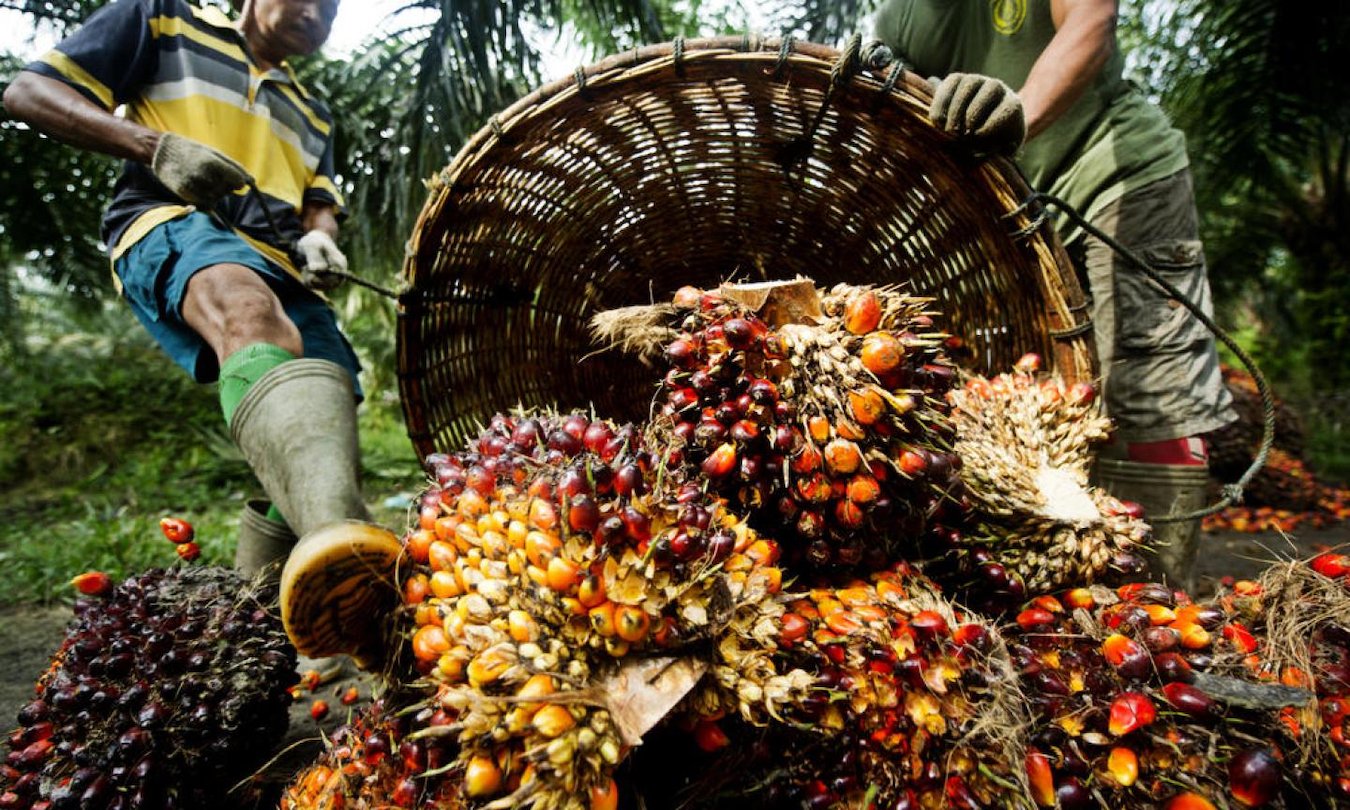
In the palm oil industry, which employs millions of workers, investigators highlighted evidence of systemic debt bondage. Domestic migrant workers are often required to pay substantial recruitment fees to labor brokers before beginning employment. Many plantation operators also impose unrealistic harvesting quotas that effectively force employees to work beyond legal limits without additional compensation, often under threat of wage deductions. The report further pointed to poor living conditions in remote plantation areas and the routine exposure of workers to hazardous pesticides without adequate protective equipment.
These practices suggest structural labor governance failures that Jakarta must address, not only to mitigate tariff risks but also to uphold basic worker rights. The broader context of US trade policy under Trump has been hitting Asia at a moment of maximum economic strain, as noted in our coverage of Trump's new tariffs hitting Asia.
For Indonesia, the path forward requires a dual strategy: engaging Washington to negotiate product-specific exclusions while simultaneously strengthening domestic labor enforcement to remove the moral justification for punitive tariffs. Failure to act on either front could leave the country's exporters bearing a cumulative tariff burden that undermines their competitiveness in the US market for years to come.