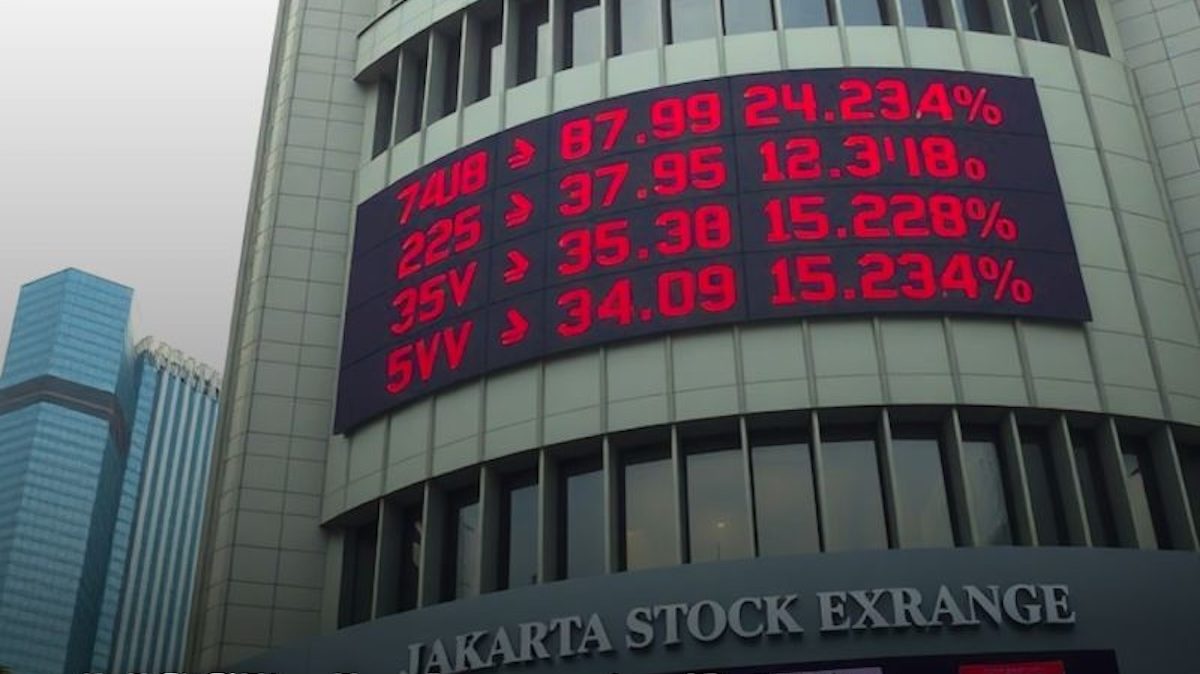
Indonesia's financial markets were shaken on Monday (June 8) as the rupiah plunged to an unprecedented low of over 18,155 against the US dollar, while the Jakarta Composite Index tumbled 4%. Foreign investors have been rapidly exiting rupiah-denominated assets, with net sales of $422 million in local bonds and $3.6 billion in equities so far this year.
The current crisis is particularly dangerous because the very policies designed to stabilize the currency are squeezing the industrial sector they aim to protect. Higher interest rates and aggressive issuance of risk-free government securities are diverting capital away from productive lending, hitting manufacturers with a simultaneous currency shock and credit crunch.
Premature Deindustrialization Looms
This twin blow raises the specter of premature deindustrialization—a scenario where manufacturing's share of the economy collapses not because Indonesia has grown richer and moved up the value chain, but because external and policy conditions make domestic production increasingly unprofitable. Manufacturing already accounts for barely 19% of GDP, down from around 30% before the 1997–98 Asian financial crisis, and analysts warn the sector may be approaching a tipping point.
Pressure on the rupiah, ignited by the Iran war, has been compounded by seasonal dividend repatriations by multinational corporations and private-sector foreign debt repayments due in the second quarter. At the same time, foreign exchange earnings from the real sector have weakened as Indonesia's trade surplus shrank dramatically to just $89.1 million in April, largely due to soaring energy import costs and declining competitiveness.
Government officials and monetary authorities continue to insist that Indonesia's economic fundamentals remain sound, citing first-quarter growth of 5.6%, a budget deficit of 2.48% of GDP, and private external debt at 29.5% of GDP. Yet the gap between these reassuring macroeconomic indicators and the realities of Indonesia's underlying economic structure is widening—reflected most clearly in the rupiah's declining fortunes.
Rewind to 1997, just before the Asian financial crisis, the rupiah traded near 2,300 to the dollar. When the crisis hit, it quickly collapsed to over 10,000. After decades of relative stability, the currency started to falter again in late 2024, breaching 16,000, and fell further below 17,000 in March this year with the outbreak of the Iran war. For more on the structural strains, see Indonesia's Rupiah Crisis: Beyond the Dollar, a Story of Policy Missteps and Structural Strains.
Investors are clearly concerned about Indonesia's inefficient domestic markets, undermined by oligopolistic practices and an industrial sector highly dependent on increasingly expensive imported inputs. Market skepticism has been reinforced by domestic policy coordination that many view as counterproductive for real-sector liquidity. To defend the rupiah, Bank Indonesia raised its benchmark interest rate to 5.25% in May and aggressively expanded the issuance of Bank Indonesia Rupiah Securities (SRBI).
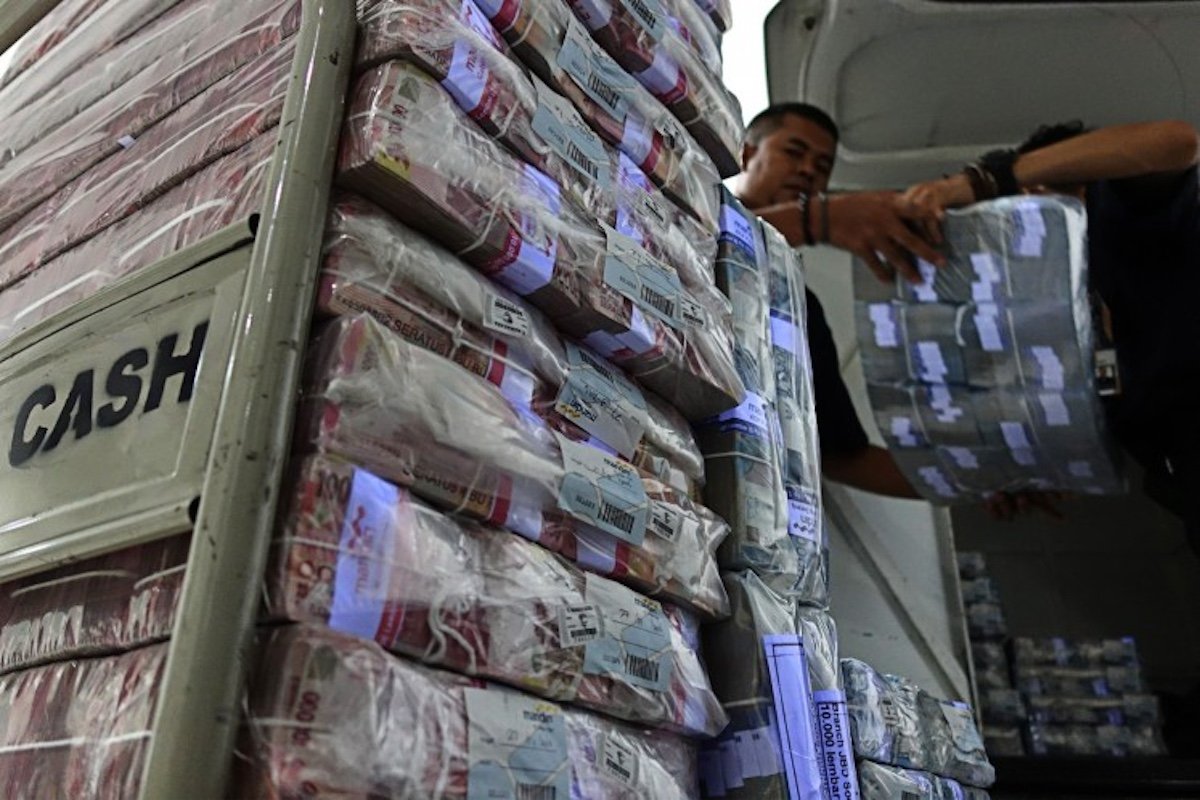
With outstanding SRBI holdings exceeding 915 trillion rupiah and offering risk-free yields above 7%, the instrument has attracted foreign capital and supported foreign exchange reserves. However, this monetary strategy has also produced an unwanted crowding-out effect, draining liquidity from the domestic banking system. Indonesian banks increasingly prefer to place funds in SRBI and government bonds rather than extend credit to the productive economy. Household savings have also flowed into government debt instruments that offer significantly higher returns than conventional bank deposits.
The result is a rapid tightening of rupiah liquidity across the financial system. For manufacturers, the policy environment creates a double burden: borrowing costs are rising while access to new credit is shrinking as liquidity is diverted toward risk-free government instruments. This dynamic is explored further in Capital Flight and Trade Fraud Keep Indonesia's Rupiah Under Siege.
Fiscal policy faces its own constraints. The launch of large-scale social programs, including the Free Nutritious Meals initiative, has significantly increased government spending. The program currently requires 71 trillion rupiah in funding and is forecast to expand to 171 trillion rupiah. At the same time, the government faces approximately 800 trillion rupiah in maturing debt obligations in 2025–26. To finance these commitments and roll over existing debt, Jakarta has been issuing government bonds aggressively.
This fiscal expansion, occurring alongside monetary tightening, has further squeezed liquidity in financial markets and kept yields on 10-year government bonds elevated. Higher sovereign yields translate directly into more expensive financing for private corporations, including manufacturers. The combination of tighter monetary policy and expansionary fiscal policy has left Indonesia's industrial sector increasingly vulnerable.
Manufacturing remains the backbone of the national economy, contributing 19.1% of GDP in the first quarter of 2026 and employing millions of formal-sector workers alongside agriculture and trade. But the sector's long-term decline, from roughly 30% before the 1997–98 crisis to below 20% today, is widely seen as premature deindustrialization. And it is now confronting a severe currency shock without adequate government policy support.
The greatest structural weakness in Indonesia's manufacturing base is its dependence on imported raw materials and foreign-currency financing. Business surveys indicate that around 70% of industrial inputs still originate overseas because domestic upstream industries remain underdeveloped. Raw materials account for approximately 55% of total production costs, making manufacturers exceptionally vulnerable to exchange-rate fluctuations. When the rupiah breaches 18,000 per dollar, the resulting increases in input costs move alarmingly close to eroding profit margins entirely. For more on the broader market crisis, see MSCI's Indonesia Purge Signals Deep Market Structure Crisis.