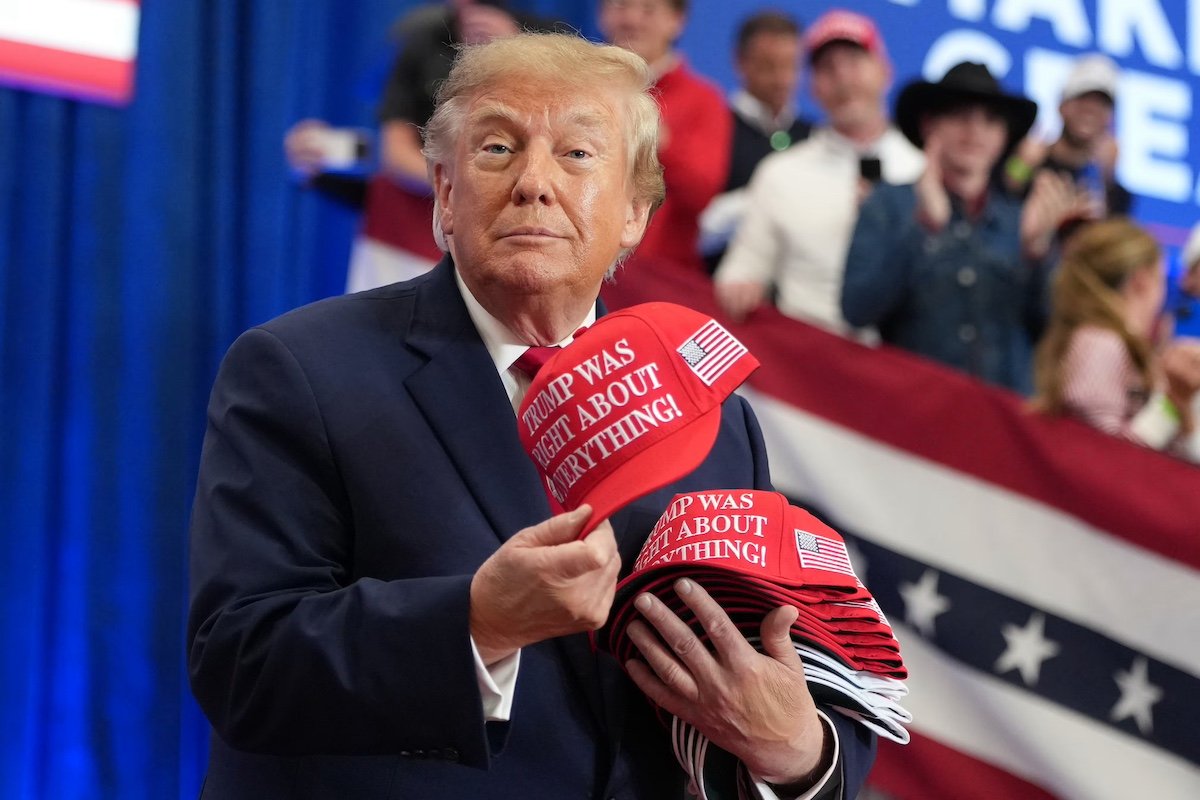
WASHINGTON, D.C. — President Donald Trump's Republican Party enters Tuesday's midterm elections facing the prospect of a significant voter backlash. A recent Reuters/Ipsos poll puts Trump's approval rating at just 32%, while Democrats hold a more than eight-point lead in the national congressional ballot.
The electoral map reflects this shift. The nonpartisan Cook Political Report projects Democratic gains of 12 to 25 House seats and rates the party as "slight favorites" to take the Senate, raising the possibility of a full reversal of Republican control in Washington.
Steven Okun, chief executive of APAC Advisors, sees mounting economic grievances translating into a national wave. "I would certainly predict, and I have been for a while, it will be a wave election," he said, noting that Trump's unpopularity threatens Republican candidates even in traditionally conservative districts.
The key question is whether this discontent will produce an ordinary midterm rebuke or something more consequential. Analysts see the makings of a Democratic wave but caution that punishing Trump's Republicans does not necessarily translate into enduring support for the opposition.
Even if Democrats capture both chambers, their ability to constrain Trump remains limited by his broad executive powers and veto. For Asian governments and markets, political gridlock could deepen uncertainty while doing little to temper Washington's increasingly confrontational approach to trade and foreign affairs. The potential for post-midterm Iran strikes adds another layer of unpredictability.
Economic anxieties drive the vote
The geopolitical consequences of Tuesday's vote may be hard to predict, but the grievances shaping it are measurable. An October AP-NORC survey found that 85% of voters consider the economy among their most important issues, 84% cite living costs, and 64% the war with Iran.
Caroline Welles, a former Democratic National Committee staffer now supporting women in down-ballot races, sees these pressures converging. "The economy and cost of living will ultimately be the deciding factors, although these issues are increasingly intertwined," she told Asia Times.
Several traditionally Republican Senate seats have moved into contention. Inside Elections now rates Ohio and Texas as slightly favoring Democrats, and has moved Iowa and Kansas, both won by Trump by double digits in 2024, into toss-up territory.
Still, Trump's weak national standing should not be mistaken for a collapse of his core support. "I think one should remain skeptical of the idea that Trump's popularity among his core MAGA base has significantly deflated," said Nirmal Ghosh, former US bureau chief of Singapore's The Straits Times.
"Certainly, there are signs of cracks," Ghosh added. "The question is whether a narrower base can still deliver wins at the polls – and that comes down a great deal to turnout."
For Republicans, the central challenge is whether high ad spending and Trump's personal appeal can carry candidates who lack his devoted following. At an October rally in Kentucky, Trump urged supporters to "pretend that I'm on the ballot," making the midterms a referendum on himself.
Yet his final campaign appearances have featured bizarre moments and inflammatory attacks. In Michigan, Trump repeatedly called Muslim Democratic Senate nominee Abdul El-Sayed a "jihadist." At Texas rallies, he made odd remarks praising the backside of Ohio Republican Senator Jon Husted. Such rhetoric may energize the base but risks distracting from the economic frustrations driving the election, analysts say.
At a Washington discussion on Friday, conservative commentator William Kristol argued Democrats could campaign against Trump's tariffs and Iran war without promising to undo his presidency. Summarizing their potential pitch, he said: "We can stop some of that. We can at least reverse what this Republican Congress has been doing."
While Democrats are ahead, they are not especially popular. Gallup's September survey shows 43% of Americans view the Democratic Party favorably, compared with 35% for the Republicans, but 54% view Democrats unfavorably. The party holds a clear advantage but little real enthusiasm.
"Ultimately, winning because voters are unhappy with Republicans is not the same as winning because voters believe in your party's future," said Welles, warning that Democrats need to articulate a compelling agenda to sustain their coalition beyond the midterms.
The rising prominence of democratic socialists is sharpening internal debates over economic policy and electoral identity. Beyond Tuesday, Democrats must reconcile youthful demands for more ambitious progressive policies with the need to appeal to older moderates wary of a leftward shift.
Those divisions could have immediate consequences if Democrats capture the House by only a slim margin. Such a narrow majority would raise difficult questions about governing priorities, from investigations into Trump to spending compromises and legislation certain to meet a presidential veto. Okun said a slim Democratic majority could amplify internal divisions, potentially complicating governance.
For Asia, the stakes are significant. A Democratic Congress might push back on some of Trump's trade policies, but gridlock could also mean continued unpredictability. As Seoul's lobbying efforts have shown, influence in Washington has its limits. The outcome of this vote will shape not only US domestic politics but also the strategic environment across the Indo-Pacific.