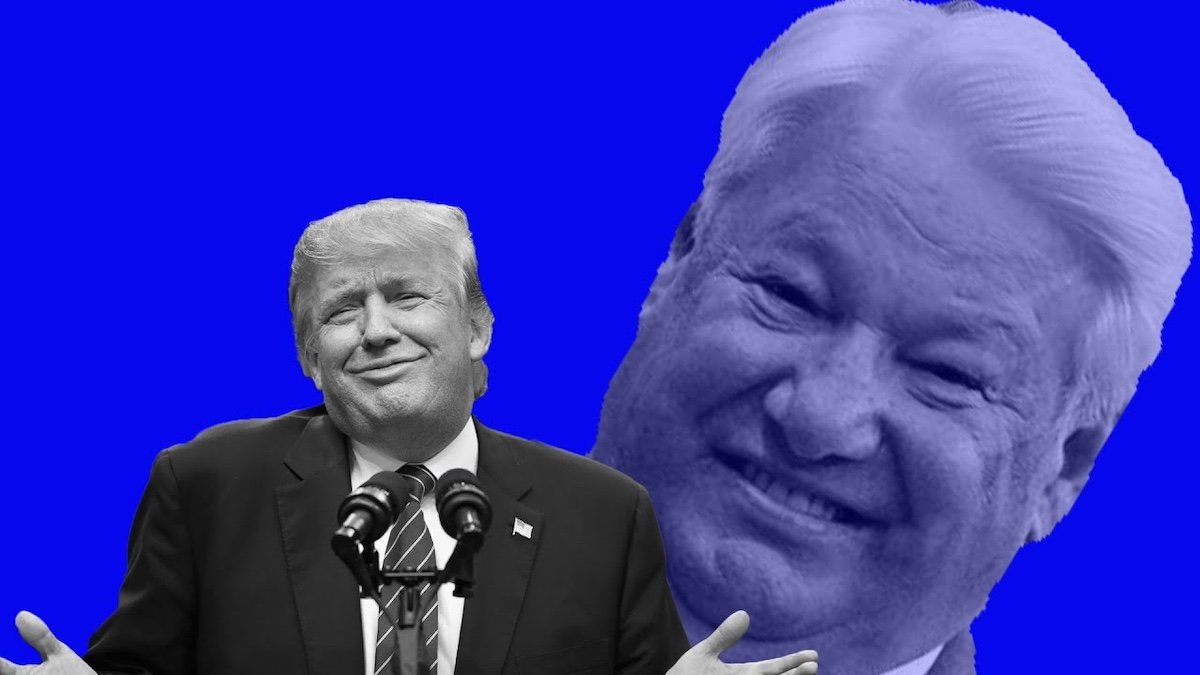
What historical role does a leader play when a political and economic system begins to falter? The question arises as observers draw parallels between former US President Donald Trump and figures from the Soviet Union's final chapter, not to equate personalities but to examine function during periods of systemic stress.
The Soviet Precedent: A System That Lost Its Balance
The Cold War presented a global ideological contest. The United States championed a decentralized, market-driven capitalist model, while the Soviet Union enforced a centralized, state-directed communist system. The USSR's collapse was not due to a lack of military power or resources, but to intrinsic structural failures. By suppressing private enterprise and market signals, it crippled innovation and created chronic inefficiencies where shortages and waste coexisted. Ultimately, the deeper failure was psychological: a widespread loss of public belief that the system served their interests.
America's Inverted Imbalance
The contemporary United States faces a different, yet structurally comparable, challenge. Where the Soviet system marginalized the merchant class, the American system has increasingly sidelined the industrial worker. Decades of globalization, financialization, and offshoring have reshaped the economy, making capital hyper-mobile while labor is not. The result is profound wealth concentration. Data shows the top 1% of US households now control roughly one-third of total wealth, a multi-decade high, while wage growth for many has stagnated.
This is not merely an economic statistic; it represents a growing crisis of legitimacy. Polling indicates a majority of Americans believe the country is on the wrong track, a sentiment of disillusionment reminiscent of the late Soviet period. The link between national economic growth and individual prosperity has fractured for a significant portion of the population.
Leaders as Symptoms of Systemic Strain
Political figures often crystallize underlying tensions rather than create them. In the dissolving Soviet Union, Boris Yeltsin embodied the chaos of a system losing coherence. His tenure accelerated the old order's collapse, leading to a turbulent, oligarchic transition. Vladimir Putin later represented a different phase, reasserting state control to provide stability after the breakdown.
Trump's political ascent reflects a distinct context but a similar structural moment. His core support derives from constituencies feeling economically abandoned and culturally displaced. His rhetoric directly challenges established trade frameworks, international alliances, and domestic institutions perceived as unresponsive. In this sequence, Trump appears less as a stabilizing force and more as a disruptive transitional figure—closer to Yeltsin than to Putin—emerging as a system's internal rules begin to bend.
The Erosion of a Financial Cushion
For decades, the US dollar's role as the world's primary reserve currency, especially in oil trade, has provided a buffer. This exorbitant privilege has allowed the US to sustain large deficits and borrow cheaply, delaying a reckoning with its domestic imbalances. However, this financial cushion is not immutable.
A gradual but meaningful shift is underway. China has actively promoted the use of its yuan, the renminbi, in energy transactions. Following Western sanctions, Russia has drastically reduced its dollar dependency. Other nations are exploring alternative payment systems. While the dollar's dominance remains, these are incremental steps toward a more multipolar monetary landscape, which would reduce Washington's ability to offset internal economic strains externally.
Asian Repercussions and the Missing Response
This evolving dynamic carries significant implications for the Indo-Pacific. A United States preoccupied with internal political fragmentation and legitimacy challenges may become a less predictable or engaged partner. Regional economies are deeply integrated into dollar-based trade and finance; any accelerated shift away from dollar hegemony could introduce volatility. Furthermore, major Asian nations are central to this monetary diversification. China's push for yuan internationalization and partnerships like the expanded BRICS bloc directly contest the post-war financial order.
Unlike Putin, who prioritized reducing Russia's sovereign debt, Trump has overseen a dramatic expansion of the US national debt, which now approaches $40 trillion. The absence of a serious fiscal consolidation plan, coupled with proposals like a 43% defense budget increase, suggests policy may exacerbate rather than alleviate structural pressures. Regional flashpoints, such as a potential Hormuz blockade, could trap the administration and trigger energy shocks that would acutely affect import-dependent Asian economies like Japan, South Korea, and India.
The comparison ultimately serves as a cautionary framework. It highlights how internal economic dislocations can erode institutional legitimacy and produce disruptive political forces. For Asian capitals, from Tokyo to New Delhi to Jakarta, understanding the United States not as a static pillar but as a system undergoing its own profound stresses is essential for navigating an increasingly turbulent geopolitical era.