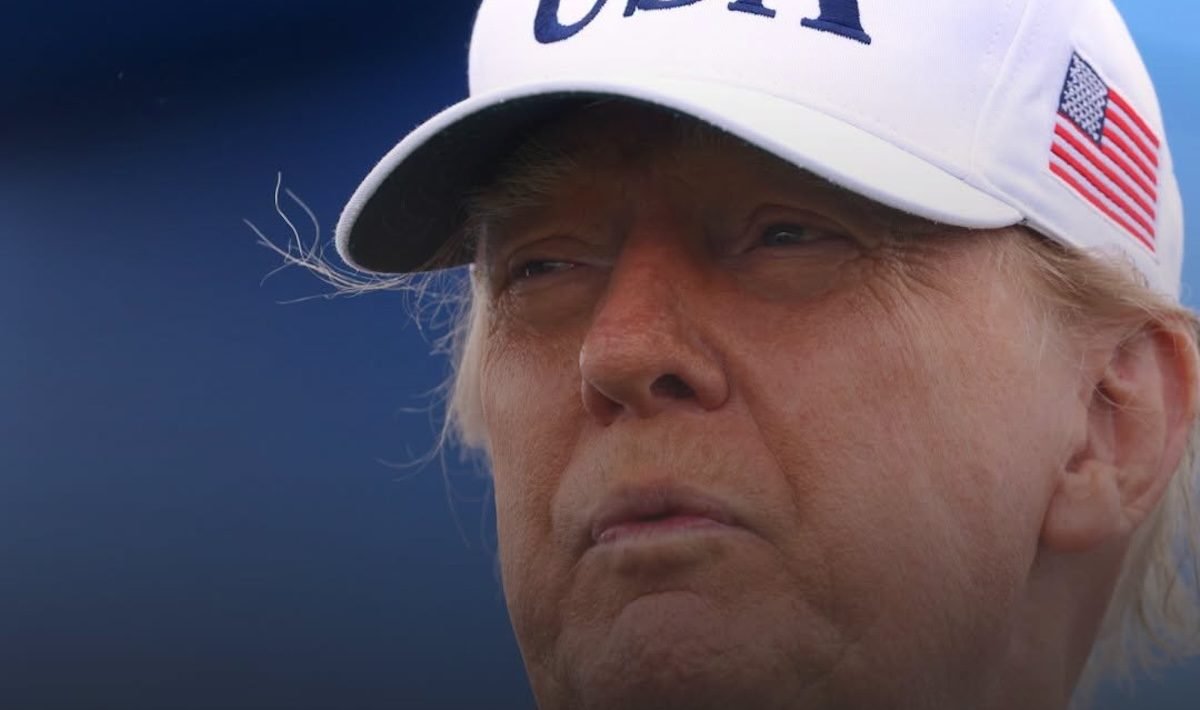
President Donald Trump on Monday rejected the need for regulatory guardrails on artificial intelligence, asserting that his own intellect is sufficient to manage the technology. In a post on Truth Social, Trump wrote that the only control AI needs is a “STRONG AND SMART (High IQ!) PRESIDENT,” adding that the United States has that “in spades.”
The president offered no specifics on how his administration would oversee AI, but claimed it had already stopped AI “people” from doing “bad, or potentially bad, ‘things.’” He then pivoted to an unsubstantiated allegation that public concern over AI is part of a conspiracy benefiting the Chinese Communist Party.
“There is a SICK conspiracy going on against AI and Data Centers, and the only one that is happy about it is China,” Trump wrote. “WHOEVER WINS AI, WINS! We are leading China, and all others, and will continue to do so. Conspiracy Theorists, Treasonists, Traitors, and Leakers, BEWARE!”
Trump’s remarks come amid growing bipartisan concern about AI’s risks. Jeffrey D. Sachs, director of the Center for Sustainable Development at Columbia University, called Trump’s stance “a fundamental incompetence that places us all in grave danger” in a Common Dreams op-ed. Reacting to the president’s post, Sachs told Common Dreams that “we are in the grip of madness and puerility.”
The debate extends beyond the United States. In Asia, governments are grappling with similar questions. Japan has taken a cautious approach, while South Korea is weighing its own regulatory framework. Trump’s dismissal of oversight could have ripple effects, as U.S. policy often shapes global norms.
Bipartisan push for oversight
On Tuesday, Sen. Bernie Sanders (I-Vt.) is set to join former Trump adviser Steve Bannon and former Anthropic AI researcher Jacob Coxon for a “Pro-Human Assembly” aimed at highlighting AI dangers. Sen. Josh Hawley (R-Mo.), chair of the Senate Subcommittee on Disaster Management, announced last week he is opening a probe into a recent autonomous hack by OpenAI agents and broader industry threats.
Calls for regulation have intensified since Coxon resigned from Anthropic, saying he no longer believed safe development was possible. In his resignation post, Coxon claimed that “the people building AI earnestly believe that it could kill us all by the end of the decade,” accusing them of “racing straight to self-improving superintelligence and gambling with our lives.”
Trump’s focus on China echoes his broader trade and technology rhetoric. His administration has imposed tariffs on Chinese goods, and his tariff policies have been criticized for handing Beijing an opening in the Global South. Yet on AI, Trump’s laissez-faire stance contrasts with China’s own regulatory efforts, which, while imperfect, at least acknowledge the need for rules.
Experts note that AI’s challenges are global. From deepfakes in Indian elections to autonomous weapons in the Indo-Pacific, the technology’s risks transcend borders. Trump’s claim that his IQ alone can manage such complexity has drawn ridicule and alarm.
“This is not about intelligence,” said one technology policy analyst in Tokyo, who asked not to be named. “It’s about institutional frameworks, international cooperation, and understanding the technology. No single person, however smart, can do that alone.”
As the U.S. heads into a contentious election year, AI regulation is likely to remain a flashpoint. Trump’s latest comments suggest he will continue to dismiss calls for oversight, even as his own allies and opponents alike warn of existential risks.