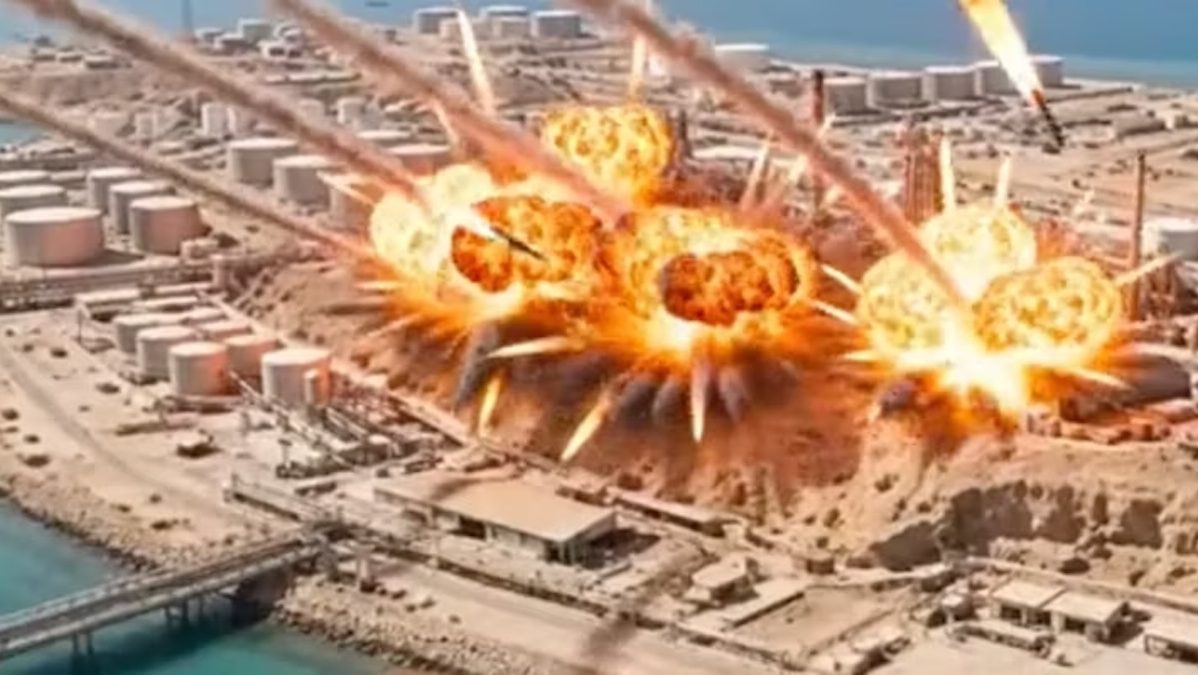
US President Donald Trump posted a series of erratic messages on his Truth Social platform overnight, including an artificial intelligence-generated video that purported to show American forces bombing Kharg Island, Iran's main oil export terminal. The post, captioned "Kharg Island being blown to smithereens!!!", drew derision from Iranian officials and concern from observers about the president's stability.
The video came after US forces struck Larak Island, located hundreds of miles east of Kharg in the Strait of Hormuz. An unnamed US official later confirmed to Reuters that American forces did not target Kharg Island during Sunday's attacks, raising questions about whether Trump confused the two locations.
Iranian response and regional tensions
Hamid Bovard, chief executive of Iran's state-run oil company, called Trump's posts "laughable" and described conditions on Kharg Island as "calm and appropriate." Iran retaliated for the Larak strike with a drone attack on two US military installations in Jordan, and the Iranian Foreign Ministry condemned the US actions as an "obvious violation" of the UN Charter.
The ministry's statement warned that "full responsibility for the consequences of America's new aggressive actions, as well as the continuation of the maritime blockade and economic war against Iran, rests with the US regime and all parties that in any way cooperate or participate in preparing and implementing the US' illegal and unlawful actions."
This military exchange marks the first significant US-Iran clash in weeks, amid stalled efforts to resolve the war that Trump and Israeli Prime Minister Benjamin Netanyahu launched in late February. The conflict has triggered a global energy crisis, spiking gas prices in the US and raising fears of a worldwide food emergency.
In a separate post on Monday, Trump declared Iran "officially a Failed Nation," adding in all-caps, "IT IS DEAD!" He claimed Iran has no navy, no air force, no currency, and that inflation is at 300%. He also called for Iranian leaders to be "tried for war crimes against humanity," despite credible accusations of US war crimes in Iran and elsewhere.
Trump's portrayal of overwhelming US superiority contradicts internal assessments. Top American officials reportedly warned Pentagon Secretary Pete Hegseth that "prolonging large-scale operations against Iran is unsustainable and risks weakening their ability to confront threats elsewhere, including the US homeland." US intelligence assessments also indicate that Iran's government remains intact after six months of American bombing.
Representative Ted Lieu (D-Calif.), who has supported congressional efforts to end the war, wrote on social media: "The president of the United States is mentally unwell and has been for quite some time. He fantasized blowing up Iran's Kharg Island. Except it didn't happen." Lieu also questioned why Trump would need to bomb Kharg if, as Trump claims, the US has total control of the Strait.
The episode underscores the volatile nature of Trump's approach to Iran, which has exposed the limits of US military might in the region. It also feeds broader concerns about a global shift away from US leadership, as allies and adversaries alike question Washington's reliability.
For Asian observers, the standoff has direct implications: energy prices and shipping routes through the Strait of Hormuz affect economies from Tokyo to Seoul. South Korea's economy is already under strain as Trump shifts US priorities away from Asia, and any further escalation in the Gulf could ripple across the Indo-Pacific.