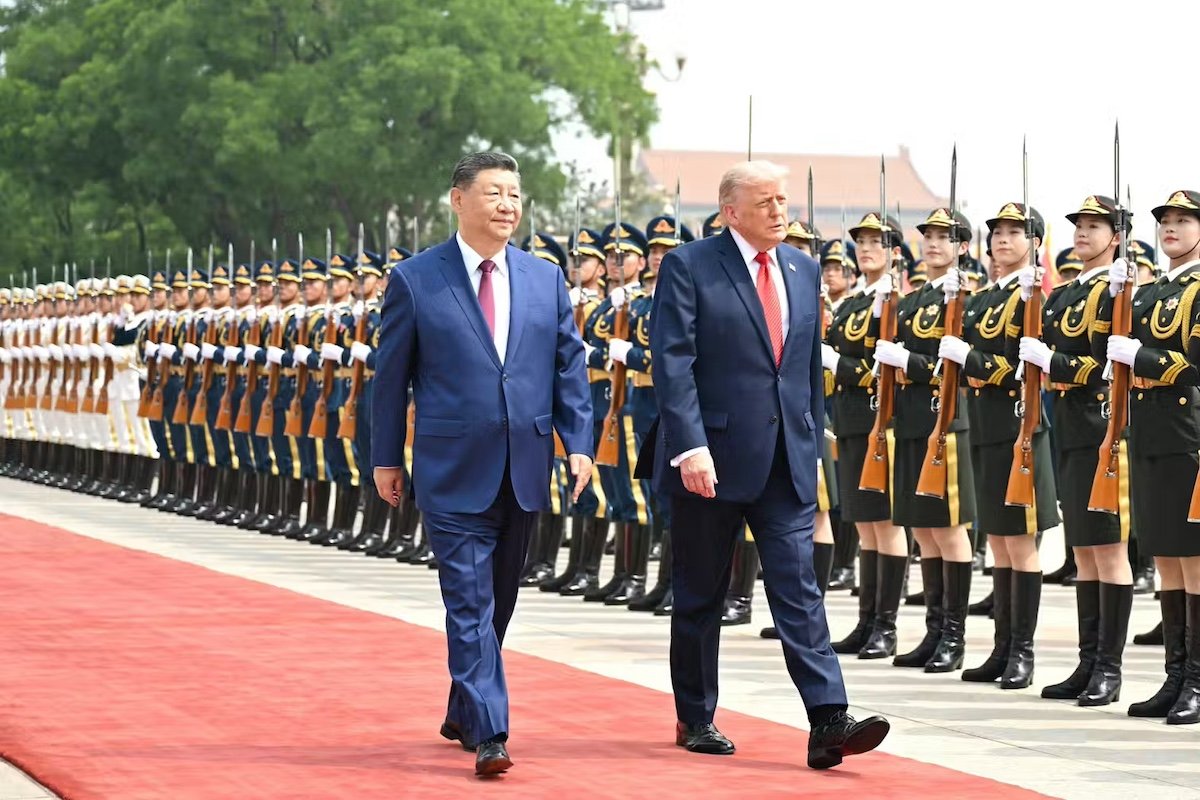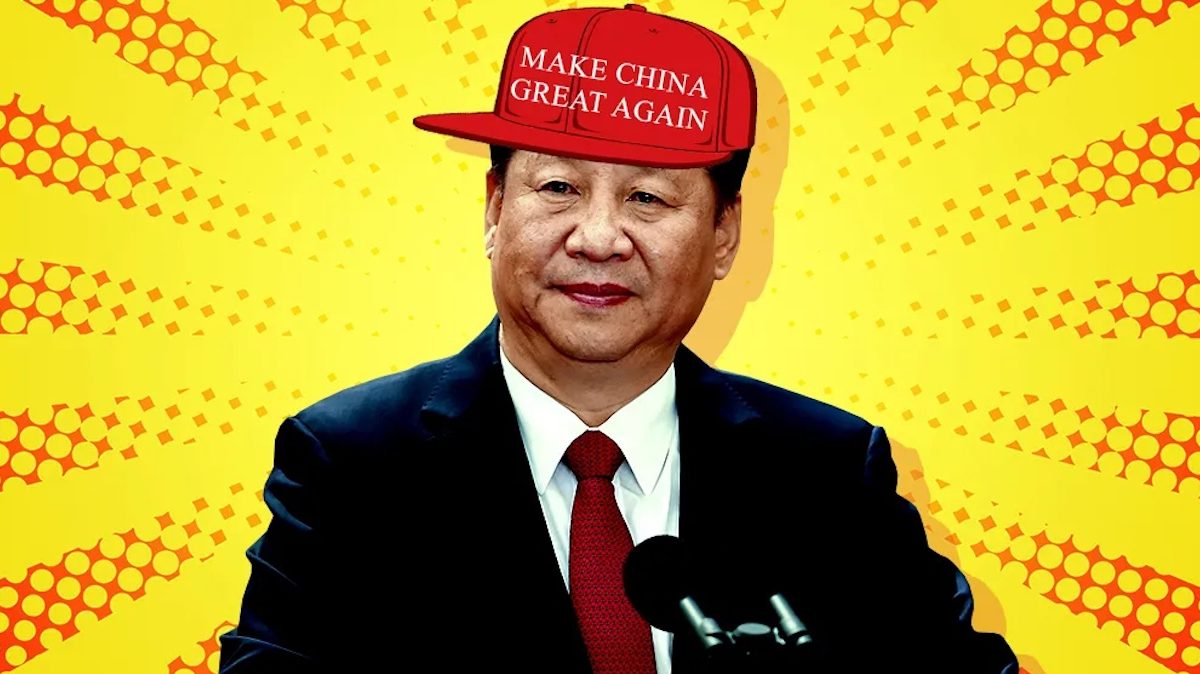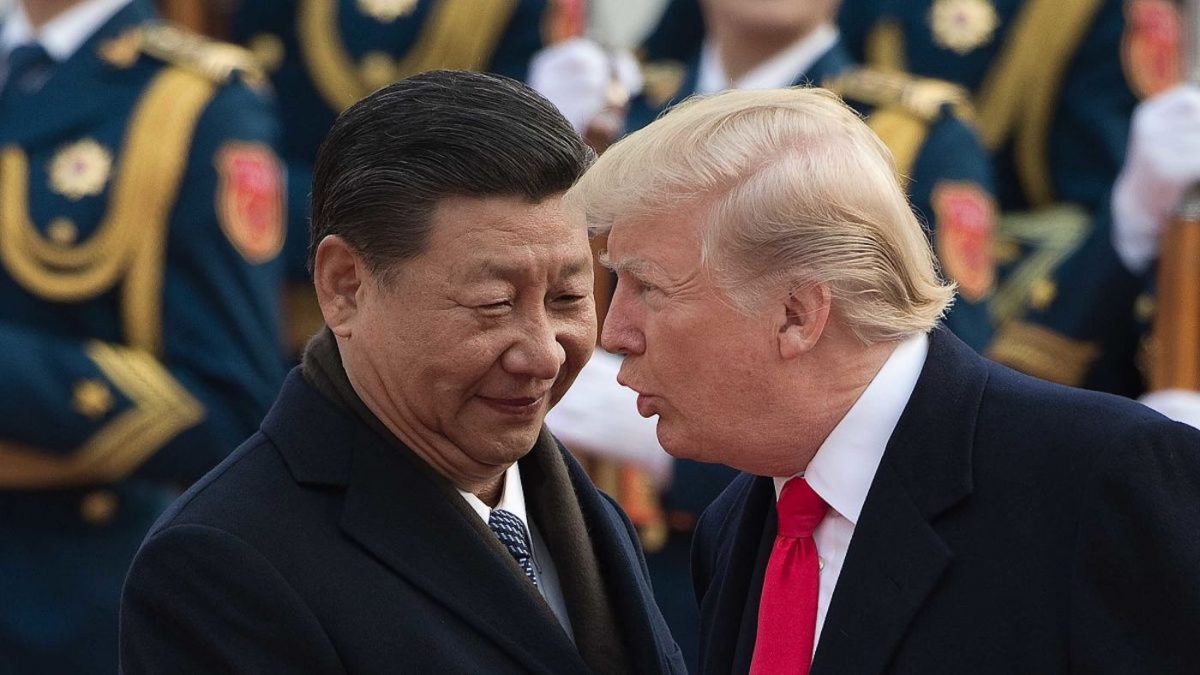
Donald Trump’s worldview is neither the rules-based globalization of the post-Cold War era nor a full Cold War fragmentation. It is something more fluid and more transactional: perpetual leverage economics. This week’s summit in Beijing between Trump and Chinese President Xi Jinping will demonstrate that reality with unusual clarity.
Forget the ceremonial handshakes in the Great Hall of the People. What matters is that the world’s two largest economies now negotiate within a permanently transactional framework. Trade, security, energy, finance, and military power are no longer separate domains. They are all instruments of leverage.
Trump arrives in Beijing carrying a single negotiating brief that includes tariffs, sanctions, Taiwan, Iran, semiconductors, Boeing aircraft orders, soybean exports, and rare earth minerals. Xi receives him as China confronts a far weaker domestic economy than projected just a few years ago. The property sector remains under severe strain after the collapse of developers like Evergrande and Country Garden. Exports are slowing under mounting trade friction with the US and Europe. Foreign direct investment into China fell sharply again last year as global companies accelerated supply-chain diversification. And China’s energy security is now in question, with the Iran war and dueling blockades of the Strait of Hormuz.
Everything Is Connected
Nothing is compartmentalized anymore. Taiwan is tied to trade, trade is tied to security, security is tied to energy, energy is tied to sanctions, and sanctions are tied to investment flows. This is the new operating system of the global economy.
For three decades after the Cold War, markets operated on the assumption that economics would gradually overpower geopolitics. Countries could compete strategically while still deepening trade integration, expanding supply chains, and increasing capital flows. Investors believed economic interdependence reduced the chances of serious confrontation.
Trump and his policymakers never believed that. The US leader’s worldview has always been aggressively transactional. Economic dependence, military alliance, access to American consumer markets—all create leverage. Tariffs create leverage. Tech access creates leverage. And yes, even uncertainty itself becomes leverage.
The Beijing summit reflects this with extraordinary precision. Ahead of Trump’s arrival, Washington sanctioned several Chinese satellite companies accused of assisting Iran through imagery and logistical support linked to military operations in the Middle East. The Treasury also targeted entities allegedly connected to Iranian procurement networks. At the same time, the White House is discussing expanded Chinese purchases of Boeing aircraft, US agricultural exports, and possible trade-management mechanisms designed to stabilize commerce in non-sensitive sectors. The contradictions are not accidental; they are the strategy.
US-China goods trade still exceeded roughly US$575 billion last year despite years of tariffs, sanctions, and escalating strategic hostility. China remains one of the largest export markets for American agriculture, particularly soybeans. Boeing continues to view China as one of the most critical long-term aviation markets globally, even after years of political tensions and delivery disputes. Yet Washington is simultaneously tightening restrictions on advanced semiconductor exports, increasing scrutiny of outbound investment into China, and accelerating military support for Taiwan.
This is not Cold War economics. The Soviet Union was never deeply integrated into the architecture of global trade, manufacturing, and capital markets. China is central to all three. China accounts for around 30% of global manufacturing output. It dominates processing capacity for critical minerals essential to electric vehicles, batteries, and defense systems. The US, meanwhile, remains the world’s dominant financial power and China’s largest single export market. Neither side can afford full rupture. But neither side trusts the other enough to preserve the old rules-based framework either.
This superpower tension increasingly drives markets across Asia. A decade ago, investors focused overwhelmingly on interest rates, earnings, and central-bank policy. Today, geopolitical signaling moves markets almost as powerfully as macroeconomic data. The Taiwan issue demonstrates the dynamic. Beijing wants Trump to shift the official US language toward explicit opposition to Taiwanese independence. Washington publicly insists policy remains unchanged while preparing another substantial arms package for Taipei after approving more than $11 billion in military sales to Taiwan since Trump returned to office. Yet reports indicate that the White House delayed formal congressional notification of the latest package, in part, to avoid destabilizing the summit atmosphere. Even timing becomes leverage.
China faces enormous contradictions of its own. Beijing wants stable export markets, uninterrupted energy flows, and calm financial conditions. It also wants strategic partnerships with Iran and Russia, reduced vulnerability to American pressure, and greater geopolitical influence across the developing world. Those objectives increasingly collide with Trump’s worldview. China imports more than 11 million barrels of crude oil per day and remains heavily dependent on Middle Eastern energy flows. Serious disruption hits Asian manufacturing, shipping costs, inflation, and financial markets. Yet Beijing resists fully aligning with Washington’s pressure campaign against Tehran because Iran remains strategically valuable to China, both economically and geopolitically.
China increasingly wants the advantages of geopolitical disruption without absorbing the costs of geopolitical disorder. Trump understands this vulnerability instinctively. His negotiating style is designed to merge commercial pressure with security pressure until the other side yields. The summit in Beijing will test whether that approach can produce a stable outcome—or whether it simply accelerates the drift toward a more dangerous, fragmented world.