On November 18, China's revised export controls on drone components took effect, covering 13 categories from propulsion to flight control electronics and communications. Days earlier, Baykar had been in Bamako showing its aircraft to African militaries. A Taiwanese company that has supplied Baykar for most of the past decade sits between those two events.
When Winmate Chairman Ken Lu discussed the company's drone business in May, he said Baykar had been buying from it for seven or eight years. Winmate first supplied control equipment and displays, and the relationship later expanded to ground control stations. Turkish orders bring the company between NT$100 million and NT$200 million a year. With total revenue expected to exceed NT$4 billion, Turkey accounts for no more than about one-twentieth of the business.
Maintenance as a steady revenue stream
Baykar's growth in Africa raises a practical question for Taiwanese suppliers. Will aircraft sold in the Sahel turn into steady orders in Taiwan?
Lu described the company's drone control boards as consumables. Each aircraft carries about three, and they wear out. A fleet that keeps flying keeps buying parts, which is the kind of demand Taiwan's drone industry has struggled to find. A September report by DSET, a government-funded think tank, found that the island's export boom has yet to translate into stable, long-term government procurement. If Turkey's African sales reach Taiwan in a durable way, they are more likely to do so through maintenance than through new aircraft.
Where the repairs go
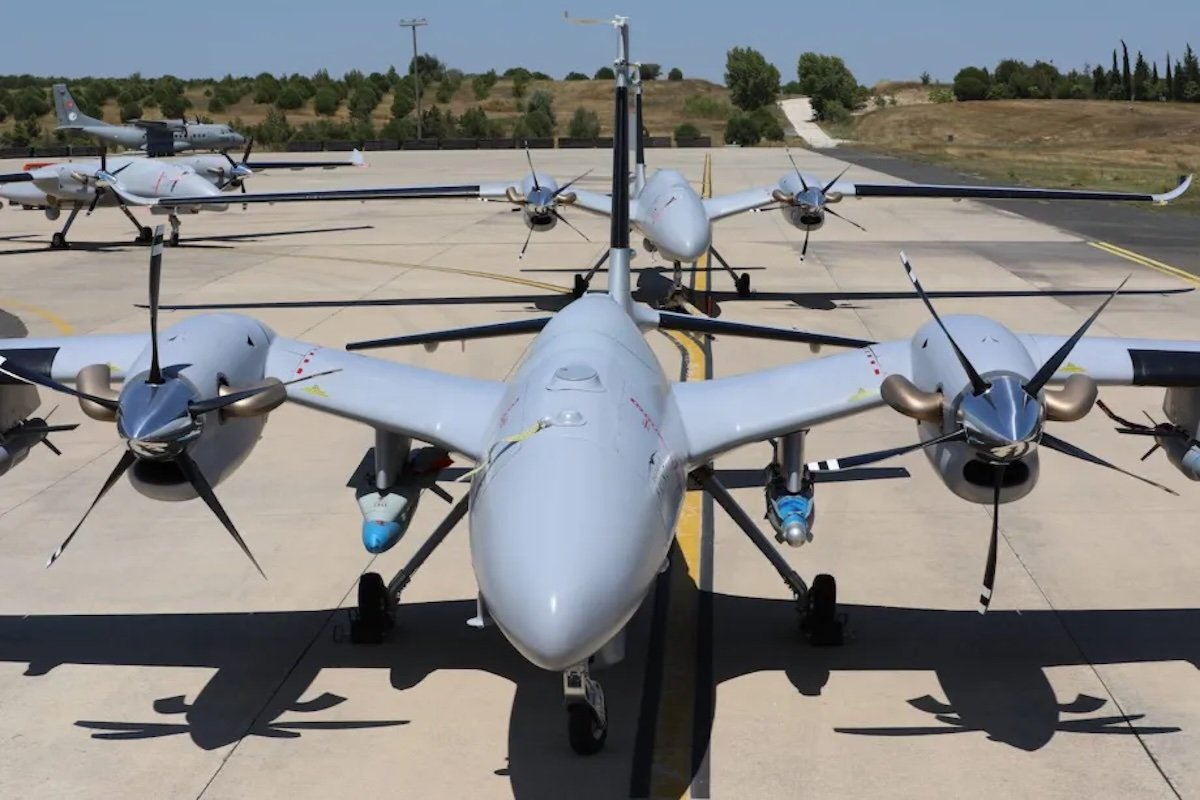
At BAMEX, which ran from Nov. 9 to 13 with about 20 Turkish defense firms, Malian Foreign Minister Abdoulaye Diop called for technology transfer and said Mali wants to develop its own capabilities. Diop was speaking about defense cooperation in general. For a country that flies Turkish drones, his demand has a specific meaning. Mali has operated Bayraktar TB2 aircraft since at least early 2024 and received another batch of Akıncı aircraft at Sévaré on July 30.
Baykar has already moved part of this work closer to its customers. It set up a subsidiary in Morocco to maintain the aircraft it sold to Rabat, and Turkey's defense agreement with Kenya covers maintenance and sustainment. Harun Saraç, chairman of the Bamako exhibition, listed maintenance agreements among the outcomes that would matter after the stands came down.
Each new repair site changes where spare modules travel. A supply contract signed with Baykar in Turkey was probably not written with Bamako in mind.
A broken display can ground an aircraft until a replacement arrives. Shipping a control unit abroad for repair takes time that an operator in the field may struggle to spare. Winmate builds computers meant to keep working in harsh conditions, yet any role in African maintenance would require an agreement that goes beyond its supply contract with Baykar.
It is Baykar that selects suppliers and negotiates the aircraft contract. When an African customer asks for local servicing, the Taiwanese component maker has little say in the answer. Someone still has to supply replacement modules under warranty. A local technician might be trained to swap out a faulty unit, while repairs to the electronics inside stay with the original manufacturer.
The China factor
China's new controls give Taiwan's “non-red” pitch a commercial edge with integrators such as Baykar. Taiwan's drone exports reached US$93.42 million in 2025, and in June Saudi Arabia became the largest buyer of Taiwanese drones with a US$47.2 million purchase. Saudi Arabia is also estimated to be the single largest customer for Baykar's Akıncı. Turkish and Taiwanese supply chains already meet in the same Gulf buyer.
The edge is narrower than it looks. Taiwan's own drone makers still source battery cells and rare-earth magnets predominantly from China, and industry insiders doubt official claims that most exports are free of Chinese content. In rugged computers, displays and control electronics, where Taiwan is strong, the pitch holds. Farther down the bill of materials, the same Chinese license requirement returns.
A contract for an Akıncı says little about demand for the cheaper aircraft now spreading across African battlefields. An October study by the Africa Center for Strategic Studies describes the TB2 as Africa's most sought-after military drone, yet expects future wars to be dominated by lower-cost systems used in larger numbers. Mali and its neighbors face threats from small drones even as their armies invest in bigger aircraft.
At BAMEX, a team from Niger's military research and development center showed five reconnaissance prototypes with a range of about five kilometers and roughly 40 minutes of endurance. In that segment, a Taiwanese firm would be competing with African workshops rather than supplying a Turkish integrator.
No published source places Taiwanese components in Mali's fleet, and Turkey remains a modest market for Winmate. Taiwan's industry also imports its own flight controller chips and flight control software, and some domestic replacements are still two to three years from mass production.
What suppliers should settle
Taiwan promulgated legislation supporting its unmanned systems industry in September. The law provides for NT$240 billion over six years and counts export promotion among its aims, with most provisions taking effect in March 2027. Public support will not resolve the commercial terms between a Taiwanese supplier and a Turkish integrator.
Baykar's own history shows how quickly a component can drop out of the chain. In 2020, Canada suspended exports of drone optics to Turkey, forcing Baykar to find alternatives. That episode underscores the fragility of supply chains in defense. For Taiwanese suppliers, the lesson is clear: a single contract can vanish overnight, but a maintenance relationship tied to a growing fleet offers more resilience. As Baykar's African footprint expands, the repair shop may become the most durable bridge between Turkish drones and Taiwanese components.