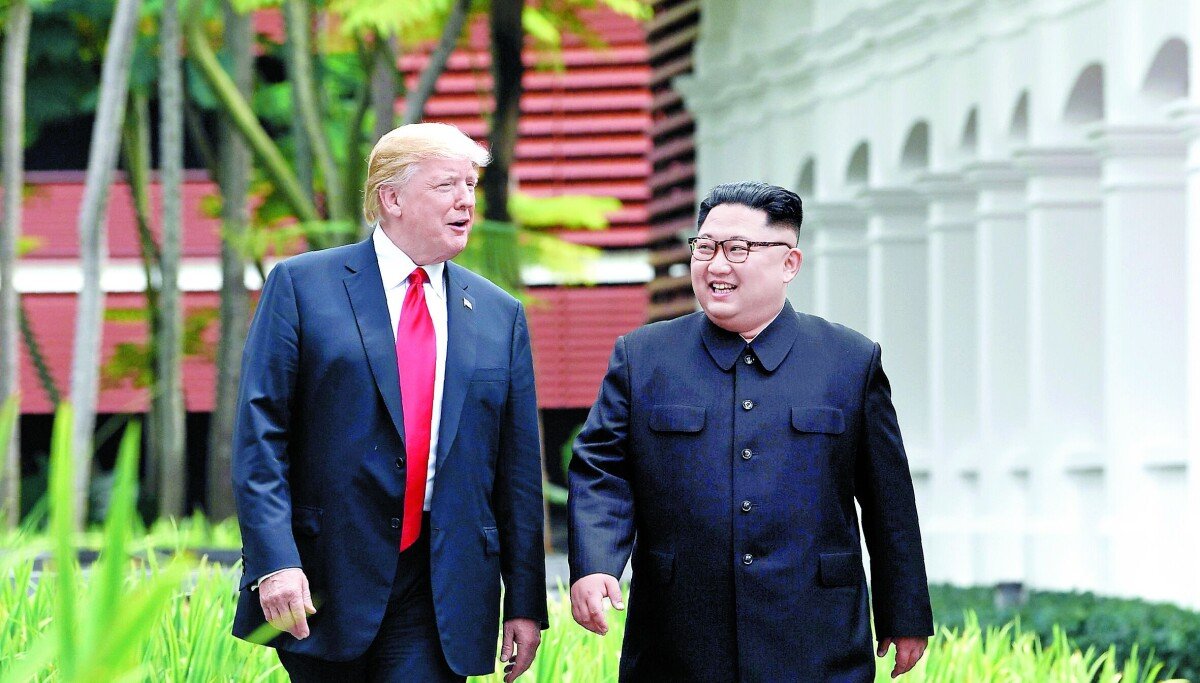
The prospect of a US-North Korea summit was one of the most closely watched items at the APEC summit in China, but Pyongyang's refusal to engage dashed immediate hopes. Yet the door is not fully closed. On November 24, US President Donald Trump suggested that his exchange of letters with North Korean leader Kim Jong Un could resume at any time, keeping the possibility of renewed dialogue alive.
Why has Pyongyang, despite Washington's repeated overtures, stayed away from the negotiating table? The answer lies in North Korea's strategic pivot toward "inreach"—consolidating ties within its own camp with the backing of China and Russia—rather than "outreach" to broaden engagement with the international community.
The great-power rivalry that sidelines the nuclear issue
Another obstacle has been the intensifying rivalry among the major powers, evident in recent summit diplomacy involving the United States, China, and Russia. While Washington focused on global dominance and Moscow on defending its sphere of influence, Beijing prioritized its economic interests, particularly trade. The North Korean nuclear issue consequently slipped down the list of priorities, with no meaningful progress toward renewed dialogue.
These competing interests have created a strategic environment in which North Korea can secure substantial benefits without improving relations with the United States. Pyongyang has exploited the geopolitical turmoil, including the wars in Ukraine and the Middle East, to pursue a strategy of "bandwagoning" with China and Russia. The substantial wartime gains and economic and military benefits secured through its deployment of some 14,000 troops to Russia have significantly diminished its incentive to pursue a "grand bargain" with the second Trump administration.
When does North Korea choose outreach?
North Korea's foreign policy has never been oriented toward reform and opening up. Instead, guided by its Juche doctrine of self-reliance and the overriding imperative of regime survival, Pyongyang has repeatedly adjusted its diplomatic scope, alternating between outreach and inreach. Although inreach has been the dominant approach, North Korea occasionally pursued outreach around the end of the Cold War to ensure regime survival and seek new economic opportunities. Examples include the adoption of a joint venture law to attract Western capital and the establishment of diplomatic relations with major European countries. The culmination was the Kaesong Industrial Complex, a symbol of inter-Korean economic cooperation until its closure in 2016.
After Kim Jong Un came to power, North Korea also pursued dialogue with South Korea and the United States. These efforts ultimately came to nothing following the failed Hanoi summit and the subsequent breakdown of the September 19 inter-Korean military agreement. Pyongyang then made a sharp turn toward inreach, devoting resources to advancing its nuclear and missile capabilities while strengthening strategic cooperation with China and Russia. This shift reflects a structural change in the international order: the increasingly entrenched rivalry among Washington, Beijing, and Moscow.
What would lure Pyongyang back?
Historically, two factors have driven North Korea to pursue outreach: the need to overcome severe domestic economic hardship and the desire to escape international sanctions and isolation. Today, however, Pyongyang finds itself in a markedly different strategic environment. Closer ties with Russia have opened up new economic and military opportunities, while China's and Russia's blatant departures from the UN sanctions regime have substantially undermined its effectiveness. North Korea can now secure through inreach much of what it previously sought to achieve through outreach.
Even so, as long as US and UN sanctions remain in place, North Korea will continue to face considerable constraints on its economic development and regime stability. Its leadership is likely well aware of these limitations. The possibility of renewed US-North Korea talks has therefore not disappeared entirely, but strategic incentives would have to be created for Pyongyang to pursue outreach once again.
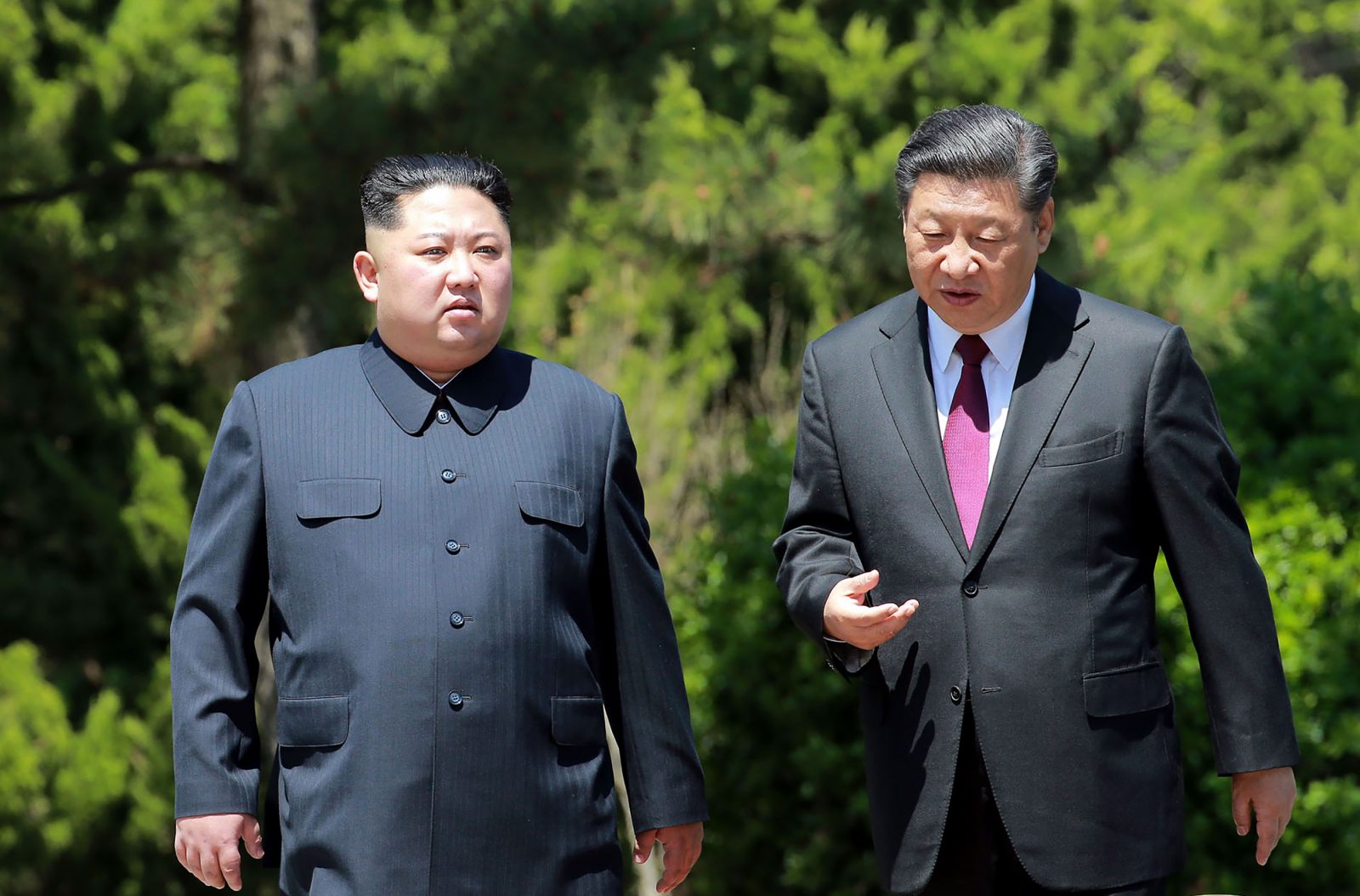
A key diplomatic prerequisite is an improvement in US-China relations. As long as Beijing prioritizes solidarity with North Korea and Russia in its confrontation with Washington, Pyongyang is unlikely to seek talks with the United States on its own. Only when Washington and Beijing ease their intense confrontation and restore strategic communication can North Korea begin to alleviate its security concerns and broaden its external engagement.
The APEC summit opened the door to an easing of US-China tensions, but that alone will not be enough. If Beijing continues to shield Pyongyang unconditionally, it risks undermining the recently established momentum toward better relations with Washington. China's policy toward North Korea, particularly the extent of its economic cooperation, is equally critical. If Beijing disregards UN Security Council sanctions and proceeds with large-scale economic assistance, Pyongyang will have greater incentives to consolidate its alignment with China and Russia than to negotiate with the United States. Encouraging North Korea to look beyond that alignment will therefore require a more responsible approach from Beijing. Trump's explicit remark that the prospects for a US-North Korea summit depend on Chinese President Xi Jinping reflects the same understanding.
For now, the ball remains in Pyongyang's court, but the calculus is shaped as much by Beijing and Moscow as by Washington. As North Korea's missile advances expose South Korea's industrial vulnerability, the region watches to see whether the second Trump administration can craft a strategy that makes outreach more attractive than inreach. The stakes are high, not just for the Korean Peninsula but for the entire Indo-Pacific security architecture.